

8 New Trend in Instrumentation of NIR Spectroscopy …
195
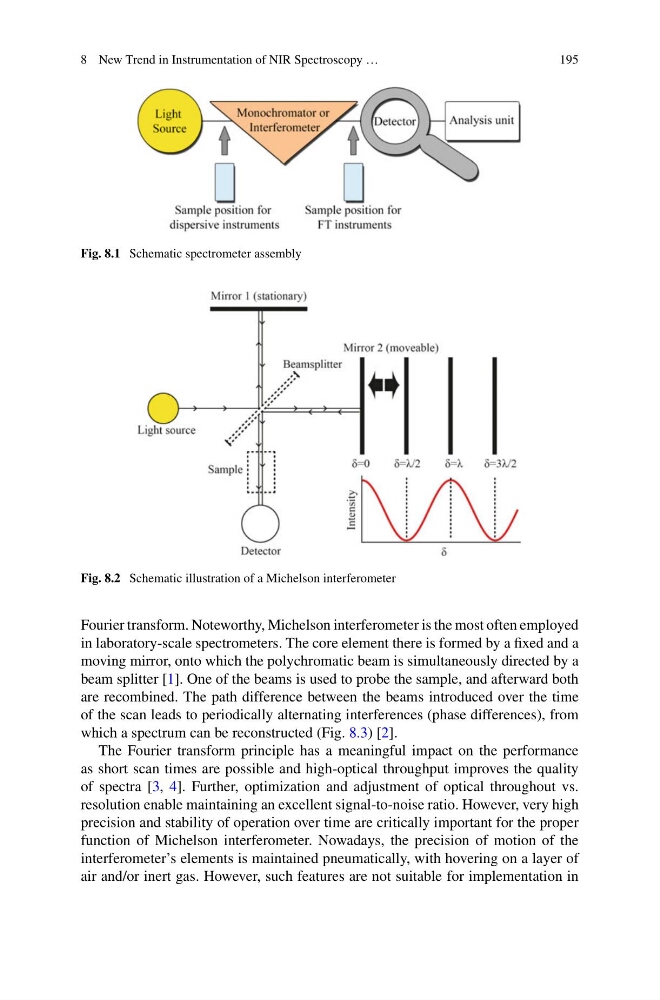
Fig. 8.1 Schematic spectrometer assembly
Fig. 8.2 Schematic illustration of a Michelson interferometer
Fourier transform. Noteworthy, Michelson interferometer is the most often employed
in laboratory-scale spectrometers. The core element there is formed by a fixed and a
moving mirror, onto which the polychromatic beam is simultaneously directed by a
beam splitter [1]. One of the beams is used to probe the sample, and afterward both
are recombined. The path difference between the beams introduced over the time
of the scan leads to periodically alternating interferences (phase differences), from
which a spectrum can be reconstructed (Fig. 8.3) [2].
The Fourier transform principle has a meaningful impact on the performance
as short scan times are possible and high-optical throughput improves the quality
of spectra [3, 4]. Further, optimization and adjustment of optical throughout vs.
resolution enable maintaining an excellent signal-to-noise ratio. However, very high
precision and stability of operation over time are critically important for the proper
function of Michelson interferometer. Nowadays, the precision of motion of the
interferometer’s elements is maintained pneumatically, with hovering on a layer of
air and/or inert gas. However, such features are not suitable for implementation in
195
Fig. 8.1 Schematic spectrometer assembly
Fig. 8.2 Schematic illustration of a Michelson interferometer
Fourier transform. Noteworthy, Michelson interferometer is the most often employed
in laboratory-scale spectrometers. The core element there is formed by a fixed and a
moving mirror, onto which the polychromatic beam is simultaneously directed by a
beam splitter [1]. One of the beams is used to probe the sample, and afterward both
are recombined. The path difference between the beams introduced over the time
of the scan leads to periodically alternating interferences (phase differences), from
which a spectrum can be reconstructed (Fig. 8.3) [2].
The Fourier transform principle has a meaningful impact on the performance
as short scan times are possible and high-optical throughput improves the quality
of spectra [3, 4]. Further, optimization and adjustment of optical throughout vs.
resolution enable maintaining an excellent signal-to-noise ratio. However, very high
precision and stability of operation over time are critically important for the proper
function of Michelson interferometer. Nowadays, the precision of motion of the
interferometer’s elements is maintained pneumatically, with hovering on a layer of
air and/or inert gas. However, such features are not suitable for implementation in