

The influences of high energy particles on semiconductor device are as follows.
1. Total dose effect
Total dose effect is a phenomenon that the performance of a semiconductor
device deteriorates depending on the total amount of radiation of the environment
in which the device is exposed. Total dose effect is regarded as permanent degradation, and the performance deteriorates due to the threshold voltage shift of transistors. This phenomenon is mainly caused by protons and electrons. Even when a large
amount of these particles is received, there sometimes are cases that the effects are
relaxed. This phenomenon is called annealing effect. However, it is difficult to
suppress the degradation in general. Shielding using metal plates is often employed
to reduce this phenomenon.
2. Single Event Upset
High energy particles such as heavy ions or protons from the sun and the center of
galaxy hit circuits in Large Scale Integrations (LSIs) such as memory cells, register
cells and flip-flops, and the data inside these cells are often inverted. It is a transient
error. It is a single event upset (SEU) and is usually called “soft error”. Even if
correct software or data are stored in the semiconductor memory cells at first, the soft
error causes malfunctions on digital LSIs by changing the contents of memory cells.
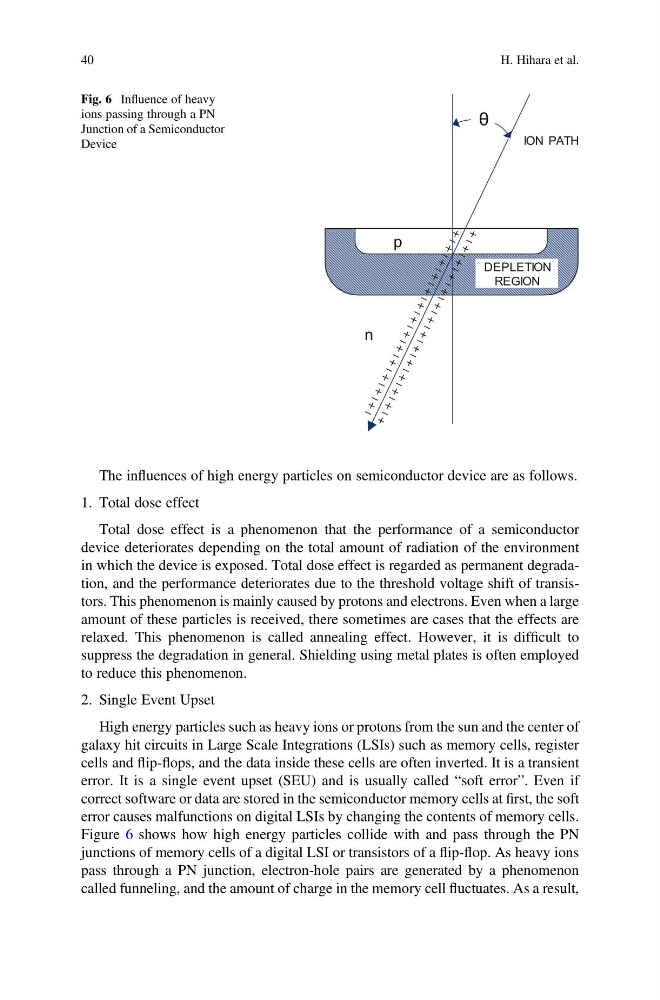
Figure 6 shows how high energy particles collide with and pass through the PN
junctions of memory cells of a digital LSI or transistors of a flip-flop. As heavy ions
pass through a PN junction, electron-hole pairs are generated by a phenomenon
called funneling, and the amount of charge in the memory cell fluctuates. As a result,
θ
ION PATH
DEPLETION
REGION
p
n
Fig. 6 Influence of heavy
ions passing through a PN
Junction of a Semiconductor
Device
40
H. Hihara et al.
1. Total dose effect
Total dose effect is a phenomenon that the performance of a semiconductor
device deteriorates depending on the total amount of radiation of the environment
in which the device is exposed. Total dose effect is regarded as permanent degradation, and the performance deteriorates due to the threshold voltage shift of transistors. This phenomenon is mainly caused by protons and electrons. Even when a large
amount of these particles is received, there sometimes are cases that the effects are
relaxed. This phenomenon is called annealing effect. However, it is difficult to
suppress the degradation in general. Shielding using metal plates is often employed
to reduce this phenomenon.
2. Single Event Upset
High energy particles such as heavy ions or protons from the sun and the center of
galaxy hit circuits in Large Scale Integrations (LSIs) such as memory cells, register
cells and flip-flops, and the data inside these cells are often inverted. It is a transient
error. It is a single event upset (SEU) and is usually called “soft error”. Even if
correct software or data are stored in the semiconductor memory cells at first, the soft
error causes malfunctions on digital LSIs by changing the contents of memory cells.
Figure 6 shows how high energy particles collide with and pass through the PN
junctions of memory cells of a digital LSI or transistors of a flip-flop. As heavy ions
pass through a PN junction, electron-hole pairs are generated by a phenomenon
called funneling, and the amount of charge in the memory cell fluctuates. As a result,
θ
ION PATH
DEPLETION
REGION
p
n
Fig. 6 Influence of heavy
ions passing through a PN
Junction of a Semiconductor
Device
40
H. Hihara et al.