

switches. In general, SBH could be estimated from the partial density of states
(PDOS) as the difference between the Fermi level and valence band maximum
(VBM) of the bulk like layer. However, it is difficult to estimate the SBH for our
a-Ta 2 O 5 heterostructures because of their relatively small thickness. In addition, the
distribution of macroscopically averaged electrostatic potentials is fluctuant in these
heterostructures due to the disordered arrangement of atoms.
Considering the above, we constructed the Cu/λ-Ta 2 O 5 /Pt model with welldefined interfaces. Here the λ-Ta 2 O 5 is the most stable structure of crystal Ta 2 O 5
at low temperature [26]. To construct the Cu/λ-Ta 2 O 5 /Pt heterostructure, Cu and Pt
(111) surfaces were connected to the (001) surface of λ-Ta 2 O 5 with O-termination.
The lattice mismatch is less than 1%. The corresponding chemical composition of
this model is Cu 69 /Ta 36 O 102 /Pt 63 , which is labeled as c-O12 since the λ-Ta 2 O 5 slab
cleaved contains 12 O atoms in the interface layer. Figure 11 shows the PDOS of the
Cu/λ-Ta 2 O 5 /Pt models with various O concentrations at the interfaces. From this
figure, the SBHs can be obtained as the difference between the Fermi level and VBM
in the bulk-like layer. It should be noted that VBM can be more accurately computed
than the conduction band minimum within DFT [27]. The estimated p-type SBH is
1.1 eV for the c-O12 case. The large values of p- and n-type SBHs reveal that when
the voltage applied to the Cu or Pt electrode is not so large, no conduction channel
for the electron flow is formed in this heterostructure.
Next, the SBH in the Cu/λ-Ta 2 O 5 /Pt was calculated as a function of the interface
O concentration. In doing so, the corresponding O atoms (from 0 to 50%) were
removed from both c-O12 interfaces. As seen in Fig. 11, the PDOS analysis reveals
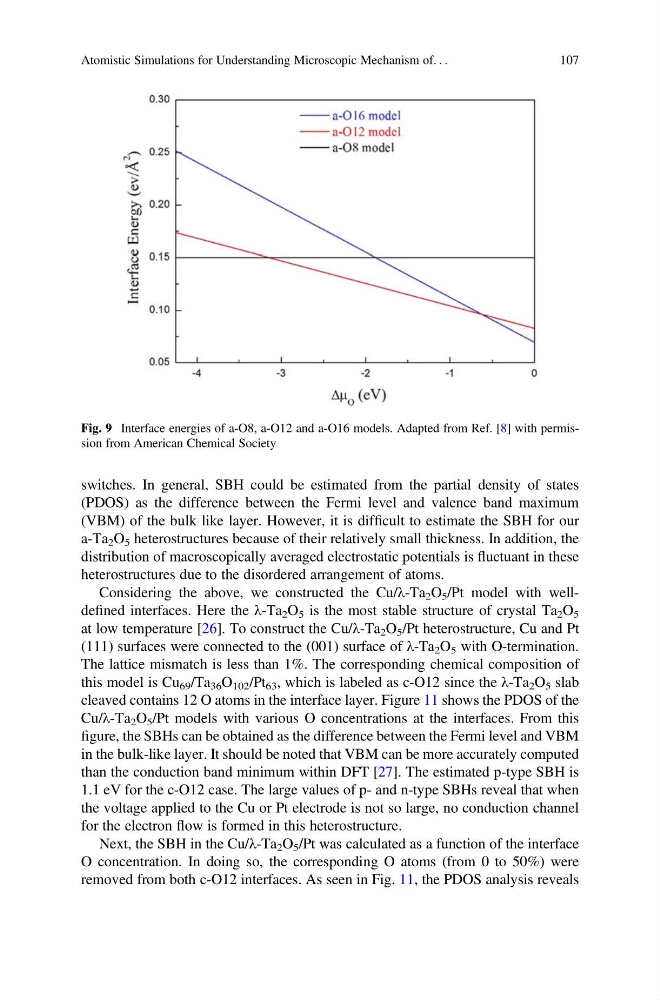
Fig. 9 Interface energies of a-O8, a-O12 and a-O16 models. Adapted from Ref. [8] with permission from American Chemical Society
Atomistic Simulations for Understanding Microscopic Mechanism of. . .
107
(PDOS) as the difference between the Fermi level and valence band maximum
(VBM) of the bulk like layer. However, it is difficult to estimate the SBH for our
a-Ta 2 O 5 heterostructures because of their relatively small thickness. In addition, the
distribution of macroscopically averaged electrostatic potentials is fluctuant in these
heterostructures due to the disordered arrangement of atoms.
Considering the above, we constructed the Cu/λ-Ta 2 O 5 /Pt model with welldefined interfaces. Here the λ-Ta 2 O 5 is the most stable structure of crystal Ta 2 O 5
at low temperature [26]. To construct the Cu/λ-Ta 2 O 5 /Pt heterostructure, Cu and Pt
(111) surfaces were connected to the (001) surface of λ-Ta 2 O 5 with O-termination.
The lattice mismatch is less than 1%. The corresponding chemical composition of
this model is Cu 69 /Ta 36 O 102 /Pt 63 , which is labeled as c-O12 since the λ-Ta 2 O 5 slab
cleaved contains 12 O atoms in the interface layer. Figure 11 shows the PDOS of the
Cu/λ-Ta 2 O 5 /Pt models with various O concentrations at the interfaces. From this
figure, the SBHs can be obtained as the difference between the Fermi level and VBM
in the bulk-like layer. It should be noted that VBM can be more accurately computed
than the conduction band minimum within DFT [27]. The estimated p-type SBH is
1.1 eV for the c-O12 case. The large values of p- and n-type SBHs reveal that when
the voltage applied to the Cu or Pt electrode is not so large, no conduction channel
for the electron flow is formed in this heterostructure.
Next, the SBH in the Cu/λ-Ta 2 O 5 /Pt was calculated as a function of the interface
O concentration. In doing so, the corresponding O atoms (from 0 to 50%) were
removed from both c-O12 interfaces. As seen in Fig. 11, the PDOS analysis reveals
Fig. 9 Interface energies of a-O8, a-O12 and a-O16 models. Adapted from Ref. [8] with permission from American Chemical Society
Atomistic Simulations for Understanding Microscopic Mechanism of. . .
107