

Order and Dielectric Relaxation During Polymer Crystallization
209
(a)
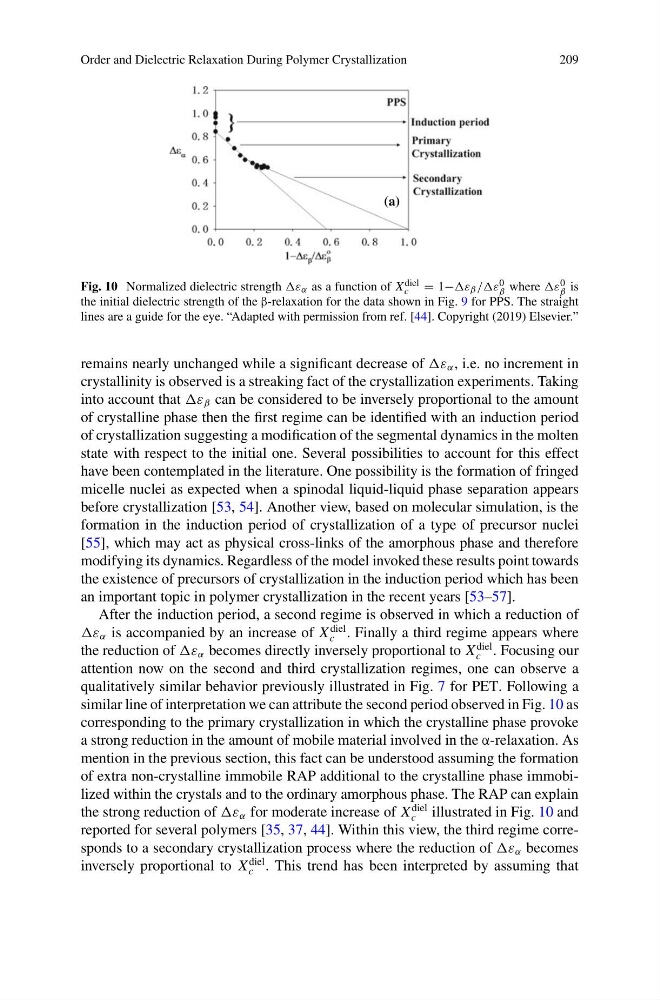
Fig. 10 Normalized dielectric strength α as a function of X diel
c
= 1− β //ε 0
β where 0
β is
the initial dielectric strength of the β-relaxation for the data shown in Fig. 9 for PPS. The straight
lines are a guide for the eye. “Adapted with permission from ref. [44]. Copyright (2019) Elsevier.”
remains nearly unchanged while a significant decrease of α , i.e. no increment in
crystallinity is observed is a streaking fact of the crystallization experiments. Taking
into account that β can be considered to be inversely proportional to the amount
of crystalline phase then the first regime can be identified with an induction period
of crystallization suggesting a modification of the segmental dynamics in the molten
state with respect to the initial one. Several possibilities to account for this effect
have been contemplated in the literature. One possibility is the formation of fringed
micelle nuclei as expected when a spinodal liquid-liquid phase separation appears
before crystallization [53, 54]. Another view, based on molecular simulation, is the
formation in the induction period of crystallization of a type of precursor nuclei
[55], which may act as physical cross-links of the amorphous phase and therefore
modifying its dynamics. Regardless of the model invoked these results point towards
the existence of precursors of crystallization in the induction period which has been
an important topic in polymer crystallization in the recent years [53–57].
After the induction period, a second regime is observed in which a reduction of
α is accompanied by an increase of X
diel
c . Finally a third regime appears where
the reduction of α becomes directly inversely proportional to X
diel
c . Focusing our
attention now on the second and third crystallization regimes, one can observe a
qualitatively similar behavior previously illustrated in Fig. 7 for PET. Following a
similar line of interpretation we can attribute the second period observed in Fig. 10 as
corresponding to the primary crystallization in which the crystalline phase provoke
a strong reduction in the amount of mobile material involved in the α-relaxation. As
mention in the previous section, this fact can be understood assuming the formation
of extra non-crystalline immobile RAP additional to the crystalline phase immobilized within the crystals and to the ordinary amorphous phase. The RAP can explain
the strong reduction of α for moderate increase of X
diel
c
illustrated in Fig. 10 and
reported for several polymers [35, 37, 44]. Within this view, the third regime corresponds to a secondary crystallization process where the reduction of α becomes
inversely proportional to X
diel
c . This trend has been interpreted by assuming that
209
(a)
Fig. 10 Normalized dielectric strength α as a function of X diel
c
= 1− β //ε 0
β where 0
β is
the initial dielectric strength of the β-relaxation for the data shown in Fig. 9 for PPS. The straight
lines are a guide for the eye. “Adapted with permission from ref. [44]. Copyright (2019) Elsevier.”
remains nearly unchanged while a significant decrease of α , i.e. no increment in
crystallinity is observed is a streaking fact of the crystallization experiments. Taking
into account that β can be considered to be inversely proportional to the amount
of crystalline phase then the first regime can be identified with an induction period
of crystallization suggesting a modification of the segmental dynamics in the molten
state with respect to the initial one. Several possibilities to account for this effect
have been contemplated in the literature. One possibility is the formation of fringed
micelle nuclei as expected when a spinodal liquid-liquid phase separation appears
before crystallization [53, 54]. Another view, based on molecular simulation, is the
formation in the induction period of crystallization of a type of precursor nuclei
[55], which may act as physical cross-links of the amorphous phase and therefore
modifying its dynamics. Regardless of the model invoked these results point towards
the existence of precursors of crystallization in the induction period which has been
an important topic in polymer crystallization in the recent years [53–57].
After the induction period, a second regime is observed in which a reduction of
α is accompanied by an increase of X
diel
c . Finally a third regime appears where
the reduction of α becomes directly inversely proportional to X
diel
c . Focusing our
attention now on the second and third crystallization regimes, one can observe a
qualitatively similar behavior previously illustrated in Fig. 7 for PET. Following a
similar line of interpretation we can attribute the second period observed in Fig. 10 as
corresponding to the primary crystallization in which the crystalline phase provoke
a strong reduction in the amount of mobile material involved in the α-relaxation. As
mention in the previous section, this fact can be understood assuming the formation
of extra non-crystalline immobile RAP additional to the crystalline phase immobilized within the crystals and to the ordinary amorphous phase. The RAP can explain
the strong reduction of α for moderate increase of X
diel
c
illustrated in Fig. 10 and
reported for several polymers [35, 37, 44]. Within this view, the third regime corresponds to a secondary crystallization process where the reduction of α becomes
inversely proportional to X
diel
c . This trend has been interpreted by assuming that