

32
1 Resonance Methods for Increasing Sensitivity of Interferometry …
excites atoms and ions, optical transition frequency of which coincides with the
frequency of the present laser radiation. Intensity increase of atoms and ions glow
(fluorescence signal) is registered by the receiving equipment. By fluorescence signal
size, it is possible to determine the population of levels, which are in charge of the
present optical transition and in the end—the concentration of the respective atoms
and ions in plasma, and by Doppler width of fluorescence line it is possible to
determine their temperature. The experiments took place in hydrogen plasma of the
FT-1 tokamak device with hydrogen neutral atom concentration of 10
9 –10
10 cm
−3
(electron concentration was about 10
13 cm
−3 , maximum temperature of electrons
was 300 eV).
FT-1 tokamak represents toroidal magnetic trap with longitudinal current of 27 kA.
Torus major diameter is 125 cm, minor diameter is 40 cm, and filament diameter is
30 cm. On this device, the studies on plasma heating under longitudinal current and
microwave field [80] take place.
For exciting the signal of hydrogen neutral atoms, fluorescence in plasma dye
laser with the generation in line region (λ = 656.3 nm) was used. As a dye laser,
“Raduga-3M” device with laser pumping was used [52]. Generation line width was
about 0.5 nm, generation pulse energy was 10
−3 J, and its duration was 2 × 10
−9 s.
During the studies, it was determined that the laser with lamp pumping should be
considered more promising for the diagnostics of hydrogen plasma by the method of
resonance fluorescence, as it has stable dye generation in the range of 440–700 nm.
Generation line width in the range H a reaches 0.8 nm while using the interferometer
with the base of 10 microns as a selector. Generation pulse energy is 0.08 J with the
duration of 2.5 × 10
−6 s.
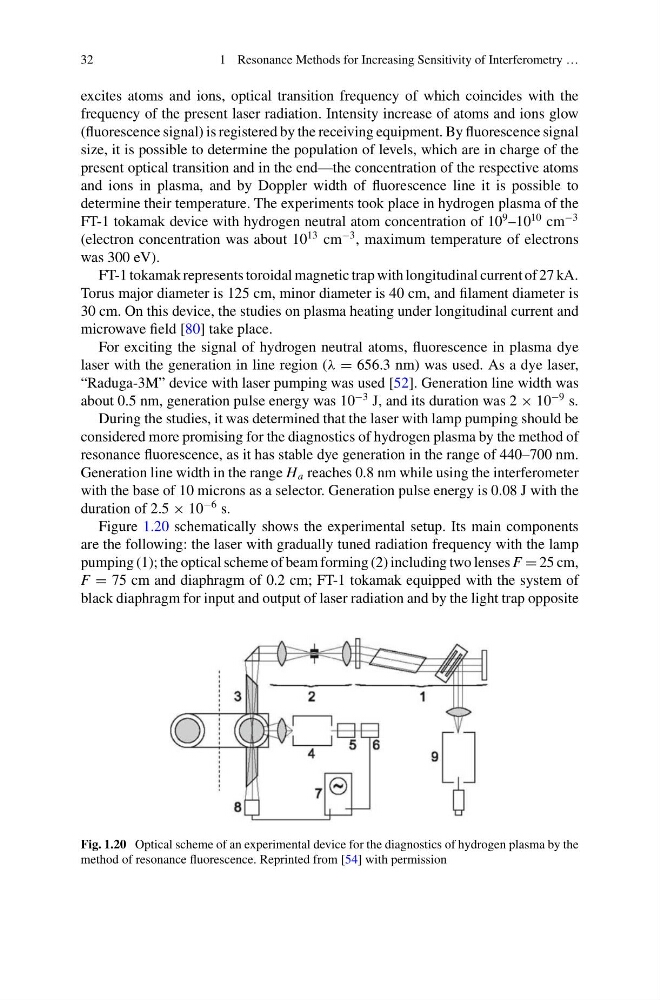
Figure 1.20 schematically shows the experimental setup. Its main components
are the following: the laser with gradually tuned radiation frequency with the lamp
pumping (1); the optical scheme of beam forming (2) including two lenses F = 25 cm,
F = 75 cm and diaphragm of 0.2 cm; FT-1 tokamak equipped with the system of
black diaphragm for input and output of laser radiation and by the light trap opposite
Fig. 1.20 Optical scheme of an experimental device for the diagnostics of hydrogen plasma by the
method of resonance fluorescence. Reprinted from [54] with permission
1 Resonance Methods for Increasing Sensitivity of Interferometry …
excites atoms and ions, optical transition frequency of which coincides with the
frequency of the present laser radiation. Intensity increase of atoms and ions glow
(fluorescence signal) is registered by the receiving equipment. By fluorescence signal
size, it is possible to determine the population of levels, which are in charge of the
present optical transition and in the end—the concentration of the respective atoms
and ions in plasma, and by Doppler width of fluorescence line it is possible to
determine their temperature. The experiments took place in hydrogen plasma of the
FT-1 tokamak device with hydrogen neutral atom concentration of 10
9 –10
10 cm
−3
(electron concentration was about 10
13 cm
−3 , maximum temperature of electrons
was 300 eV).
FT-1 tokamak represents toroidal magnetic trap with longitudinal current of 27 kA.
Torus major diameter is 125 cm, minor diameter is 40 cm, and filament diameter is
30 cm. On this device, the studies on plasma heating under longitudinal current and
microwave field [80] take place.
For exciting the signal of hydrogen neutral atoms, fluorescence in plasma dye
laser with the generation in line region (λ = 656.3 nm) was used. As a dye laser,
“Raduga-3M” device with laser pumping was used [52]. Generation line width was
about 0.5 nm, generation pulse energy was 10
−3 J, and its duration was 2 × 10
−9 s.
During the studies, it was determined that the laser with lamp pumping should be
considered more promising for the diagnostics of hydrogen plasma by the method of
resonance fluorescence, as it has stable dye generation in the range of 440–700 nm.
Generation line width in the range H a reaches 0.8 nm while using the interferometer
with the base of 10 microns as a selector. Generation pulse energy is 0.08 J with the
duration of 2.5 × 10
−6 s.
Figure 1.20 schematically shows the experimental setup. Its main components
are the following: the laser with gradually tuned radiation frequency with the lamp
pumping (1); the optical scheme of beam forming (2) including two lenses F = 25 cm,
F = 75 cm and diaphragm of 0.2 cm; FT-1 tokamak equipped with the system of
black diaphragm for input and output of laser radiation and by the light trap opposite
Fig. 1.20 Optical scheme of an experimental device for the diagnostics of hydrogen plasma by the
method of resonance fluorescence. Reprinted from [54] with permission