

446
5 Laser Specklometer, Speckle-Optical Diagnostics and Laser …
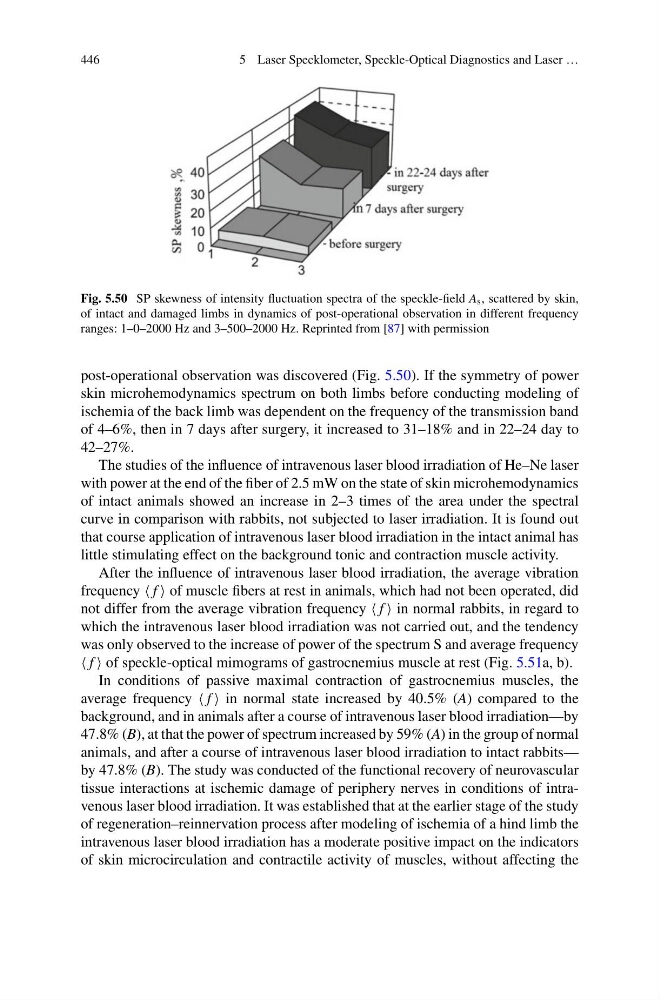
Fig. 5.50 SP skewness of intensity fluctuation spectra of the speckle-field A s , scattered by skin,
of intact and damaged limbs in dynamics of post-operational observation in different frequency
ranges: 1–0–2000 Hz and 3–500–2000 Hz. Reprinted from [87] with permission
post-operational observation was discovered (Fig. 5.50). If the symmetry of power
skin microhemodynamics spectrum on both limbs before conducting modeling of
ischemia of the back limb was dependent on the frequency of the transmission band
of 4–6%, then in 7 days after surgery, it increased to 31–18% and in 22–24 day to
42–27%.
The studies of the influence of intravenous laser blood irradiation of He–Ne laser
with power at the end of the fiber of 2.5 mW on the state of skin microhemodynamics
of intact animals showed an increase in 2–3 times of the area under the spectral
curve in comparison with rabbits, not subjected to laser irradiation. It is found out
that course application of intravenous laser blood irradiation in the intact animal has
little stimulating effect on the background tonic and contraction muscle activity.
After the influence of intravenous laser blood irradiation, the average vibration
frequency f of muscle fibers at rest in animals, which had not been operated, did
not differ from the average vibration frequency f in normal rabbits, in regard to
which the intravenous laser blood irradiation was not carried out, and the tendency
was only observed to the increase of power of the spectrum S and average frequency
f of speckle-optical mimograms of gastrocnemius muscle at rest (Fig. 5.51a, b).
In conditions of passive maximal contraction of gastrocnemius muscles, the
average frequency f in normal state increased by 40.5% (A) compared to the
background, and in animals after a course of intravenous laser blood irradiation—by
47.8% (B), at that the power of spectrum increased by 59% (A) in the group of normal
animals, and after a course of intravenous laser blood irradiation to intact rabbits—
by 47.8% (B). The study was conducted of the functional recovery of neurovascular
tissue interactions at ischemic damage of periphery nerves in conditions of intravenous laser blood irradiation. It was established that at the earlier stage of the study
of regeneration–reinnervation process after modeling of ischemia of a hind limb the
intravenous laser blood irradiation has a moderate positive impact on the indicators
of skin microcirculation and contractile activity of muscles, without affecting the
5 Laser Specklometer, Speckle-Optical Diagnostics and Laser …
Fig. 5.50 SP skewness of intensity fluctuation spectra of the speckle-field A s , scattered by skin,
of intact and damaged limbs in dynamics of post-operational observation in different frequency
ranges: 1–0–2000 Hz and 3–500–2000 Hz. Reprinted from [87] with permission
post-operational observation was discovered (Fig. 5.50). If the symmetry of power
skin microhemodynamics spectrum on both limbs before conducting modeling of
ischemia of the back limb was dependent on the frequency of the transmission band
of 4–6%, then in 7 days after surgery, it increased to 31–18% and in 22–24 day to
42–27%.
The studies of the influence of intravenous laser blood irradiation of He–Ne laser
with power at the end of the fiber of 2.5 mW on the state of skin microhemodynamics
of intact animals showed an increase in 2–3 times of the area under the spectral
curve in comparison with rabbits, not subjected to laser irradiation. It is found out
that course application of intravenous laser blood irradiation in the intact animal has
little stimulating effect on the background tonic and contraction muscle activity.
After the influence of intravenous laser blood irradiation, the average vibration
frequency f of muscle fibers at rest in animals, which had not been operated, did
not differ from the average vibration frequency f in normal rabbits, in regard to
which the intravenous laser blood irradiation was not carried out, and the tendency
was only observed to the increase of power of the spectrum S and average frequency
f of speckle-optical mimograms of gastrocnemius muscle at rest (Fig. 5.51a, b).
In conditions of passive maximal contraction of gastrocnemius muscles, the
average frequency f in normal state increased by 40.5% (A) compared to the
background, and in animals after a course of intravenous laser blood irradiation—by
47.8% (B), at that the power of spectrum increased by 59% (A) in the group of normal
animals, and after a course of intravenous laser blood irradiation to intact rabbits—
by 47.8% (B). The study was conducted of the functional recovery of neurovascular
tissue interactions at ischemic damage of periphery nerves in conditions of intravenous laser blood irradiation. It was established that at the earlier stage of the study
of regeneration–reinnervation process after modeling of ischemia of a hind limb the
intravenous laser blood irradiation has a moderate positive impact on the indicators
of skin microcirculation and contractile activity of muscles, without affecting the