

2.5 Effect of Welding Speed on Keyhole Profile
43
are constantly changing. Similarly, in the thickness direction of the workpiece, the
energy of the laser beam is gradually attenuated due to the interaction of the Fresnel
absorption of the keyhole wall and the inverse bremsstrahlung absorption of the
plasma in the keyhole. This energy attenuation is the direct reason for the gradual
reduction of the keyhole size in the direction of workpiece thickness. In the case of
full penetration, the upper and lower surfaces of the weld pool are free surfaces, and
Marangoni convection strengthens the convection of the weld pool. Therefore, the
range of heat flow action at the upper and lower surfaces of the workpiece shown
in Fig. 2.12 is larger than that at the middle of the workpiece. The asymmetry of
the action range of heat flow in Figs. 2.11 and 2.12 are the final results of the direct
influence of welding speed on the direction of flow and heat transfer in weld pool.
2.5.2 Effect of Welding Speed on Keyhole Size
Laser keyhole welding involves many technological parameters, such as focus
position, laser power, laser beam quality, welding speed, and auxiliary gas flow.
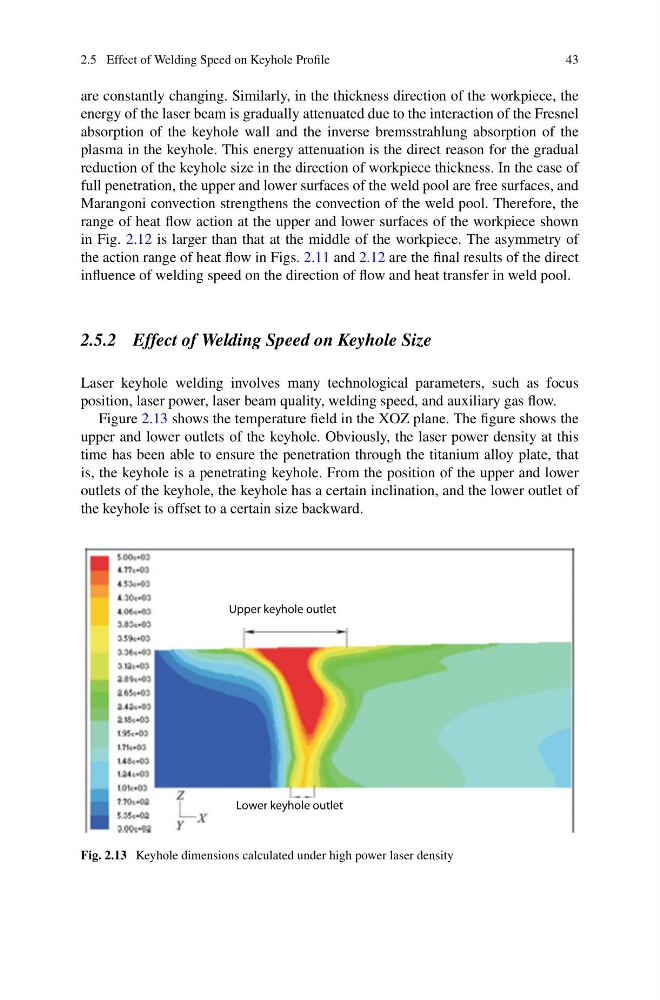
Figure 2.13 shows the temperature field in the XOZ plane. The figure shows the
upper and lower outlets of the keyhole. Obviously, the laser power density at this
time has been able to ensure the penetration through the titanium alloy plate, that
is, the keyhole is a penetrating keyhole. From the position of the upper and lower
outlets of the keyhole, the keyhole has a certain inclination, and the lower outlet of
the keyhole is offset to a certain size backward.
Upper keyhole outlet
Lower keyhole outlet
Fig. 2.13 Keyhole dimensions calculated under high power laser density
43
are constantly changing. Similarly, in the thickness direction of the workpiece, the
energy of the laser beam is gradually attenuated due to the interaction of the Fresnel
absorption of the keyhole wall and the inverse bremsstrahlung absorption of the
plasma in the keyhole. This energy attenuation is the direct reason for the gradual
reduction of the keyhole size in the direction of workpiece thickness. In the case of
full penetration, the upper and lower surfaces of the weld pool are free surfaces, and
Marangoni convection strengthens the convection of the weld pool. Therefore, the
range of heat flow action at the upper and lower surfaces of the workpiece shown
in Fig. 2.12 is larger than that at the middle of the workpiece. The asymmetry of
the action range of heat flow in Figs. 2.11 and 2.12 are the final results of the direct
influence of welding speed on the direction of flow and heat transfer in weld pool.
2.5.2 Effect of Welding Speed on Keyhole Size
Laser keyhole welding involves many technological parameters, such as focus
position, laser power, laser beam quality, welding speed, and auxiliary gas flow.
Figure 2.13 shows the temperature field in the XOZ plane. The figure shows the
upper and lower outlets of the keyhole. Obviously, the laser power density at this
time has been able to ensure the penetration through the titanium alloy plate, that
is, the keyhole is a penetrating keyhole. From the position of the upper and lower
outlets of the keyhole, the keyhole has a certain inclination, and the lower outlet of
the keyhole is offset to a certain size backward.
Upper keyhole outlet
Lower keyhole outlet
Fig. 2.13 Keyhole dimensions calculated under high power laser density