

6.3 Behaviors of Keyhole and Weld Pool Under the Effect …
177
(a) General view
(b) Upper surface of workpiece
(c) Lower part of
keyhole
(d) Middle part of
keyhole
(e) Upper part of keyhole
(metallic vapor inside keyhole
considered)
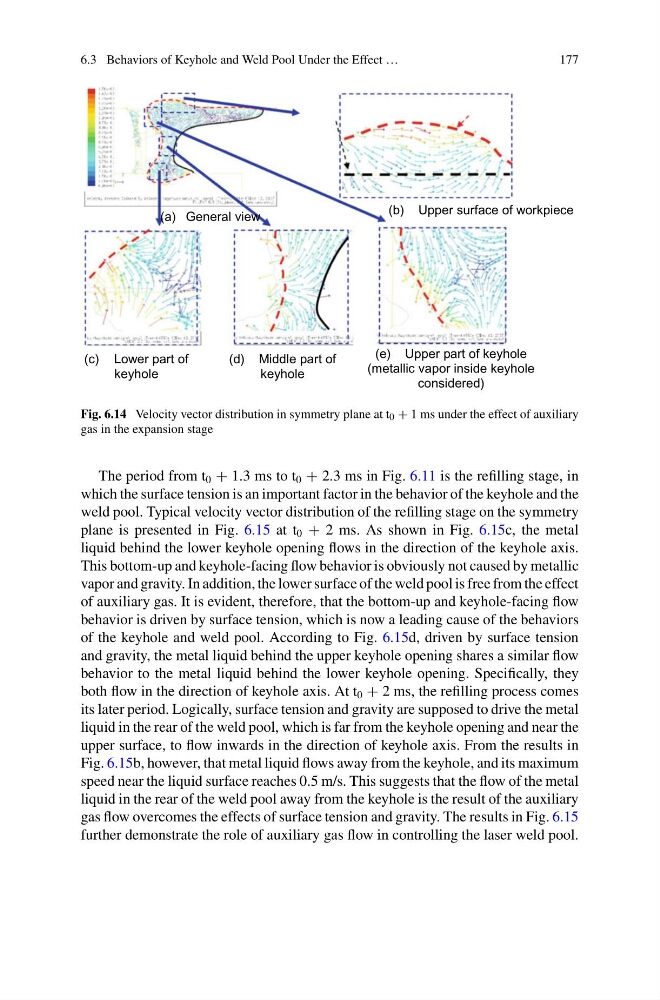
Fig. 6.14 Velocity vector distribution in symmetry plane at t 0 + 1 ms under the effect of auxiliary
gas in the expansion stage
The period from t 0 + 1.3 ms to t 0 + 2.3 ms in Fig. 6.11 is the refilling stage, in
which the surface tension is an important factor in the behavior of the keyhole and the
weld pool. Typical velocity vector distribution of the refilling stage on the symmetry
plane is presented in Fig. 6.15 at t 0 + 2 ms. As shown in Fig. 6.15c, the metal
liquid behind the lower keyhole opening flows in the direction of the keyhole axis.
This bottom-up and keyhole-facing flow behavior is obviously not caused by metallic
vapor and gravity. In addition, the lower surface of the weld pool is free from the effect
of auxiliary gas. It is evident, therefore, that the bottom-up and keyhole-facing flow
behavior is driven by surface tension, which is now a leading cause of the behaviors
of the keyhole and weld pool. According to Fig. 6.15d, driven by surface tension
and gravity, the metal liquid behind the upper keyhole opening shares a similar flow
behavior to the metal liquid behind the lower keyhole opening. Specifically, they
both flow in the direction of keyhole axis. At t 0 + 2 ms, the refilling process comes
its later period. Logically, surface tension and gravity are supposed to drive the metal
liquid in the rear of the weld pool, which is far from the keyhole opening and near the
upper surface, to flow inwards in the direction of keyhole axis. From the results in
Fig. 6.15b, however, that metal liquid flows away from the keyhole, and its maximum
speed near the liquid surface reaches 0.5 m/s. This suggests that the flow of the metal
liquid in the rear of the weld pool away from the keyhole is the result of the auxiliary
gas flow overcomes the effects of surface tension and gravity. The results in Fig. 6.15
further demonstrate the role of auxiliary gas flow in controlling the laser weld pool.
177
(a) General view
(b) Upper surface of workpiece
(c) Lower part of
keyhole
(d) Middle part of
keyhole
(e) Upper part of keyhole
(metallic vapor inside keyhole
considered)
Fig. 6.14 Velocity vector distribution in symmetry plane at t 0 + 1 ms under the effect of auxiliary
gas in the expansion stage
The period from t 0 + 1.3 ms to t 0 + 2.3 ms in Fig. 6.11 is the refilling stage, in
which the surface tension is an important factor in the behavior of the keyhole and the
weld pool. Typical velocity vector distribution of the refilling stage on the symmetry
plane is presented in Fig. 6.15 at t 0 + 2 ms. As shown in Fig. 6.15c, the metal
liquid behind the lower keyhole opening flows in the direction of the keyhole axis.
This bottom-up and keyhole-facing flow behavior is obviously not caused by metallic
vapor and gravity. In addition, the lower surface of the weld pool is free from the effect
of auxiliary gas. It is evident, therefore, that the bottom-up and keyhole-facing flow
behavior is driven by surface tension, which is now a leading cause of the behaviors
of the keyhole and weld pool. According to Fig. 6.15d, driven by surface tension
and gravity, the metal liquid behind the upper keyhole opening shares a similar flow
behavior to the metal liquid behind the lower keyhole opening. Specifically, they
both flow in the direction of keyhole axis. At t 0 + 2 ms, the refilling process comes
its later period. Logically, surface tension and gravity are supposed to drive the metal
liquid in the rear of the weld pool, which is far from the keyhole opening and near the
upper surface, to flow inwards in the direction of keyhole axis. From the results in
Fig. 6.15b, however, that metal liquid flows away from the keyhole, and its maximum
speed near the liquid surface reaches 0.5 m/s. This suggests that the flow of the metal
liquid in the rear of the weld pool away from the keyhole is the result of the auxiliary
gas flow overcomes the effects of surface tension and gravity. The results in Fig. 6.15
further demonstrate the role of auxiliary gas flow in controlling the laser weld pool.