

5.3 Dynamics of Metal Vapor/Plasma in Transient Keyhole
159
(a) 2.509ms
(b) 8.307ms
(c) 14.069ms
(d) 17.976ms
(e) 25.678ms
(f) 31.536ms
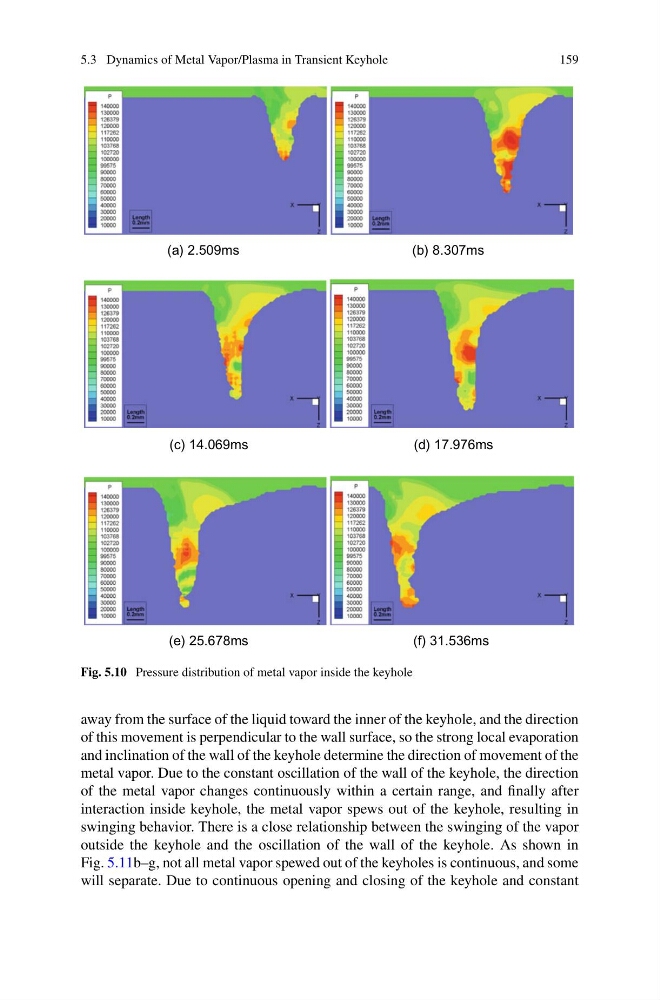
Fig. 5.10 Pressure distribution of metal vapor inside the keyhole
away from the surface of the liquid toward the inner of the keyhole, and the direction
of this movement is perpendicular to the wall surface, so the strong local evaporation
and inclination of the wall of the keyhole determine the direction of movement of the
metal vapor. Due to the constant oscillation of the wall of the keyhole, the direction
of the metal vapor changes continuously within a certain range, and finally after
interaction inside keyhole, the metal vapor spews out of the keyhole, resulting in
swinging behavior. There is a close relationship between the swinging of the vapor
outside the keyhole and the oscillation of the wall of the keyhole. As shown in
Fig. 5.11b–g, not all metal vapor spewed out of the keyholes is continuous, and some
will separate. Due to continuous opening and closing of the keyhole and constant
159
(a) 2.509ms
(b) 8.307ms
(c) 14.069ms
(d) 17.976ms
(e) 25.678ms
(f) 31.536ms
Fig. 5.10 Pressure distribution of metal vapor inside the keyhole
away from the surface of the liquid toward the inner of the keyhole, and the direction
of this movement is perpendicular to the wall surface, so the strong local evaporation
and inclination of the wall of the keyhole determine the direction of movement of the
metal vapor. Due to the constant oscillation of the wall of the keyhole, the direction
of the metal vapor changes continuously within a certain range, and finally after
interaction inside keyhole, the metal vapor spews out of the keyhole, resulting in
swinging behavior. There is a close relationship between the swinging of the vapor
outside the keyhole and the oscillation of the wall of the keyhole. As shown in
Fig. 5.11b–g, not all metal vapor spewed out of the keyholes is continuous, and some
will separate. Due to continuous opening and closing of the keyhole and constant