

22
the Gregorian calendar, respectively. During autumn and winter months, it is the
full-moon which periodically illuminates the interior of Cave 6 (Cuenca Sanabria
et al., 2018). This clearly divides the year between two dark and bright halves. All
in all, present data does not offer further clues of the actual conception of the term
equinox for this ancient society and if they brought it with them in the process of
colonization—perhaps under Roman or Punic influence—or if they developed it
locally according to environmental needs. The solar hierophany at Mactar (Fig. 6)
would support the first possibility.
It is worth noticing that, although the astronomical definition of equinox was certainly known in Rome, it was not applied for the reform of the Republican calendar
introduced by Julius Caesar in 46 BC. This was performed to adjust the year and
festivities to the seasons, and Caesar certainly carried out his reform with the problem
of the equinox in mind. Probably, for the Romans of the end of the Republic, there
were varying definitions for equinox, but March 25th was accepted as the canonical
date for the vernal equinox by both Caesar and Augustus. Under this consideration,
the sense of equinox used probably was the day that marked the middle of the time
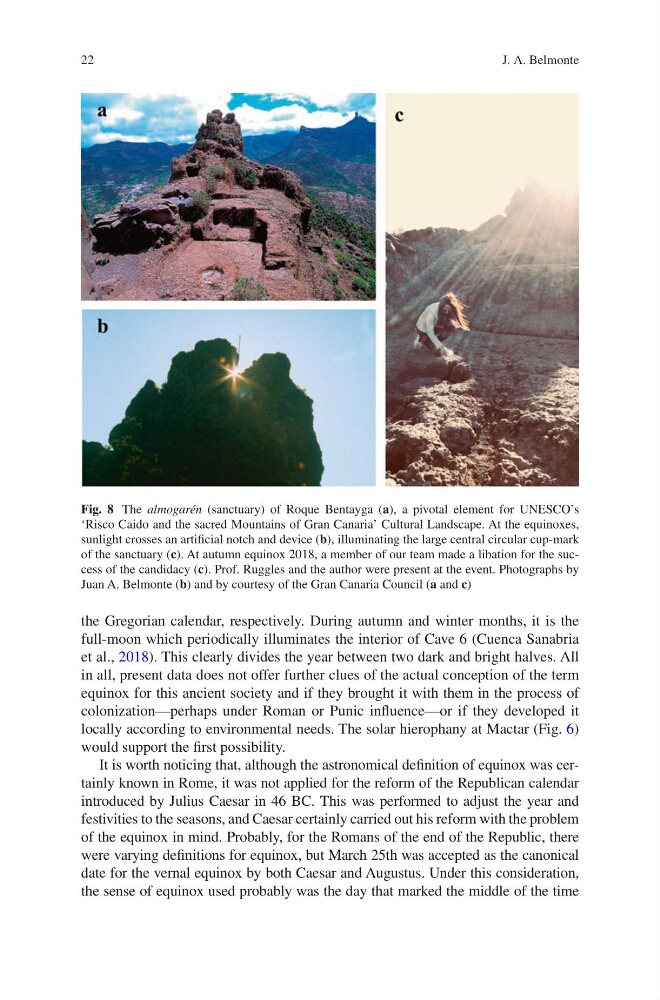
Fig. 8 The almogarén (sanctuary) of Roque Bentayga (a), a pivotal element for UNESCO’s
‘Risco Caido and the sacred Mountains of Gran Canaria’ Cultural Landscape. At the equinoxes,
sunlight crosses an artificial notch and device (b), illuminating the large central circular cup-mark
of the sanctuary (c). At autumn equinox 2018, a member of our team made a libation for the success of the candidacy (c). Prof. Ruggles and the author were present at the event. Photographs by
Juan A. Belmonte (b) and by courtesy of the Gran Canaria Council (a and c)
J. A. Belmonte
the Gregorian calendar, respectively. During autumn and winter months, it is the
full-moon which periodically illuminates the interior of Cave 6 (Cuenca Sanabria
et al., 2018). This clearly divides the year between two dark and bright halves. All
in all, present data does not offer further clues of the actual conception of the term
equinox for this ancient society and if they brought it with them in the process of
colonization—perhaps under Roman or Punic influence—or if they developed it
locally according to environmental needs. The solar hierophany at Mactar (Fig. 6)
would support the first possibility.
It is worth noticing that, although the astronomical definition of equinox was certainly known in Rome, it was not applied for the reform of the Republican calendar
introduced by Julius Caesar in 46 BC. This was performed to adjust the year and
festivities to the seasons, and Caesar certainly carried out his reform with the problem
of the equinox in mind. Probably, for the Romans of the end of the Republic, there
were varying definitions for equinox, but March 25th was accepted as the canonical
date for the vernal equinox by both Caesar and Augustus. Under this consideration,
the sense of equinox used probably was the day that marked the middle of the time
Fig. 8 The almogarén (sanctuary) of Roque Bentayga (a), a pivotal element for UNESCO’s
‘Risco Caido and the sacred Mountains of Gran Canaria’ Cultural Landscape. At the equinoxes,
sunlight crosses an artificial notch and device (b), illuminating the large central circular cup-mark
of the sanctuary (c). At autumn equinox 2018, a member of our team made a libation for the success of the candidacy (c). Prof. Ruggles and the author were present at the event. Photographs by
Juan A. Belmonte (b) and by courtesy of the Gran Canaria Council (a and c)
J. A. Belmonte