

203
that do not conform to the conventional temple layout (such as altars and tholoi)
(Boutsikas, 2020: 36–70). At first glance, no preference for certain orientations is
detected for either the Doric or the Ionic orders.
On closer examination, the percentage of Ionic temples facing the sun’s path during the year are fewer than the Doric. The study of 237 orientations of Greek religious structures which includes the same geographical areas as the present sample,
has revealed that 55.7% of the structures are oriented in the part of the horizon visited by the sun in its annual path (Boutsikas, 2020). The present, more focused
study, reveals a similar percentage: Ionic and Doric temples combined, facing this
part of the horizon comprise 53.8% of the total sample of 131 orientations. When
examining this trend separately for each architectural order, however, it is found that
0
1
2
3
4
5
6
7
8
-60.0
-55.0
-50.0
-45.0
-40.0
-35.0
-30.0
-25.0
-20.0
-15.0
-10.0
-5.0
0.0
5.0
10.0
15.0
20.0
25.0
30.0
35.0
40.0
45.0
50.0
55.0
60.0
65.0
70.0
Declination
Declinations of 97 Doric orientations
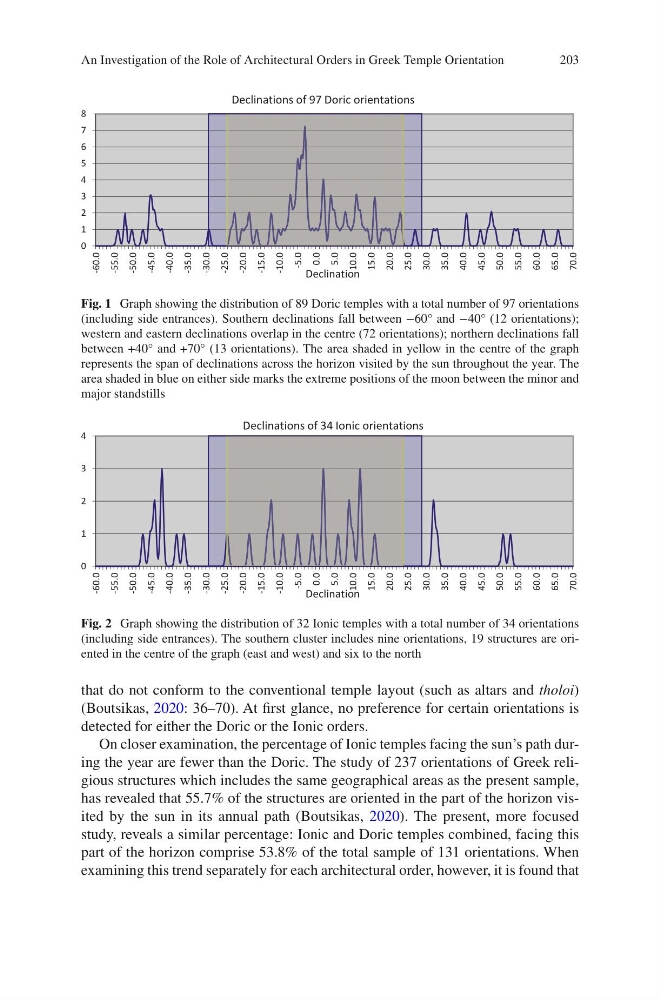
Fig. 1 Graph showing the distribution of 89 Doric temples with a total number of 97 orientations
(including side entrances). Southern declinations fall between −60° and −40° (12 orientations);
western and eastern declinations overlap in the centre (72 orientations); northern declinations fall
between +40° and +70° (13 orientations). The area shaded in yellow in the centre of the graph
represents the span of declinations across the horizon visited by the sun throughout the year. The
area shaded in blue on either side marks the extreme positions of the moon between the minor and
major standstills
0
1
2
3
4
-60.0
-55.0
-50.0
-45.0
-40.0
-35.0
-30.0
-25.0
-20.0
-15.0
-10.0
-5.0
0.0
5.0
10.0
15.0
20.0
25.0
30.0
35.0
40.0
45.0
50.0
55.0
60.0
65.0
70.0
Declination
Declinations of 34 Ionic orientations
Fig. 2 Graph showing the distribution of 32 Ionic temples with a total number of 34 orientations
(including side entrances). The southern cluster includes nine orientations, 19 structures are oriented in the centre of the graph (east and west) and six to the north
An Investigation of the Role of Architectural Orders in Greek Temple Orientation
that do not conform to the conventional temple layout (such as altars and tholoi)
(Boutsikas, 2020: 36–70). At first glance, no preference for certain orientations is
detected for either the Doric or the Ionic orders.
On closer examination, the percentage of Ionic temples facing the sun’s path during the year are fewer than the Doric. The study of 237 orientations of Greek religious structures which includes the same geographical areas as the present sample,
has revealed that 55.7% of the structures are oriented in the part of the horizon visited by the sun in its annual path (Boutsikas, 2020). The present, more focused
study, reveals a similar percentage: Ionic and Doric temples combined, facing this
part of the horizon comprise 53.8% of the total sample of 131 orientations. When
examining this trend separately for each architectural order, however, it is found that
0
1
2
3
4
5
6
7
8
-60.0
-55.0
-50.0
-45.0
-40.0
-35.0
-30.0
-25.0
-20.0
-15.0
-10.0
-5.0
0.0
5.0
10.0
15.0
20.0
25.0
30.0
35.0
40.0
45.0
50.0
55.0
60.0
65.0
70.0
Declination
Declinations of 97 Doric orientations
Fig. 1 Graph showing the distribution of 89 Doric temples with a total number of 97 orientations
(including side entrances). Southern declinations fall between −60° and −40° (12 orientations);
western and eastern declinations overlap in the centre (72 orientations); northern declinations fall
between +40° and +70° (13 orientations). The area shaded in yellow in the centre of the graph
represents the span of declinations across the horizon visited by the sun throughout the year. The
area shaded in blue on either side marks the extreme positions of the moon between the minor and
major standstills
0
1
2
3
4
-60.0
-55.0
-50.0
-45.0
-40.0
-35.0
-30.0
-25.0
-20.0
-15.0
-10.0
-5.0
0.0
5.0
10.0
15.0
20.0
25.0
30.0
35.0
40.0
45.0
50.0
55.0
60.0
65.0
70.0
Declination
Declinations of 34 Ionic orientations
Fig. 2 Graph showing the distribution of 32 Ionic temples with a total number of 34 orientations
(including side entrances). The southern cluster includes nine orientations, 19 structures are oriented in the centre of the graph (east and west) and six to the north
An Investigation of the Role of Architectural Orders in Greek Temple Orientation