

4
sites (Ruggles, 2015b: 97), he described this concern as lying “at the heart of
archaeoastronomical methodology and interpretation”. As he saw it, “[E]stablishing
the credibility of the archaeoastronomical interpretations is crucial to any assessment of their value”. In a more general presentation, rather than stressing a dichotomy between rival approaches, he proposed that the central issue remains “how best
… to interpret purely archaeological data (where only this is available) as opposed
to how best to integrate diverse types of data (in other cases) in order to identify the
most credible interpretations” (Ruggles, 2015a: 355).
1 The Equinoxes
In 1996, about the time of the spring equinox, Clive participated in an archaeological conference on Science and Stonehenge, organised by the British Academy. His
paper, an overview of the astronomy of Stonehenge, began with an introduction to
the conceptual framework of prehistoric astronomy (Ruggles, 1997a: 205–212). He
outlined for his audience the “recipe book”, commonly consisting of the solstices,
the lunar standstills, and in some cases, the equinoxes, which had frequently been
used in archaeoastronomical investigations. He questioned whether the lunar standstills and the equinoxes have any meaning outside the framework of “modern western science and its precursors”. He suggested various ways in which prehistoric
people may have observed and conceptualized the equinoxes, yet stressed the
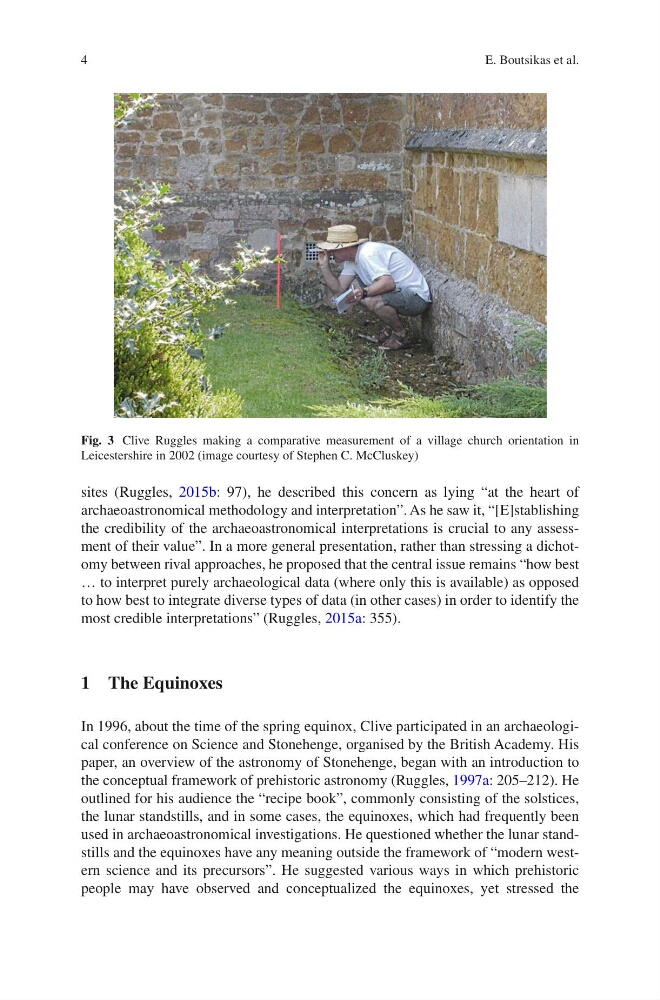
Fig. 3 Clive Ruggles making a comparative measurement of a village church orientation in
Leicestershire in 2002 (image courtesy of Stephen C. McCluskey)
E. Boutsikas et al.
sites (Ruggles, 2015b: 97), he described this concern as lying “at the heart of
archaeoastronomical methodology and interpretation”. As he saw it, “[E]stablishing
the credibility of the archaeoastronomical interpretations is crucial to any assessment of their value”. In a more general presentation, rather than stressing a dichotomy between rival approaches, he proposed that the central issue remains “how best
… to interpret purely archaeological data (where only this is available) as opposed
to how best to integrate diverse types of data (in other cases) in order to identify the
most credible interpretations” (Ruggles, 2015a: 355).
1 The Equinoxes
In 1996, about the time of the spring equinox, Clive participated in an archaeological conference on Science and Stonehenge, organised by the British Academy. His
paper, an overview of the astronomy of Stonehenge, began with an introduction to
the conceptual framework of prehistoric astronomy (Ruggles, 1997a: 205–212). He
outlined for his audience the “recipe book”, commonly consisting of the solstices,
the lunar standstills, and in some cases, the equinoxes, which had frequently been
used in archaeoastronomical investigations. He questioned whether the lunar standstills and the equinoxes have any meaning outside the framework of “modern western science and its precursors”. He suggested various ways in which prehistoric
people may have observed and conceptualized the equinoxes, yet stressed the
Fig. 3 Clive Ruggles making a comparative measurement of a village church orientation in
Leicestershire in 2002 (image courtesy of Stephen C. McCluskey)
E. Boutsikas et al.