

85
5.3 Applying Integral Approach to Environmental
Leadership Education
5.3.1 Oasis Unit in Northwestern Arid China
The Heihe River basin in arid northwestern China is an excellent area for fi eldwork
participants to consider how sustainable development could be achieved in dryland
regions under severe water resources constraints. APIEL chose this river basin
specifi cally as a target area for fi eld exercise for the following two reasons.
First, sustainable development in dryland regions is an inevitable, current world
challenge. It is associated with water security as well as food security around the
world. Today, irrigated agricultural land makes up less than one-fi fth of the total
cultivated area in the world but produces about two-fi fths of the world’s food [ 17 ].
Irrigation farming, to a great extent, contributed to the increase in food production
in the twentieth century and continues to support large numbers in an increasing
population. However, food production relying on the “irrigation miracle” gives
Interior
Exterior
Individual
Collective
Upper Left Quadrant
Subjective: Personal, Intentional
Upper Right Quadrant
Objective: Physical, Behavioral
Lower Left Quadrant
Inter-Subjective: Cultural
Lower Right Quadrant
Inter-Objective: Social, Systemic
What we do?
Decision-making processes, collective
action (practice of shared values and
vision); comprehensive solutions and
information dissemination
What We experience?
Shared values and vision; interpersonal
dynamics; team learning
What I do?
Personal action (practice of personal
values and vision); personal skills
What I experience?
Personal values and vision; personal
commitment; self-development
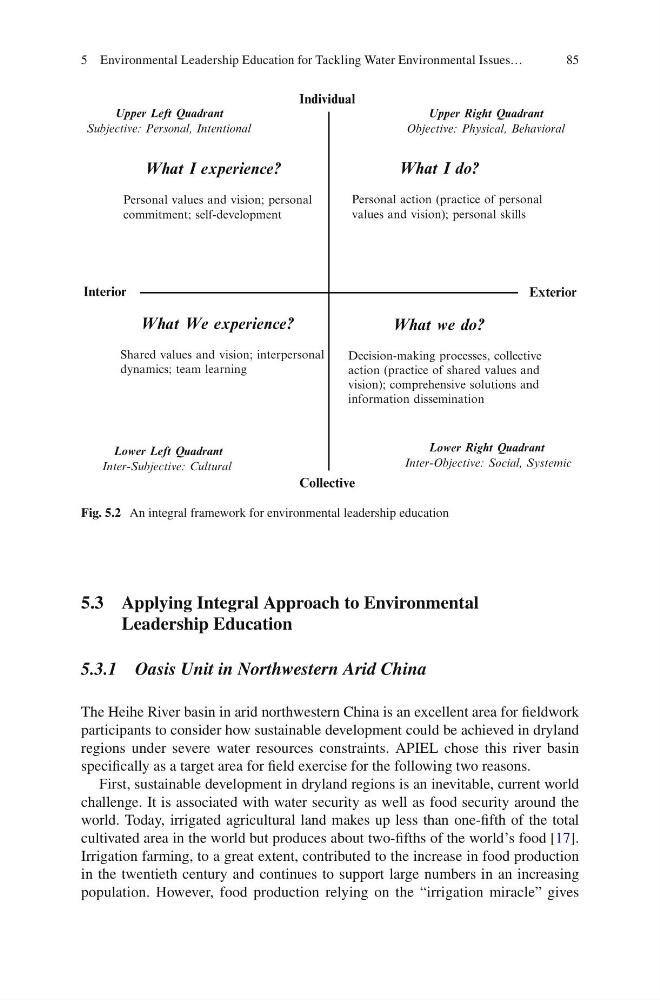
Fig. 5.2 An integral framework for environmental leadership education
5 Environmental Leadership Education for Tackling Water Environmental Issues…
5.3 Applying Integral Approach to Environmental
Leadership Education
5.3.1 Oasis Unit in Northwestern Arid China
The Heihe River basin in arid northwestern China is an excellent area for fi eldwork
participants to consider how sustainable development could be achieved in dryland
regions under severe water resources constraints. APIEL chose this river basin
specifi cally as a target area for fi eld exercise for the following two reasons.
First, sustainable development in dryland regions is an inevitable, current world
challenge. It is associated with water security as well as food security around the
world. Today, irrigated agricultural land makes up less than one-fi fth of the total
cultivated area in the world but produces about two-fi fths of the world’s food [ 17 ].
Irrigation farming, to a great extent, contributed to the increase in food production
in the twentieth century and continues to support large numbers in an increasing
population. However, food production relying on the “irrigation miracle” gives
Interior
Exterior
Individual
Collective
Upper Left Quadrant
Subjective: Personal, Intentional
Upper Right Quadrant
Objective: Physical, Behavioral
Lower Left Quadrant
Inter-Subjective: Cultural
Lower Right Quadrant
Inter-Objective: Social, Systemic
What we do?
Decision-making processes, collective
action (practice of shared values and
vision); comprehensive solutions and
information dissemination
What We experience?
Shared values and vision; interpersonal
dynamics; team learning
What I do?
Personal action (practice of personal
values and vision); personal skills
What I experience?
Personal values and vision; personal
commitment; self-development
Fig. 5.2 An integral framework for environmental leadership education
5 Environmental Leadership Education for Tackling Water Environmental Issues…