

84
advantages of adopting the approach to their projects [ 13 ]. At the local level, this
approach has also been used in community development projects such as the one
in the San Juan del Gozo community in El Salvador [ 14 ]. In the fi eld of education, the approach has also proved useful for curriculum development: see, for
example, Gidleya and Hampson [ 15 ], Lloyd [ 16 ] and Akiyama et al. [ 1 ]. Drawing
upon these practices, we designed the fi eld exercise following the four quadrant
framework presented in Fig. 5.2 .
In Fig. 5.2 , “I” (or “we”) refer to the participant(s) in the fi eld exercise. This
framework helps us to design a fi eld exercise. First, it requires the fi eld exercise
design to foster self-development through personal learning as well as group work,
collaboration and communication with the different stakeholders. Second, it
requires the fi eld exercise design to lead to the common conclusions of all participants, as well as to accommodate their individual views. Therefore, the fi eld exercise
should provide enough time and resources for the participants to reach a consensus
and to set clear shared goals from the beginning, while also allowing for individual
points of view.
Interior
Exterior
Individual
Collective
Upper Left Quadrant
Subjective: Personal, Intentional
Upper Right Quadrant
Objective: Physical, Behavioral
Lower Left Quadrant
Inter-Subjective: Cultural
Lower Right Quadrant
Inter-Objective: Social, Systemic
Culture nurtured in the adaption to water
environment
Shared worldview
Hydrological process
Quantity & quality of water
Water facilities
Water-use technology
Water creed (water omnipresence etc.)
Personal values (perceptions)
Water use & water management
systems
Ways of production
Policies and implementation
processes
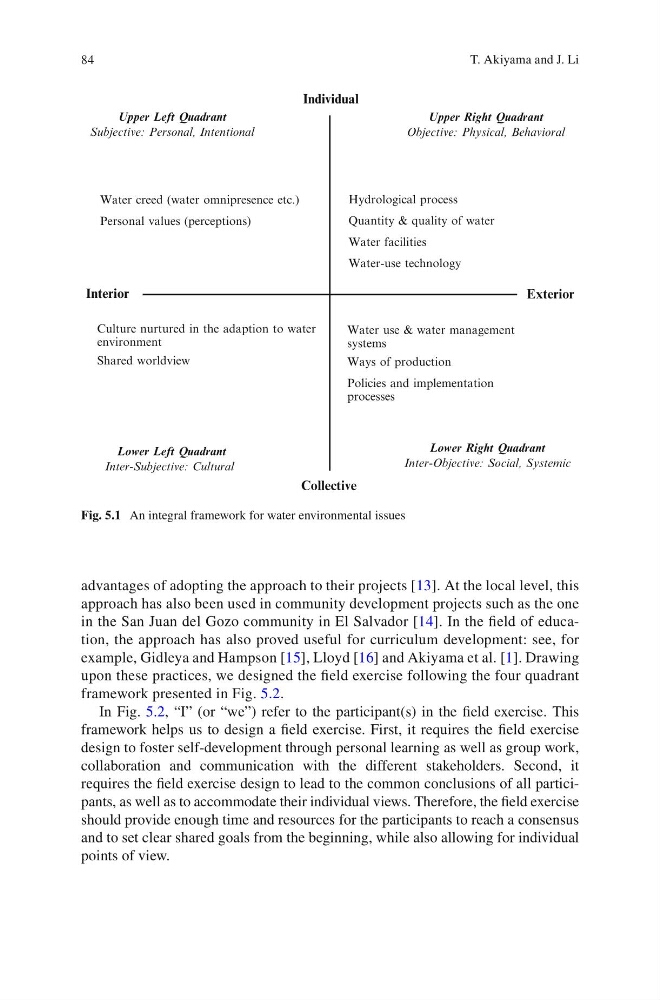
Fig. 5.1 An integral framework for water environmental issues
T. Akiyama and J. Li
advantages of adopting the approach to their projects [ 13 ]. At the local level, this
approach has also been used in community development projects such as the one
in the San Juan del Gozo community in El Salvador [ 14 ]. In the fi eld of education, the approach has also proved useful for curriculum development: see, for
example, Gidleya and Hampson [ 15 ], Lloyd [ 16 ] and Akiyama et al. [ 1 ]. Drawing
upon these practices, we designed the fi eld exercise following the four quadrant
framework presented in Fig. 5.2 .
In Fig. 5.2 , “I” (or “we”) refer to the participant(s) in the fi eld exercise. This
framework helps us to design a fi eld exercise. First, it requires the fi eld exercise
design to foster self-development through personal learning as well as group work,
collaboration and communication with the different stakeholders. Second, it
requires the fi eld exercise design to lead to the common conclusions of all participants, as well as to accommodate their individual views. Therefore, the fi eld exercise
should provide enough time and resources for the participants to reach a consensus
and to set clear shared goals from the beginning, while also allowing for individual
points of view.
Interior
Exterior
Individual
Collective
Upper Left Quadrant
Subjective: Personal, Intentional
Upper Right Quadrant
Objective: Physical, Behavioral
Lower Left Quadrant
Inter-Subjective: Cultural
Lower Right Quadrant
Inter-Objective: Social, Systemic
Culture nurtured in the adaption to water
environment
Shared worldview
Hydrological process
Quantity & quality of water
Water facilities
Water-use technology
Water creed (water omnipresence etc.)
Personal values (perceptions)
Water use & water management
systems
Ways of production
Policies and implementation
processes
Fig. 5.1 An integral framework for water environmental issues
T. Akiyama and J. Li