

69
from the two cases in 2009 and 2011, which employed two different approaches
to the group work.
2. In order to improve the unit design and implementation, questionnaire surveys of
involved faculty members were conducted to ask strengths and weaknesses.
3. Effects of the unit participation on leadership development in students were
examined through feedback comments from the students themselves.
4.3 Implementation of the Thailand Unit
Factual information on the unit implementation is presented in this subsection,
including participants’ background as well as the fi eld program schedules.
4.3.1 Participants
Participants of the unit in 2009 were six students from UT, six AIT students, and fi ve
KU students. In 2011, fi ve UT students, fi ve AIT students, and fi ve KU students participated. Their genders and nationality are shown in Table 4.2 .
Academic backgrounds of participants were different in 2009 and 2011. In 2009,
the students from Thai counterpart were only from the discipline of environmental
engineering. To further diversify the group, in 2011; Thai local counterparts
expanded their student backgrounds to come from all the disciplines in AIT and
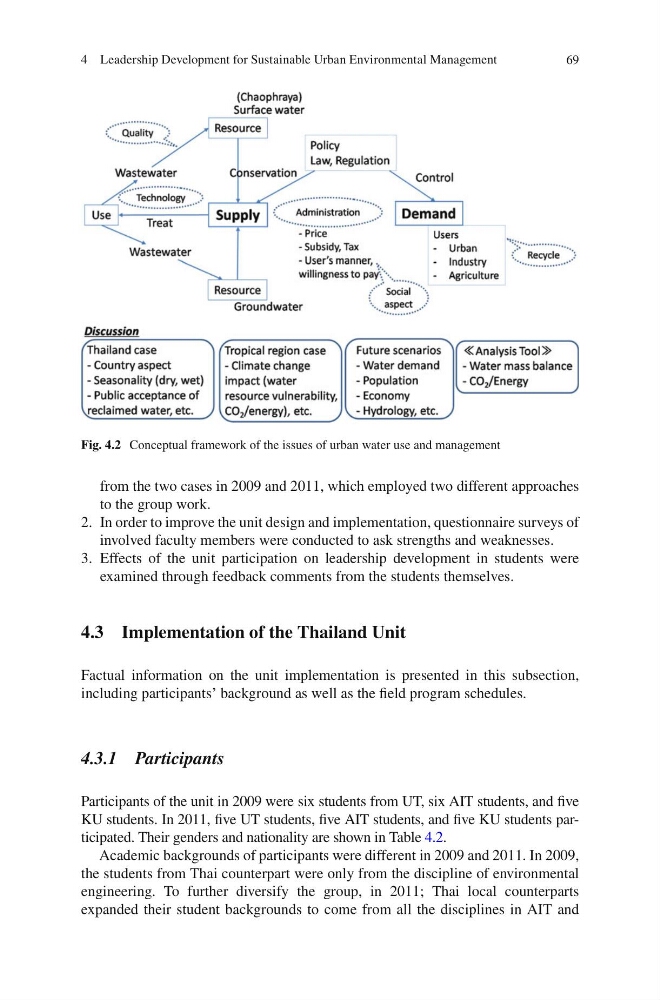
Fig. 4.2 Conceptual framework of the issues of urban water use and management
4 Leadership Development for Sustainable Urban Environmental Management
from the two cases in 2009 and 2011, which employed two different approaches
to the group work.
2. In order to improve the unit design and implementation, questionnaire surveys of
involved faculty members were conducted to ask strengths and weaknesses.
3. Effects of the unit participation on leadership development in students were
examined through feedback comments from the students themselves.
4.3 Implementation of the Thailand Unit
Factual information on the unit implementation is presented in this subsection,
including participants’ background as well as the fi eld program schedules.
4.3.1 Participants
Participants of the unit in 2009 were six students from UT, six AIT students, and fi ve
KU students. In 2011, fi ve UT students, fi ve AIT students, and fi ve KU students participated. Their genders and nationality are shown in Table 4.2 .
Academic backgrounds of participants were different in 2009 and 2011. In 2009,
the students from Thai counterpart were only from the discipline of environmental
engineering. To further diversify the group, in 2011; Thai local counterparts
expanded their student backgrounds to come from all the disciplines in AIT and
Fig. 4.2 Conceptual framework of the issues of urban water use and management
4 Leadership Development for Sustainable Urban Environmental Management