

56
M. A. Espinosa-Hernandez et al.
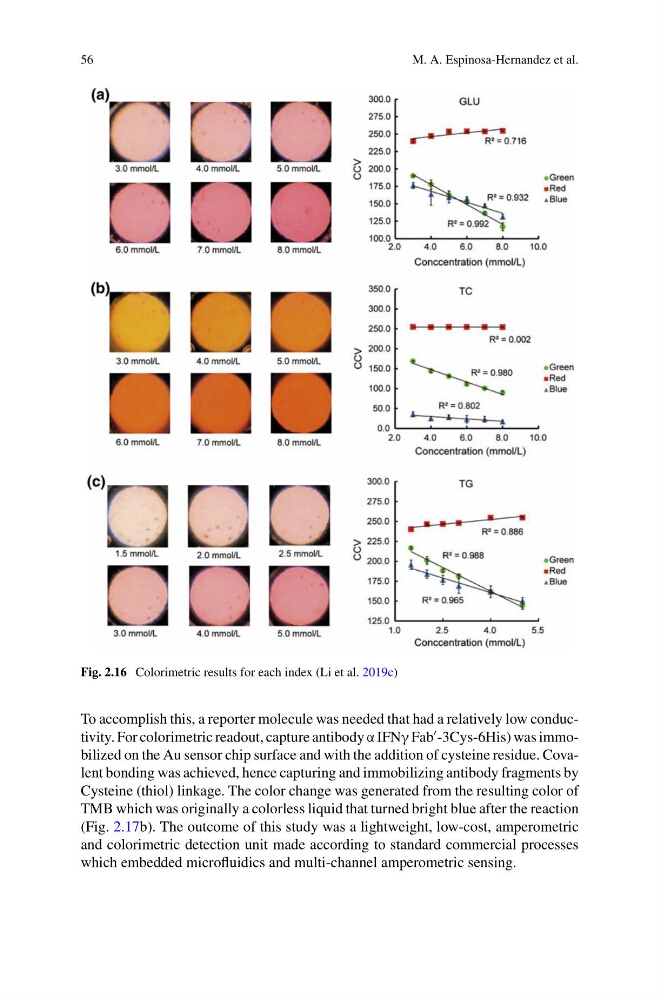
Fig. 2.16 Colorimetric results for each index (Li et al. 2019c)
To accomplish this, a reporter molecule was needed that had a relatively low conductivity. For colorimetric readout, capture antibody α IFNγ Fab
-3Cys-6His) was immobilized on the Au sensor chip surface and with the addition of cysteine residue. Covalent bonding was achieved, hence capturing and immobilizing antibody fragments by
Cysteine (thiol) linkage. The color change was generated from the resulting color of
TMB which was originally a colorless liquid that turned bright blue after the reaction
(Fig. 2.17b). The outcome of this study was a lightweight, low-cost, amperometric
and colorimetric detection unit made according to standard commercial processes
which embedded microfluidics and multi-channel amperometric sensing.
M. A. Espinosa-Hernandez et al.
Fig. 2.16 Colorimetric results for each index (Li et al. 2019c)
To accomplish this, a reporter molecule was needed that had a relatively low conductivity. For colorimetric readout, capture antibody α IFNγ Fab
-3Cys-6His) was immobilized on the Au sensor chip surface and with the addition of cysteine residue. Covalent bonding was achieved, hence capturing and immobilizing antibody fragments by
Cysteine (thiol) linkage. The color change was generated from the resulting color of
TMB which was originally a colorless liquid that turned bright blue after the reaction
(Fig. 2.17b). The outcome of this study was a lightweight, low-cost, amperometric
and colorimetric detection unit made according to standard commercial processes
which embedded microfluidics and multi-channel amperometric sensing.