

174
A. S. Cerda-Kipper and S. Hosseini
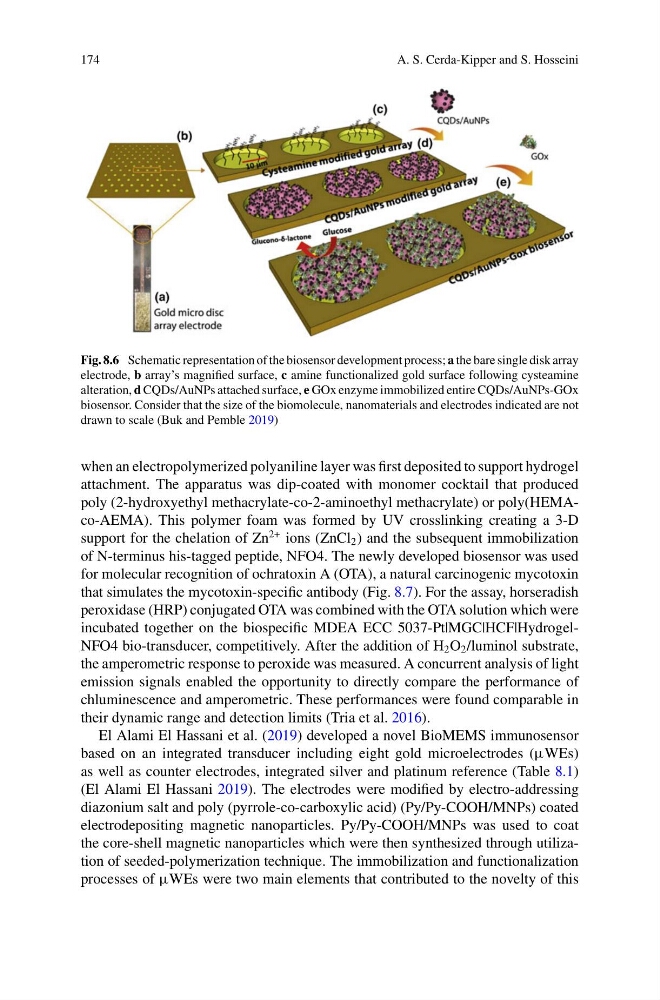
Fig. 8.6 Schematic representation of the biosensor development process; a the bare single disk array
electrode, b array’s magnified surface, c amine functionalized gold surface following cysteamine
alteration, d CQDs/AuNPs attached surface, e GOx enzyme immobilized entire CQDs/AuNPs-GOx
biosensor. Consider that the size of the biomolecule, nanomaterials and electrodes indicated are not
drawn to scale (Buk and Pemble 2019)
when an electropolymerized polyaniline layer was first deposited to support hydrogel
attachment. The apparatus was dip-coated with monomer cocktail that produced
poly (2-hydroxyethyl methacrylate-co-2-aminoethyl methacrylate) or poly(HEMAco-AEMA). This polymer foam was formed by UV crosslinking creating a 3-D
support for the chelation of Zn
2+ ions (ZnCl 2 ) and the subsequent immobilization
of N-terminus his-tagged peptide, NFO4. The newly developed biosensor was used
for molecular recognition of ochratoxin A (OTA), a natural carcinogenic mycotoxin
that simulates the mycotoxin-specific antibody (Fig. 8.7). For the assay, horseradish
peroxidase (HRP) conjugated OTA was combined with the OTA solution which were
incubated together on the biospecific MDEA ECC 5037-Pt|MGC|HCF|HydrogelNFO4 bio-transducer, competitively. After the addition of H 2 O 2 /luminol substrate,
the amperometric response to peroxide was measured. A concurrent analysis of light
emission signals enabled the opportunity to directly compare the performance of
chluminescence and amperometric. These performances were found comparable in
their dynamic range and detection limits (Tria et al. 2016).
El Alami El Hassani et al. (2019) developed a novel BioMEMS immunosensor
based on an integrated transducer including eight gold microelectrodes (µWEs)
as well as counter electrodes, integrated silver and platinum reference (Table 8.1)
(El Alami El Hassani 2019). The electrodes were modified by electro-addressing
diazonium salt and poly (pyrrole-co-carboxylic acid) (Py/Py-COOH/MNPs) coated
electrodepositing magnetic nanoparticles. Py/Py-COOH/MNPs was used to coat
the core-shell magnetic nanoparticles which were then synthesized through utilization of seeded-polymerization technique. The immobilization and functionalization
processes of µWEs were two main elements that contributed to the novelty of this
A. S. Cerda-Kipper and S. Hosseini
Fig. 8.6 Schematic representation of the biosensor development process; a the bare single disk array
electrode, b array’s magnified surface, c amine functionalized gold surface following cysteamine
alteration, d CQDs/AuNPs attached surface, e GOx enzyme immobilized entire CQDs/AuNPs-GOx
biosensor. Consider that the size of the biomolecule, nanomaterials and electrodes indicated are not
drawn to scale (Buk and Pemble 2019)
when an electropolymerized polyaniline layer was first deposited to support hydrogel
attachment. The apparatus was dip-coated with monomer cocktail that produced
poly (2-hydroxyethyl methacrylate-co-2-aminoethyl methacrylate) or poly(HEMAco-AEMA). This polymer foam was formed by UV crosslinking creating a 3-D
support for the chelation of Zn
2+ ions (ZnCl 2 ) and the subsequent immobilization
of N-terminus his-tagged peptide, NFO4. The newly developed biosensor was used
for molecular recognition of ochratoxin A (OTA), a natural carcinogenic mycotoxin
that simulates the mycotoxin-specific antibody (Fig. 8.7). For the assay, horseradish
peroxidase (HRP) conjugated OTA was combined with the OTA solution which were
incubated together on the biospecific MDEA ECC 5037-Pt|MGC|HCF|HydrogelNFO4 bio-transducer, competitively. After the addition of H 2 O 2 /luminol substrate,
the amperometric response to peroxide was measured. A concurrent analysis of light
emission signals enabled the opportunity to directly compare the performance of
chluminescence and amperometric. These performances were found comparable in
their dynamic range and detection limits (Tria et al. 2016).
El Alami El Hassani et al. (2019) developed a novel BioMEMS immunosensor
based on an integrated transducer including eight gold microelectrodes (µWEs)
as well as counter electrodes, integrated silver and platinum reference (Table 8.1)
(El Alami El Hassani 2019). The electrodes were modified by electro-addressing
diazonium salt and poly (pyrrole-co-carboxylic acid) (Py/Py-COOH/MNPs) coated
electrodepositing magnetic nanoparticles. Py/Py-COOH/MNPs was used to coat
the core-shell magnetic nanoparticles which were then synthesized through utilization of seeded-polymerization technique. The immobilization and functionalization
processes of µWEs were two main elements that contributed to the novelty of this