

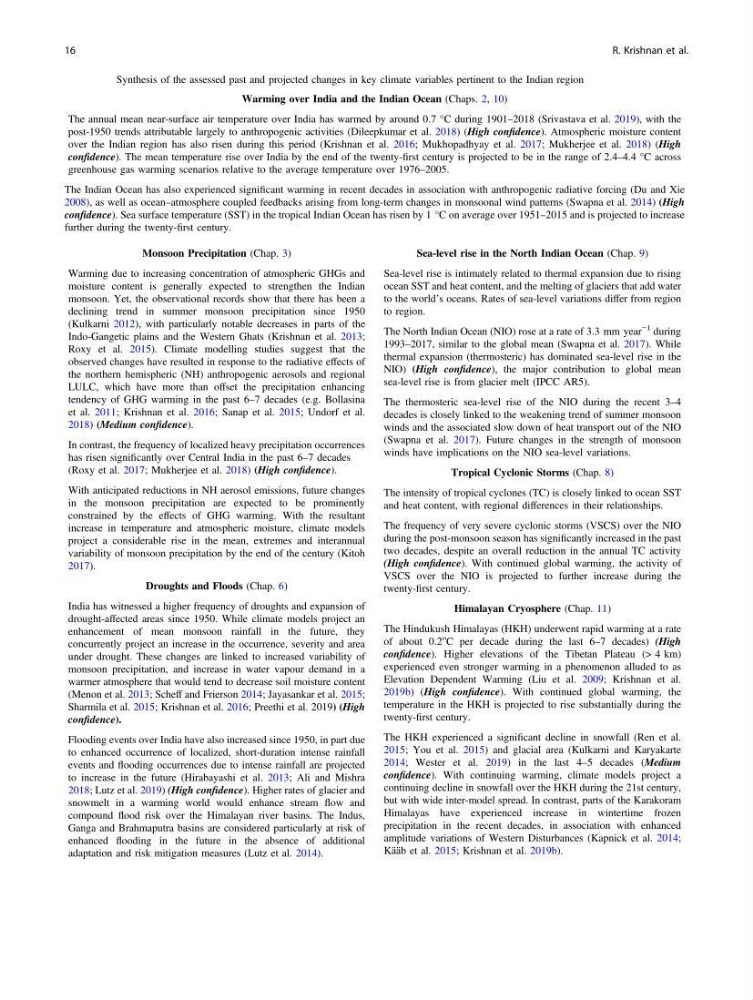
Table 1.5 Synthesis of the assessed past and projected changes in key climate variables pertinent to the Indian region
Warming over India and the Indian Ocean (Chaps. 2, 10)
The annual mean near-surface air temperature over India has warmed by around 0.7 °C during 1901–2018 (Srivastava et al. 2019), with the
post-1950 trends attributable largely to anthropogenic activities (Dileepkumar et al. 2018) (High confidence). Atmospheric moisture content
over the Indian region has also risen during this period (Krishnan et al. 2016; Mukhopadhyay et al. 2017; Mukherjee et al. 2018) (High
confidence). The mean temperature rise over India by the end of the twenty-first century is projected to be in the range of 2.4–4.4 °C across
greenhouse gas warming scenarios relative to the average temperature over 1976–2005.
The Indian Ocean has also experienced significant warming in recent decades in association with anthropogenic radiative forcing (Du and Xie
2008), as well as ocean–atmosphere coupled feedbacks arising from long-term changes in monsoonal wind patterns (Swapna et al. 2014) (High
confidence). Sea surface temperature (SST) in the tropical Indian Ocean has risen by 1 °C on average over 1951–2015 and is projected to increase
further during the twenty-first century.
Monsoon Precipitation (Chap. 3)
Warming due to increasing concentration of atmospheric GHGs and
moisture content is generally expected to strengthen the Indian
monsoon. Yet, the observational records show that there has been a
declining trend in summer monsoon precipitation since 1950
(Kulkarni 2012), with particularly notable decreases in parts of the
Indo-Gangetic plains and the Western Ghats (Krishnan et al. 2013;
Roxy et al. 2015). Climate modelling studies suggest that the
observed changes have resulted in response to the radiative effects of
the northern hemispheric (NH) anthropogenic aerosols and regional
LULC, which have more than offset the precipitation enhancing
tendency of GHG warming in the past 6–7 decades (e.g. Bollasina
et al. 2011; Krishnan et al. 2016; Sanap et al. 2015; Undorf et al.
2018) (Medium confidence).
In contrast, the frequency of localized heavy precipitation occurrences
has risen significantly over Central India in the past 6–7 decades
(Roxy et al. 2017; Mukherjee et al. 2018) (High confidence).
With anticipated reductions in NH aerosol emissions, future changes
in the monsoon precipitation are expected to be prominently
constrained by the effects of GHG warming. With the resultant
increase in temperature and atmospheric moisture, climate models
project a considerable rise in the mean, extremes and interannual
variability of monsoon precipitation by the end of the century (Kitoh
2017).
Droughts and Floods (Chap. 6)
India has witnessed a higher frequency of droughts and expansion of
drought-affected areas since 1950. While climate models project an
enhancement of mean monsoon rainfall in the future, they
concurrently project an increase in the occurrence, severity and area
under drought. These changes are linked to increased variability of
monsoon precipitation, and increase in water vapour demand in a
warmer atmosphere that would tend to decrease soil moisture content
(Menon et al. 2013; Scheff and Frierson 2014; Jayasankar et al. 2015;
Sharmila et al. 2015; Krishnan et al. 2016; Preethi et al. 2019) (High
confidence).
Flooding events over India have also increased since 1950, in part due
to enhanced occurrence of localized, short-duration intense rainfall
events and flooding occurrences due to intense rainfall are projected
to increase in the future (Hirabayashi et al. 2013; Ali and Mishra
2018; Lutz et al. 2019) (High confidence). Higher rates of glacier and
snowmelt in a warming world would enhance stream flow and
compound flood risk over the Himalayan river basins. The Indus,
Ganga and Brahmaputra basins are considered particularly at risk of
enhanced flooding in the future in the absence of additional
adaptation and risk mitigation measures (Lutz et al. 2014).
Sea-level rise in the North Indian Ocean (Chap. 9)
Sea-level rise is intimately related to thermal expansion due to rising
ocean SST and heat content, and the melting of glaciers that add water
to the world’s oceans. Rates of sea-level variations differ from region
to region.
The North Indian Ocean (NIO) rose at a rate of 3.3 mm year
−1 during
1993–2017, similar to the global mean (Swapna et al. 2017). While
thermal expansion (thermosteric) has dominated sea-level rise in the
NIO) (High confidence), the major contribution to global mean
sea-level rise is from glacier melt (IPCC AR5).
The thermosteric sea-level rise of the NIO during the recent 3–4
decades is closely linked to the weakening trend of summer monsoon
winds and the associated slow down of heat transport out of the NIO
(Swapna et al. 2017). Future changes in the strength of monsoon
winds have implications on the NIO sea-level variations.
Tropical Cyclonic Storms (Chap. 8)
The intensity of tropical cyclones (TC) is closely linked to ocean SST
and heat content, with regional differences in their relationships.
The frequency of very severe cyclonic storms (VSCS) over the NIO
during the post-monsoon season has significantly increased in the past
two decades, despite an overall reduction in the annual TC activity
(High confidence). With continued global warming, the activity of
VSCS over the NIO is projected to further increase during the
twenty-first century.
Himalayan Cryosphere (Chap. 11)
The Hindukush Himalayas (HKH) underwent rapid warming at a rate
of about 0.2
o
C per decade during the last 6–7 decades) (High
confidence). Higher elevations of the Tibetan Plateau (> 4 km)
experienced even stronger warming in a phenomenon alluded to as
Elevation Dependent Warming (Liu et al. 2009; Krishnan et al.
2019b) (High confidence). With continued global warming, the
temperature in the HKH is projected to rise substantially during the
twenty-first century.
The HKH experienced a significant decline in snowfall (Ren et al.
2015; You et al. 2015) and glacial area (Kulkarni and Karyakarte
2014; Wester et al. 2019) in the last 4–5 decades (Medium
confidence). With continuing warming, climate models project a
continuing decline in snowfall over the HKH during the 21st century,
but with wide inter-model spread. In contrast, parts of the Karakoram
Himalayas have experienced increase in wintertime frozen
precipitation in the recent decades, in association with enhanced
amplitude variations of Western Disturbances (Kapnick et al. 2014;
Kääb et al. 2015; Krishnan et al. 2019b).
16
R. Krishnan et al.
Warming over India and the Indian Ocean (Chaps. 2, 10)
The annual mean near-surface air temperature over India has warmed by around 0.7 °C during 1901–2018 (Srivastava et al. 2019), with the
post-1950 trends attributable largely to anthropogenic activities (Dileepkumar et al. 2018) (High confidence). Atmospheric moisture content
over the Indian region has also risen during this period (Krishnan et al. 2016; Mukhopadhyay et al. 2017; Mukherjee et al. 2018) (High
confidence). The mean temperature rise over India by the end of the twenty-first century is projected to be in the range of 2.4–4.4 °C across
greenhouse gas warming scenarios relative to the average temperature over 1976–2005.
The Indian Ocean has also experienced significant warming in recent decades in association with anthropogenic radiative forcing (Du and Xie
2008), as well as ocean–atmosphere coupled feedbacks arising from long-term changes in monsoonal wind patterns (Swapna et al. 2014) (High
confidence). Sea surface temperature (SST) in the tropical Indian Ocean has risen by 1 °C on average over 1951–2015 and is projected to increase
further during the twenty-first century.
Monsoon Precipitation (Chap. 3)
Warming due to increasing concentration of atmospheric GHGs and
moisture content is generally expected to strengthen the Indian
monsoon. Yet, the observational records show that there has been a
declining trend in summer monsoon precipitation since 1950
(Kulkarni 2012), with particularly notable decreases in parts of the
Indo-Gangetic plains and the Western Ghats (Krishnan et al. 2013;
Roxy et al. 2015). Climate modelling studies suggest that the
observed changes have resulted in response to the radiative effects of
the northern hemispheric (NH) anthropogenic aerosols and regional
LULC, which have more than offset the precipitation enhancing
tendency of GHG warming in the past 6–7 decades (e.g. Bollasina
et al. 2011; Krishnan et al. 2016; Sanap et al. 2015; Undorf et al.
2018) (Medium confidence).
In contrast, the frequency of localized heavy precipitation occurrences
has risen significantly over Central India in the past 6–7 decades
(Roxy et al. 2017; Mukherjee et al. 2018) (High confidence).
With anticipated reductions in NH aerosol emissions, future changes
in the monsoon precipitation are expected to be prominently
constrained by the effects of GHG warming. With the resultant
increase in temperature and atmospheric moisture, climate models
project a considerable rise in the mean, extremes and interannual
variability of monsoon precipitation by the end of the century (Kitoh
2017).
Droughts and Floods (Chap. 6)
India has witnessed a higher frequency of droughts and expansion of
drought-affected areas since 1950. While climate models project an
enhancement of mean monsoon rainfall in the future, they
concurrently project an increase in the occurrence, severity and area
under drought. These changes are linked to increased variability of
monsoon precipitation, and increase in water vapour demand in a
warmer atmosphere that would tend to decrease soil moisture content
(Menon et al. 2013; Scheff and Frierson 2014; Jayasankar et al. 2015;
Sharmila et al. 2015; Krishnan et al. 2016; Preethi et al. 2019) (High
confidence).
Flooding events over India have also increased since 1950, in part due
to enhanced occurrence of localized, short-duration intense rainfall
events and flooding occurrences due to intense rainfall are projected
to increase in the future (Hirabayashi et al. 2013; Ali and Mishra
2018; Lutz et al. 2019) (High confidence). Higher rates of glacier and
snowmelt in a warming world would enhance stream flow and
compound flood risk over the Himalayan river basins. The Indus,
Ganga and Brahmaputra basins are considered particularly at risk of
enhanced flooding in the future in the absence of additional
adaptation and risk mitigation measures (Lutz et al. 2014).
Sea-level rise in the North Indian Ocean (Chap. 9)
Sea-level rise is intimately related to thermal expansion due to rising
ocean SST and heat content, and the melting of glaciers that add water
to the world’s oceans. Rates of sea-level variations differ from region
to region.
The North Indian Ocean (NIO) rose at a rate of 3.3 mm year
−1 during
1993–2017, similar to the global mean (Swapna et al. 2017). While
thermal expansion (thermosteric) has dominated sea-level rise in the
NIO) (High confidence), the major contribution to global mean
sea-level rise is from glacier melt (IPCC AR5).
The thermosteric sea-level rise of the NIO during the recent 3–4
decades is closely linked to the weakening trend of summer monsoon
winds and the associated slow down of heat transport out of the NIO
(Swapna et al. 2017). Future changes in the strength of monsoon
winds have implications on the NIO sea-level variations.
Tropical Cyclonic Storms (Chap. 8)
The intensity of tropical cyclones (TC) is closely linked to ocean SST
and heat content, with regional differences in their relationships.
The frequency of very severe cyclonic storms (VSCS) over the NIO
during the post-monsoon season has significantly increased in the past
two decades, despite an overall reduction in the annual TC activity
(High confidence). With continued global warming, the activity of
VSCS over the NIO is projected to further increase during the
twenty-first century.
Himalayan Cryosphere (Chap. 11)
The Hindukush Himalayas (HKH) underwent rapid warming at a rate
of about 0.2
o
C per decade during the last 6–7 decades) (High
confidence). Higher elevations of the Tibetan Plateau (> 4 km)
experienced even stronger warming in a phenomenon alluded to as
Elevation Dependent Warming (Liu et al. 2009; Krishnan et al.
2019b) (High confidence). With continued global warming, the
temperature in the HKH is projected to rise substantially during the
twenty-first century.
The HKH experienced a significant decline in snowfall (Ren et al.
2015; You et al. 2015) and glacial area (Kulkarni and Karyakarte
2014; Wester et al. 2019) in the last 4–5 decades (Medium
confidence). With continuing warming, climate models project a
continuing decline in snowfall over the HKH during the 21st century,
but with wide inter-model spread. In contrast, parts of the Karakoram
Himalayas have experienced increase in wintertime frozen
precipitation in the recent decades, in association with enhanced
amplitude variations of Western Disturbances (Kapnick et al. 2014;
Kääb et al. 2015; Krishnan et al. 2019b).
16
R. Krishnan et al.