

largely attributed to the lack of past sea-level data in the
interior ocean especially prior to 1980. The international
venture of enhancing and sustaining the Indian Ocean
Observing System (IndOOS, Beal et al. 2019) aims to fill
those many knowledge gaps which arise mainly from lack of
long-term observations in the Indian Ocean.
9.7 Summary
One of the major consequences of warming of the global ocean
and the melting of ice and glaciers is the rise in mean sea level.
There is high confidence that sea level has been rising in the
global oceans as well as in the Indian Ocean. Over 90% of the
anthropogenic excess heat goes into the oceans (Church et al.
2013a, b), remaining goes into melting both terrestrial and sea
ice, and warming the atmosphere and land (Hansen et al. 2011;
Church et al. 2011b; Trenberth et al. 2014). As a result, global
mean sea level has risen by 1.7 (1.5–1.9) mm year
−1 since 1901
and the rate of rise has accelerated to 3.3 mm year
−1 since
1993. Sea-level rise in the Indian Ocean is non-uniform and the
rate of north Indian Ocean rise is 1.06–1.75 mm year
−1 from
1874 to 2004 and is 3.3 mm year
−1 in the recent decades
(1993–2015). Indian Ocean sea-level rise is distinct, dominated
by the thermal expansion, while mass contribution is the major
contributor to the GMSL rise. Steric sea level along the Indian
coast is likely to rise by about 20 to 30 cm at the end of the
twenty-first century and the corresponding estimate for global
mean steric sea-level rise is 18 ± 5 cm (relative to 1986–2005),
under RCP4.5 (for a mid-range emission scenario, excluding
ice-melt contributions). Considering the fact that coasts are
home to approximately 28% of the global population, including 11% living on land less than 10 m above sea level,
long-term sustained observations and continued modelling are
critical for detecting, understanding and predicting ocean and
cryosphere change, thus providing knowledge to inform risk
assessments and adaptation planning (IPCC, Special Report on
Ocean and Cryosphere in a Changing Climate).
References
Allison EH, Perry AL, Badjeck MC, Neil Adger W, Brown K,
Conway D, Halls AS, Pilling GM, Reynolds JD, Andrew NL,
Dulvy NK (2009) Vulnerability of national economies to the
impacts of climate change on fisheries. Fish Fish 10:173–196
Antony C, Unnikrishnan AS, Woodworth PL (2016) Evolution of
extreme high waters along the east coast of India and at the head of
the Bay of Bengal. Global Planet Change 140:59–67. https://doi.
org/10.1016/j.gloplacha.2016.03.008
Arns A, Wahl T, Haigh ID, Jensen J, Pattiaratchi C (2013) Estimating
extreme water level probabilities: a comparison of the direct
methods and recommendations for best practise. Coast Eng. https://
doi.org/10.1016/j.coastaleng.2013.07.003
Beal LM, Vialard J, Roxy MK and lead authors (2019) IndOOS-2: a
roadmap to sustained observations of the Indian Ocean for 2030.
CLIVAR-4/2019. https://doi.org/10.36071/clivar.rp.4-1.2019
Bindoff NL, Willebrand J, Cazenave A, Gregory J, Gulev S,
Hanawa K, Nojiri Y, Shum CK, Unnikrishnan A (2007) Observations: oceanic climate change and sea level. In: Climate change.
Contribution of working group I to the fourth assessment report of
the intergovernmental panel on climate change, pp 386–432
Carson M, Köhl A, Stammer D et al (2016) Coastal sea level changes,
observed and projected during the 20th and 21st century. Clim
Change 134:269–281. https://doi.org/10.1007/s10584-015-1520-1
Cazenave A, Remy F (2011) Sea level and climate: measurements and
causes of changes. WIREs Clim Change 2:647–662
Cheng L, Trenberth KE, Fasullo J, Boyer T, Abraham J, Zhu J (2017)
Improved estimates of ocean heat content from 1960 to 2015. Sci
Adv 3:e1601545. https://doi.org/10.1126/sciadv.1601545
Church JA, White NJ (2011) Sea-level rise from the late 19th to the
Early 21st Century. Surv Geophys 32(4–5):585–602. https://doi.
org/10.1007/s10712-011-9119-1
Church JA, Gregory JM, Huybrechts P, Kuhn M, Lambeck K,
Nhuan MT, Qin D, Woodworth PL (2001) Changes in sea level. In:
Houghton JT, Ding Y, Griggs DJ, Noguer M, van der Linden P,
Dai X, Maskell K, Johnson CI (eds) Climate change 2001: the
scientific basis. Contribution of working group 1 to the third
assessment report of the intergovernmental panel on climate change.
Cambridge University Press, Cambridge, pp 639–694
Church JA, Gregory JM, White NJ, Platten SM, Mitrovica JX (2011a)
Understanding and projecting sea-level change. Oceanography
24:130–143. https://doi.org/10.5670/oceanog.2011.33
Church JA, White NJ, Konikow LF, Domingues CM, Cogley JG,
Rignot E, Gregory JM, Vanden Broeke MR, Monaghan AJ,
Velicogna I (2011b) Revisiting the Earth’s sea-level and energy
budgets from 1961 to 2008. Geophys Res Lett 38:L18601. https://
doi.org/10.1029/2011GL048794
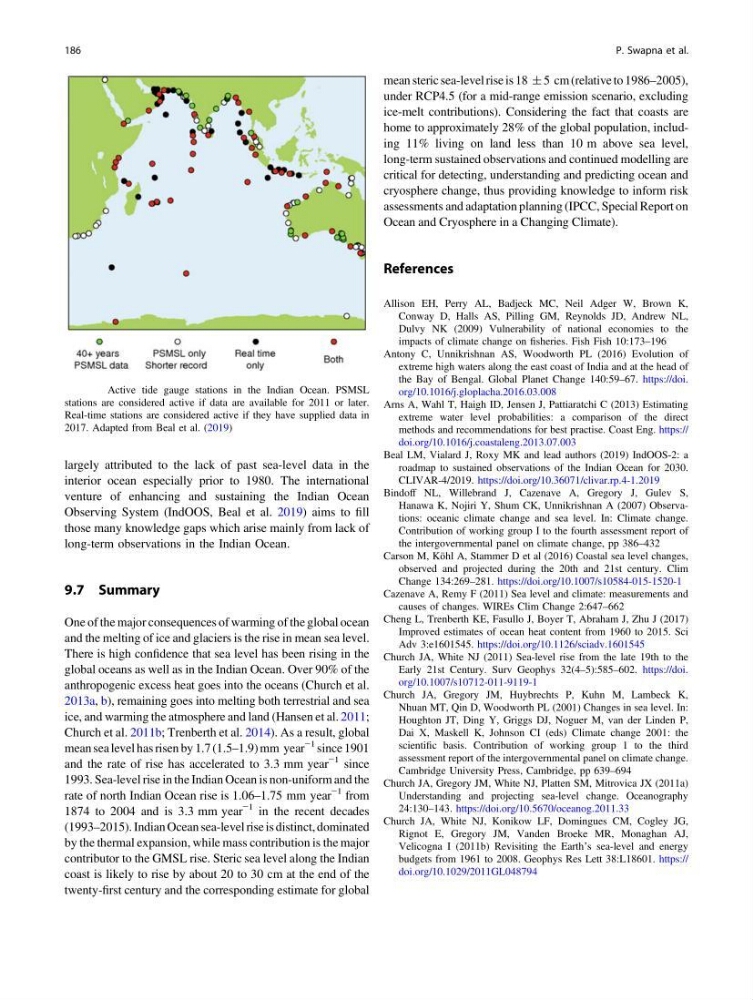
Fig. 9.6 Active tide gauge stations in the Indian Ocean. PSMSL
stations are considered active if data are available for 2011 or later.
Real-time stations are considered active if they have supplied data in
2017. Adapted from Beal et al. (2019)
186
P. Swapna et al.
interior ocean especially prior to 1980. The international
venture of enhancing and sustaining the Indian Ocean
Observing System (IndOOS, Beal et al. 2019) aims to fill
those many knowledge gaps which arise mainly from lack of
long-term observations in the Indian Ocean.
9.7 Summary
One of the major consequences of warming of the global ocean
and the melting of ice and glaciers is the rise in mean sea level.
There is high confidence that sea level has been rising in the
global oceans as well as in the Indian Ocean. Over 90% of the
anthropogenic excess heat goes into the oceans (Church et al.
2013a, b), remaining goes into melting both terrestrial and sea
ice, and warming the atmosphere and land (Hansen et al. 2011;
Church et al. 2011b; Trenberth et al. 2014). As a result, global
mean sea level has risen by 1.7 (1.5–1.9) mm year
−1 since 1901
and the rate of rise has accelerated to 3.3 mm year
−1 since
1993. Sea-level rise in the Indian Ocean is non-uniform and the
rate of north Indian Ocean rise is 1.06–1.75 mm year
−1 from
1874 to 2004 and is 3.3 mm year
−1 in the recent decades
(1993–2015). Indian Ocean sea-level rise is distinct, dominated
by the thermal expansion, while mass contribution is the major
contributor to the GMSL rise. Steric sea level along the Indian
coast is likely to rise by about 20 to 30 cm at the end of the
twenty-first century and the corresponding estimate for global
mean steric sea-level rise is 18 ± 5 cm (relative to 1986–2005),
under RCP4.5 (for a mid-range emission scenario, excluding
ice-melt contributions). Considering the fact that coasts are
home to approximately 28% of the global population, including 11% living on land less than 10 m above sea level,
long-term sustained observations and continued modelling are
critical for detecting, understanding and predicting ocean and
cryosphere change, thus providing knowledge to inform risk
assessments and adaptation planning (IPCC, Special Report on
Ocean and Cryosphere in a Changing Climate).
References
Allison EH, Perry AL, Badjeck MC, Neil Adger W, Brown K,
Conway D, Halls AS, Pilling GM, Reynolds JD, Andrew NL,
Dulvy NK (2009) Vulnerability of national economies to the
impacts of climate change on fisheries. Fish Fish 10:173–196
Antony C, Unnikrishnan AS, Woodworth PL (2016) Evolution of
extreme high waters along the east coast of India and at the head of
the Bay of Bengal. Global Planet Change 140:59–67. https://doi.
org/10.1016/j.gloplacha.2016.03.008
Arns A, Wahl T, Haigh ID, Jensen J, Pattiaratchi C (2013) Estimating
extreme water level probabilities: a comparison of the direct
methods and recommendations for best practise. Coast Eng. https://
doi.org/10.1016/j.coastaleng.2013.07.003
Beal LM, Vialard J, Roxy MK and lead authors (2019) IndOOS-2: a
roadmap to sustained observations of the Indian Ocean for 2030.
CLIVAR-4/2019. https://doi.org/10.36071/clivar.rp.4-1.2019
Bindoff NL, Willebrand J, Cazenave A, Gregory J, Gulev S,
Hanawa K, Nojiri Y, Shum CK, Unnikrishnan A (2007) Observations: oceanic climate change and sea level. In: Climate change.
Contribution of working group I to the fourth assessment report of
the intergovernmental panel on climate change, pp 386–432
Carson M, Köhl A, Stammer D et al (2016) Coastal sea level changes,
observed and projected during the 20th and 21st century. Clim
Change 134:269–281. https://doi.org/10.1007/s10584-015-1520-1
Cazenave A, Remy F (2011) Sea level and climate: measurements and
causes of changes. WIREs Clim Change 2:647–662
Cheng L, Trenberth KE, Fasullo J, Boyer T, Abraham J, Zhu J (2017)
Improved estimates of ocean heat content from 1960 to 2015. Sci
Adv 3:e1601545. https://doi.org/10.1126/sciadv.1601545
Church JA, White NJ (2011) Sea-level rise from the late 19th to the
Early 21st Century. Surv Geophys 32(4–5):585–602. https://doi.
org/10.1007/s10712-011-9119-1
Church JA, Gregory JM, Huybrechts P, Kuhn M, Lambeck K,
Nhuan MT, Qin D, Woodworth PL (2001) Changes in sea level. In:
Houghton JT, Ding Y, Griggs DJ, Noguer M, van der Linden P,
Dai X, Maskell K, Johnson CI (eds) Climate change 2001: the
scientific basis. Contribution of working group 1 to the third
assessment report of the intergovernmental panel on climate change.
Cambridge University Press, Cambridge, pp 639–694
Church JA, Gregory JM, White NJ, Platten SM, Mitrovica JX (2011a)
Understanding and projecting sea-level change. Oceanography
24:130–143. https://doi.org/10.5670/oceanog.2011.33
Church JA, White NJ, Konikow LF, Domingues CM, Cogley JG,
Rignot E, Gregory JM, Vanden Broeke MR, Monaghan AJ,
Velicogna I (2011b) Revisiting the Earth’s sea-level and energy
budgets from 1961 to 2008. Geophys Res Lett 38:L18601. https://
doi.org/10.1029/2011GL048794
Fig. 9.6 Active tide gauge stations in the Indian Ocean. PSMSL
stations are considered active if data are available for 2011 or later.
Real-time stations are considered active if they have supplied data in
2017. Adapted from Beal et al. (2019)
186
P. Swapna et al.