

(Kale 2012; Nandargi and Shelar 2018; Mirza 2011; Ali et al.
2019). Increase in extreme rainfall events (Goswami et al.
2006; Rajeevan et al. 2008; Guhathakurta et al. 2011), rate of
intensification of cyclones into severe cyclones (Niyas et al.
2009; Kishtawal et al. 2012; Chap. 8 on Extreme storms) and
prolonged breaks (Ramesh Kumar et al. 2009; Chap. 3 on
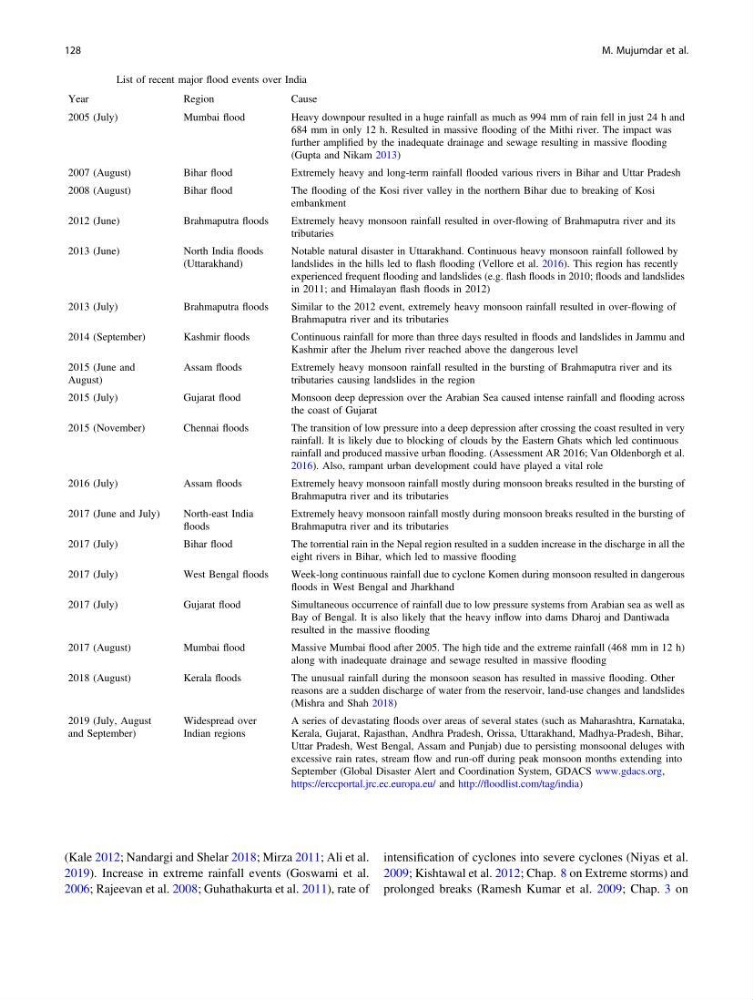
Table 6.4 List of recent major flood events over India
Year
Region
Cause
2005 (July)
Mumbai flood
Heavy downpour resulted in a huge rainfall as much as 994 mm of rain fell in just 24 h and
684 mm in only 12 h. Resulted in massive flooding of the Mithi river. The impact was
further amplified by the inadequate drainage and sewage resulting in massive flooding
(Gupta and Nikam 2013)
2007 (August)
Bihar flood
Extremely heavy and long-term rainfall flooded various rivers in Bihar and Uttar Pradesh
2008 (August)
Bihar flood
The flooding of the Kosi river valley in the northern Bihar due to breaking of Kosi
embankment
2012 (June)
Brahmaputra floods
Extremely heavy monsoon rainfall resulted in over-flowing of Brahmaputra river and its
tributaries
2013 (June)
North India floods
(Uttarakhand)
Notable natural disaster in Uttarakhand. Continuous heavy monsoon rainfall followed by
landslides in the hills led to flash flooding (Vellore et al. 2016). This region has recently
experienced frequent flooding and landslides (e.g. flash floods in 2010; floods and landslides
in 2011; and Himalayan flash floods in 2012)
2013 (July)
Brahmaputra floods
Similar to the 2012 event, extremely heavy monsoon rainfall resulted in over-flowing of
Brahmaputra river and its tributaries
2014 (September)
Kashmir floods
Continuous rainfall for more than three days resulted in floods and landslides in Jammu and
Kashmir after the Jhelum river reached above the dangerous level
2015 (June and
August)
Assam floods
Extremely heavy monsoon rainfall resulted in the bursting of Brahmaputra river and its
tributaries causing landslides in the region
2015 (July)
Gujarat flood
Monsoon deep depression over the Arabian Sea caused intense rainfall and flooding across
the coast of Gujarat
2015 (November)
Chennai floods
The transition of low pressure into a deep depression after crossing the coast resulted in very
rainfall. It is likely due to blocking of clouds by the Eastern Ghats which led continuous
rainfall and produced massive urban flooding. (Assessment AR 2016; Van Oldenborgh et al.
2016). Also, rampant urban development could have played a vital role
2016 (July)
Assam floods
Extremely heavy monsoon rainfall mostly during monsoon breaks resulted in the bursting of
Brahmaputra river and its tributaries
2017 (June and July)
North-east India
floods
Extremely heavy monsoon rainfall mostly during monsoon breaks resulted in the bursting of
Brahmaputra river and its tributaries
2017 (July)
Bihar flood
The torrential rain in the Nepal region resulted in a sudden increase in the discharge in all the
eight rivers in Bihar, which led to massive flooding
2017 (July)
West Bengal floods
Week-long continuous rainfall due to cyclone Komen during monsoon resulted in dangerous
floods in West Bengal and Jharkhand
2017 (July)
Gujarat flood
Simultaneous occurrence of rainfall due to low pressure systems from Arabian sea as well as
Bay of Bengal. It is also likely that the heavy inflow into dams Dharoj and Dantiwada
resulted in the massive flooding
2017 (August)
Mumbai flood
Massive Mumbai flood after 2005. The high tide and the extreme rainfall (468 mm in 12 h)
along with inadequate drainage and sewage resulted in massive flooding
2018 (August)
Kerala floods
The unusual rainfall during the monsoon season has resulted in massive flooding. Other
reasons are a sudden discharge of water from the reservoir, land-use changes and landslides
(Mishra and Shah 2018)
2019 (July, August
and September)
Widespread over
Indian regions
A series of devastating floods over areas of several states (such as Maharashtra, Karnataka,
Kerala, Gujarat, Rajasthan, Andhra Pradesh, Orissa, Uttarakhand, Madhya-Pradesh, Bihar,
Uttar Pradesh, West Bengal, Assam and Punjab) due to persisting monsoonal deluges with
excessive rain rates, stream flow and run-off during peak monsoon months extending into
September (Global Disaster Alert and Coordination System, GDACS www.gdacs.org,
https://erccportal.jrc.ec.europa.eu/ and http://floodlist.com/tag/india)
128
M. Mujumdar et al.
2019). Increase in extreme rainfall events (Goswami et al.
2006; Rajeevan et al. 2008; Guhathakurta et al. 2011), rate of
intensification of cyclones into severe cyclones (Niyas et al.
2009; Kishtawal et al. 2012; Chap. 8 on Extreme storms) and
prolonged breaks (Ramesh Kumar et al. 2009; Chap. 3 on
Table 6.4 List of recent major flood events over India
Year
Region
Cause
2005 (July)
Mumbai flood
Heavy downpour resulted in a huge rainfall as much as 994 mm of rain fell in just 24 h and
684 mm in only 12 h. Resulted in massive flooding of the Mithi river. The impact was
further amplified by the inadequate drainage and sewage resulting in massive flooding
(Gupta and Nikam 2013)
2007 (August)
Bihar flood
Extremely heavy and long-term rainfall flooded various rivers in Bihar and Uttar Pradesh
2008 (August)
Bihar flood
The flooding of the Kosi river valley in the northern Bihar due to breaking of Kosi
embankment
2012 (June)
Brahmaputra floods
Extremely heavy monsoon rainfall resulted in over-flowing of Brahmaputra river and its
tributaries
2013 (June)
North India floods
(Uttarakhand)
Notable natural disaster in Uttarakhand. Continuous heavy monsoon rainfall followed by
landslides in the hills led to flash flooding (Vellore et al. 2016). This region has recently
experienced frequent flooding and landslides (e.g. flash floods in 2010; floods and landslides
in 2011; and Himalayan flash floods in 2012)
2013 (July)
Brahmaputra floods
Similar to the 2012 event, extremely heavy monsoon rainfall resulted in over-flowing of
Brahmaputra river and its tributaries
2014 (September)
Kashmir floods
Continuous rainfall for more than three days resulted in floods and landslides in Jammu and
Kashmir after the Jhelum river reached above the dangerous level
2015 (June and
August)
Assam floods
Extremely heavy monsoon rainfall resulted in the bursting of Brahmaputra river and its
tributaries causing landslides in the region
2015 (July)
Gujarat flood
Monsoon deep depression over the Arabian Sea caused intense rainfall and flooding across
the coast of Gujarat
2015 (November)
Chennai floods
The transition of low pressure into a deep depression after crossing the coast resulted in very
rainfall. It is likely due to blocking of clouds by the Eastern Ghats which led continuous
rainfall and produced massive urban flooding. (Assessment AR 2016; Van Oldenborgh et al.
2016). Also, rampant urban development could have played a vital role
2016 (July)
Assam floods
Extremely heavy monsoon rainfall mostly during monsoon breaks resulted in the bursting of
Brahmaputra river and its tributaries
2017 (June and July)
North-east India
floods
Extremely heavy monsoon rainfall mostly during monsoon breaks resulted in the bursting of
Brahmaputra river and its tributaries
2017 (July)
Bihar flood
The torrential rain in the Nepal region resulted in a sudden increase in the discharge in all the
eight rivers in Bihar, which led to massive flooding
2017 (July)
West Bengal floods
Week-long continuous rainfall due to cyclone Komen during monsoon resulted in dangerous
floods in West Bengal and Jharkhand
2017 (July)
Gujarat flood
Simultaneous occurrence of rainfall due to low pressure systems from Arabian sea as well as
Bay of Bengal. It is also likely that the heavy inflow into dams Dharoj and Dantiwada
resulted in the massive flooding
2017 (August)
Mumbai flood
Massive Mumbai flood after 2005. The high tide and the extreme rainfall (468 mm in 12 h)
along with inadequate drainage and sewage resulted in massive flooding
2018 (August)
Kerala floods
The unusual rainfall during the monsoon season has resulted in massive flooding. Other
reasons are a sudden discharge of water from the reservoir, land-use changes and landslides
(Mishra and Shah 2018)
2019 (July, August
and September)
Widespread over
Indian regions
A series of devastating floods over areas of several states (such as Maharashtra, Karnataka,
Kerala, Gujarat, Rajasthan, Andhra Pradesh, Orissa, Uttarakhand, Madhya-Pradesh, Bihar,
Uttar Pradesh, West Bengal, Assam and Punjab) due to persisting monsoonal deluges with
excessive rain rates, stream flow and run-off during peak monsoon months extending into
September (Global Disaster Alert and Coordination System, GDACS www.gdacs.org,
https://erccportal.jrc.ec.europa.eu/ and http://floodlist.com/tag/india)
128
M. Mujumdar et al.