

Rethinking the Building Envelope as an Intelligent Community …
359
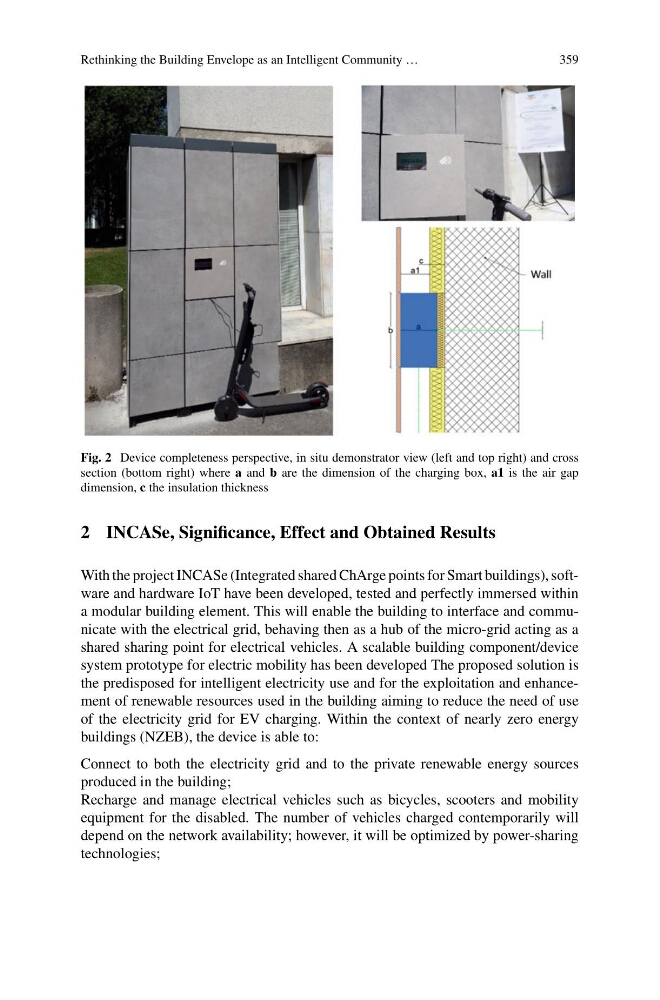
Fig. 2 Device completeness perspective, in situ demonstrator view (left and top right) and cross
section (bottom right) where a and b are the dimension of the charging box, a1 is the air gap
dimension, c the insulation thickness
2 INCASe, Significance, Effect and Obtained Results
With the project INCASe (Integrated shared ChArge points for Smart buildings), software and hardware IoT have been developed, tested and perfectly immersed within
a modular building element. This will enable the building to interface and communicate with the electrical grid, behaving then as a hub of the micro-grid acting as a
shared sharing point for electrical vehicles. A scalable building component/device
system prototype for electric mobility has been developed The proposed solution is
the predisposed for intelligent electricity use and for the exploitation and enhancement of renewable resources used in the building aiming to reduce the need of use
of the electricity grid for EV charging. Within the context of nearly zero energy
buildings (NZEB), the device is able to:
Connect to both the electricity grid and to the private renewable energy sources
produced in the building;
Recharge and manage electrical vehicles such as bicycles, scooters and mobility
equipment for the disabled. The number of vehicles charged contemporarily will
depend on the network availability; however, it will be optimized by power-sharing
technologies;
359
Fig. 2 Device completeness perspective, in situ demonstrator view (left and top right) and cross
section (bottom right) where a and b are the dimension of the charging box, a1 is the air gap
dimension, c the insulation thickness
2 INCASe, Significance, Effect and Obtained Results
With the project INCASe (Integrated shared ChArge points for Smart buildings), software and hardware IoT have been developed, tested and perfectly immersed within
a modular building element. This will enable the building to interface and communicate with the electrical grid, behaving then as a hub of the micro-grid acting as a
shared sharing point for electrical vehicles. A scalable building component/device
system prototype for electric mobility has been developed The proposed solution is
the predisposed for intelligent electricity use and for the exploitation and enhancement of renewable resources used in the building aiming to reduce the need of use
of the electricity grid for EV charging. Within the context of nearly zero energy
buildings (NZEB), the device is able to:
Connect to both the electricity grid and to the private renewable energy sources
produced in the building;
Recharge and manage electrical vehicles such as bicycles, scooters and mobility
equipment for the disabled. The number of vehicles charged contemporarily will
depend on the network availability; however, it will be optimized by power-sharing
technologies;