

Extra-Ordinary Solutions for Useful Smart Living
351
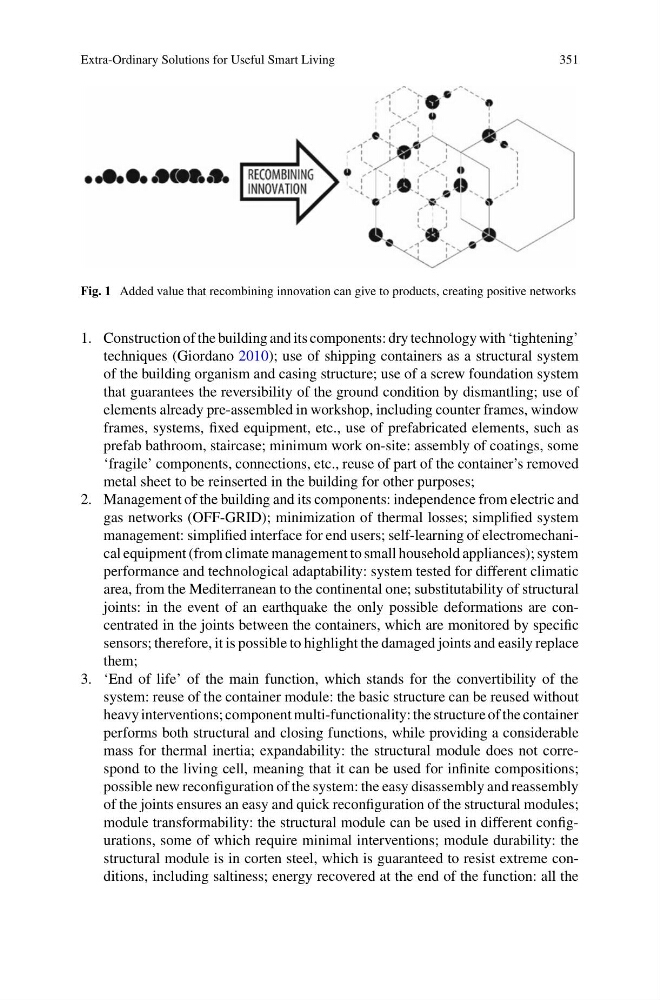
Fig. 1 Added value that recombining innovation can give to products, creating positive networks
1. Construction of the building and its components: dry technology with ‘tightening’
techniques (Giordano 2010); use of shipping containers as a structural system
of the building organism and casing structure; use of a screw foundation system
that guarantees the reversibility of the ground condition by dismantling; use of
elements already pre-assembled in workshop, including counter frames, window
frames, systems, fixed equipment, etc., use of prefabricated elements, such as
prefab bathroom, staircase; minimum work on-site: assembly of coatings, some
‘fragile’ components, connections, etc., reuse of part of the container’s removed
metal sheet to be reinserted in the building for other purposes;
2. Management of the building and its components: independence from electric and
gas networks (OFF-GRID); minimization of thermal losses; simplified system
management: simplified interface for end users; self-learning of electromechanical equipment (from climate management to small household appliances); system
performance and technological adaptability: system tested for different climatic
area, from the Mediterranean to the continental one; substitutability of structural
joints: in the event of an earthquake the only possible deformations are concentrated in the joints between the containers, which are monitored by specific
sensors; therefore, it is possible to highlight the damaged joints and easily replace
them;
3. ‘End of life’ of the main function, which stands for the convertibility of the
system: reuse of the container module: the basic structure can be reused without
heavy interventions; component multi-functionality: the structure of the container
performs both structural and closing functions, while providing a considerable
mass for thermal inertia; expandability: the structural module does not correspond to the living cell, meaning that it can be used for infinite compositions;
possible new reconfiguration of the system: the easy disassembly and reassembly
of the joints ensures an easy and quick reconfiguration of the structural modules;
module transformability: the structural module can be used in different configurations, some of which require minimal interventions; module durability: the
structural module is in corten steel, which is guaranteed to resist extreme conditions, including saltiness; energy recovered at the end of the function: all the
351
Fig. 1 Added value that recombining innovation can give to products, creating positive networks
1. Construction of the building and its components: dry technology with ‘tightening’
techniques (Giordano 2010); use of shipping containers as a structural system
of the building organism and casing structure; use of a screw foundation system
that guarantees the reversibility of the ground condition by dismantling; use of
elements already pre-assembled in workshop, including counter frames, window
frames, systems, fixed equipment, etc., use of prefabricated elements, such as
prefab bathroom, staircase; minimum work on-site: assembly of coatings, some
‘fragile’ components, connections, etc., reuse of part of the container’s removed
metal sheet to be reinserted in the building for other purposes;
2. Management of the building and its components: independence from electric and
gas networks (OFF-GRID); minimization of thermal losses; simplified system
management: simplified interface for end users; self-learning of electromechanical equipment (from climate management to small household appliances); system
performance and technological adaptability: system tested for different climatic
area, from the Mediterranean to the continental one; substitutability of structural
joints: in the event of an earthquake the only possible deformations are concentrated in the joints between the containers, which are monitored by specific
sensors; therefore, it is possible to highlight the damaged joints and easily replace
them;
3. ‘End of life’ of the main function, which stands for the convertibility of the
system: reuse of the container module: the basic structure can be reused without
heavy interventions; component multi-functionality: the structure of the container
performs both structural and closing functions, while providing a considerable
mass for thermal inertia; expandability: the structural module does not correspond to the living cell, meaning that it can be used for infinite compositions;
possible new reconfiguration of the system: the easy disassembly and reassembly
of the joints ensures an easy and quick reconfiguration of the structural modules;
module transformability: the structural module can be used in different configurations, some of which require minimal interventions; module durability: the
structural module is in corten steel, which is guaranteed to resist extreme conditions, including saltiness; energy recovered at the end of the function: all the