

Re-NetTA. Re-Manufacturing Networks for Tertiary Architectures
305
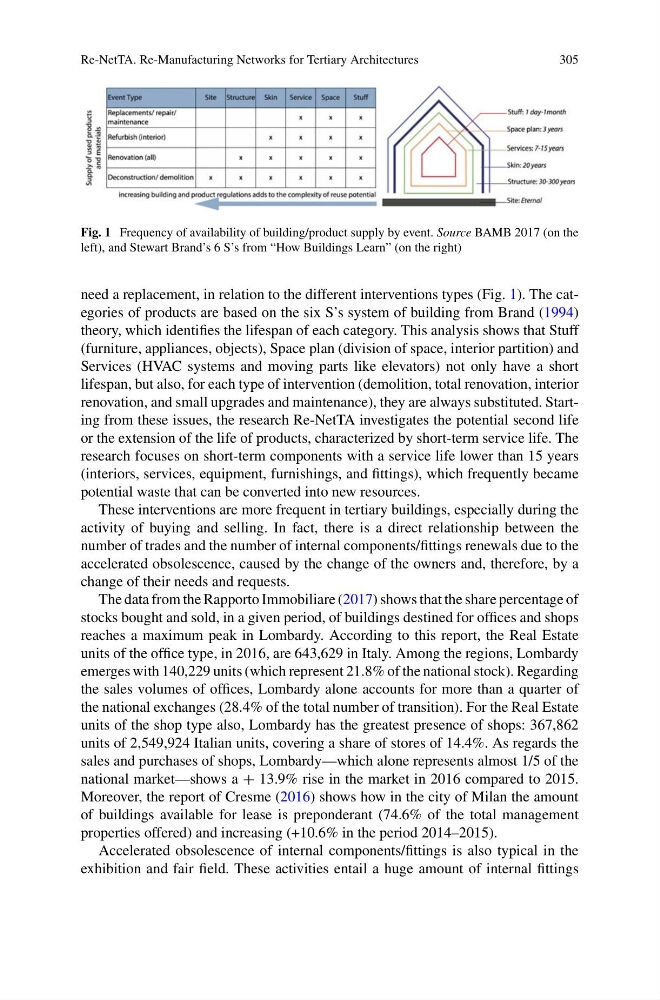
Fig. 1 Frequency of availability of building/product supply by event. Source BAMB 2017 (on the
left), and Stewart Brand’s 6 S’s from “How Buildings Learn” (on the right)
need a replacement, in relation to the different interventions types (Fig. 1). The categories of products are based on the six S’s system of building from Brand (1994)
theory, which identifies the lifespan of each category. This analysis shows that Stuff
(furniture, appliances, objects), Space plan (division of space, interior partition) and
Services (HVAC systems and moving parts like elevators) not only have a short
lifespan, but also, for each type of intervention (demolition, total renovation, interior
renovation, and small upgrades and maintenance), they are always substituted. Starting from these issues, the research Re-NetTA investigates the potential second life
or the extension of the life of products, characterized by short-term service life. The
research focuses on short-term components with a service life lower than 15 years
(interiors, services, equipment, furnishings, and fittings), which frequently became
potential waste that can be converted into new resources.
These interventions are more frequent in tertiary buildings, especially during the
activity of buying and selling. In fact, there is a direct relationship between the
number of trades and the number of internal components/fittings renewals due to the
accelerated obsolescence, caused by the change of the owners and, therefore, by a
change of their needs and requests.
The data from the Rapporto Immobiliare (2017) shows that the share percentage of
stocks bought and sold, in a given period, of buildings destined for offices and shops
reaches a maximum peak in Lombardy. According to this report, the Real Estate
units of the office type, in 2016, are 643,629 in Italy. Among the regions, Lombardy
emerges with 140,229 units (which represent 21.8% of the national stock). Regarding
the sales volumes of offices, Lombardy alone accounts for more than a quarter of
the national exchanges (28.4% of the total number of transition). For the Real Estate
units of the shop type also, Lombardy has the greatest presence of shops: 367,862
units of 2,549,924 Italian units, covering a share of stores of 14.4%. As regards the
sales and purchases of shops, Lombardy—which alone represents almost 1/5 of the
national market—shows a + 13.9% rise in the market in 2016 compared to 2015.
Moreover, the report of Cresme (2016) shows how in the city of Milan the amount
of buildings available for lease is preponderant (74.6% of the total management
properties offered) and increasing (+10.6% in the period 2014–2015).
Accelerated obsolescence of internal components/fittings is also typical in the
exhibition and fair field. These activities entail a huge amount of internal fittings
305
Fig. 1 Frequency of availability of building/product supply by event. Source BAMB 2017 (on the
left), and Stewart Brand’s 6 S’s from “How Buildings Learn” (on the right)
need a replacement, in relation to the different interventions types (Fig. 1). The categories of products are based on the six S’s system of building from Brand (1994)
theory, which identifies the lifespan of each category. This analysis shows that Stuff
(furniture, appliances, objects), Space plan (division of space, interior partition) and
Services (HVAC systems and moving parts like elevators) not only have a short
lifespan, but also, for each type of intervention (demolition, total renovation, interior
renovation, and small upgrades and maintenance), they are always substituted. Starting from these issues, the research Re-NetTA investigates the potential second life
or the extension of the life of products, characterized by short-term service life. The
research focuses on short-term components with a service life lower than 15 years
(interiors, services, equipment, furnishings, and fittings), which frequently became
potential waste that can be converted into new resources.
These interventions are more frequent in tertiary buildings, especially during the
activity of buying and selling. In fact, there is a direct relationship between the
number of trades and the number of internal components/fittings renewals due to the
accelerated obsolescence, caused by the change of the owners and, therefore, by a
change of their needs and requests.
The data from the Rapporto Immobiliare (2017) shows that the share percentage of
stocks bought and sold, in a given period, of buildings destined for offices and shops
reaches a maximum peak in Lombardy. According to this report, the Real Estate
units of the office type, in 2016, are 643,629 in Italy. Among the regions, Lombardy
emerges with 140,229 units (which represent 21.8% of the national stock). Regarding
the sales volumes of offices, Lombardy alone accounts for more than a quarter of
the national exchanges (28.4% of the total number of transition). For the Real Estate
units of the shop type also, Lombardy has the greatest presence of shops: 367,862
units of 2,549,924 Italian units, covering a share of stores of 14.4%. As regards the
sales and purchases of shops, Lombardy—which alone represents almost 1/5 of the
national market—shows a + 13.9% rise in the market in 2016 compared to 2015.
Moreover, the report of Cresme (2016) shows how in the city of Milan the amount
of buildings available for lease is preponderant (74.6% of the total management
properties offered) and increasing (+10.6% in the period 2014–2015).
Accelerated obsolescence of internal components/fittings is also typical in the
exhibition and fair field. These activities entail a huge amount of internal fittings