

Re-Using Waste as Secondary Raw Material …
235
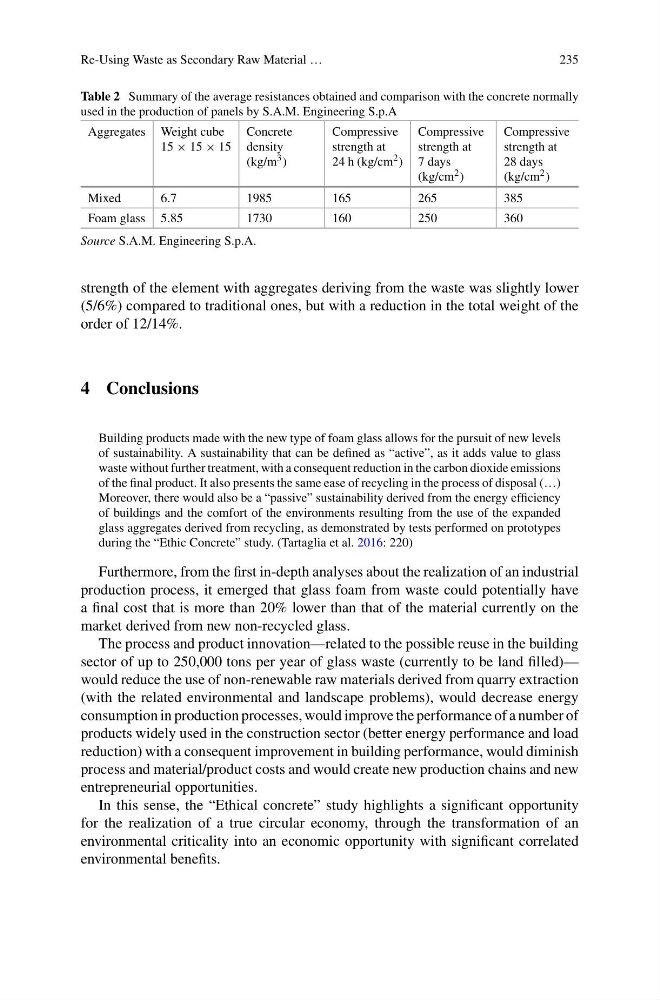
Table 2 Summary of the average resistances obtained and comparison with the concrete normally
used in the production of panels by S.A.M. Engineering S.p.A
Aggregates Weight cube
15 × 15 × 15
Concrete
density
(kg/m 3 )
Compressive
strength at
24 h (kg/cm 2 )
Compressive
strength at
7 days
(kg/cm 2 )
Compressive
strength at
28 days
(kg/cm 2 )
Mixed
6.7
1985
165
265
385
Foam glass 5.85
1730
160
250
360
Source S.A.M. Engineering S.p.A.
strength of the element with aggregates deriving from the waste was slightly lower
(5/6%) compared to traditional ones, but with a reduction in the total weight of the
order of 12/14%.
4 Conclusions
Building products made with the new type of foam glass allows for the pursuit of new levels
of sustainability. A sustainability that can be defined as “active”, as it adds value to glass
waste without further treatment, with a consequent reduction in the carbon dioxide emissions
of the final product. It also presents the same ease of recycling in the process of disposal (…)
Moreover, there would also be a “passive” sustainability derived from the energy efficiency
of buildings and the comfort of the environments resulting from the use of the expanded
glass aggregates derived from recycling, as demonstrated by tests performed on prototypes
during the “Ethic Concrete” study. (Tartaglia et al. 2016: 220)
Furthermore, from the first in-depth analyses about the realization of an industrial
production process, it emerged that glass foam from waste could potentially have
a final cost that is more than 20% lower than that of the material currently on the
market derived from new non-recycled glass.
The process and product innovation—related to the possible reuse in the building
sector of up to 250,000 tons per year of glass waste (currently to be land filled)—
would reduce the use of non-renewable raw materials derived from quarry extraction
(with the related environmental and landscape problems), would decrease energy
consumption in production processes, would improve the performance of a number of
products widely used in the construction sector (better energy performance and load
reduction) with a consequent improvement in building performance, would diminish
process and material/product costs and would create new production chains and new
entrepreneurial opportunities.
In this sense, the “Ethical concrete” study highlights a significant opportunity
for the realization of a true circular economy, through the transformation of an
environmental criticality into an economic opportunity with significant correlated
environmental benefits.
235
Table 2 Summary of the average resistances obtained and comparison with the concrete normally
used in the production of panels by S.A.M. Engineering S.p.A
Aggregates Weight cube
15 × 15 × 15
Concrete
density
(kg/m 3 )
Compressive
strength at
24 h (kg/cm 2 )
Compressive
strength at
7 days
(kg/cm 2 )
Compressive
strength at
28 days
(kg/cm 2 )
Mixed
6.7
1985
165
265
385
Foam glass 5.85
1730
160
250
360
Source S.A.M. Engineering S.p.A.
strength of the element with aggregates deriving from the waste was slightly lower
(5/6%) compared to traditional ones, but with a reduction in the total weight of the
order of 12/14%.
4 Conclusions
Building products made with the new type of foam glass allows for the pursuit of new levels
of sustainability. A sustainability that can be defined as “active”, as it adds value to glass
waste without further treatment, with a consequent reduction in the carbon dioxide emissions
of the final product. It also presents the same ease of recycling in the process of disposal (…)
Moreover, there would also be a “passive” sustainability derived from the energy efficiency
of buildings and the comfort of the environments resulting from the use of the expanded
glass aggregates derived from recycling, as demonstrated by tests performed on prototypes
during the “Ethic Concrete” study. (Tartaglia et al. 2016: 220)
Furthermore, from the first in-depth analyses about the realization of an industrial
production process, it emerged that glass foam from waste could potentially have
a final cost that is more than 20% lower than that of the material currently on the
market derived from new non-recycled glass.
The process and product innovation—related to the possible reuse in the building
sector of up to 250,000 tons per year of glass waste (currently to be land filled)—
would reduce the use of non-renewable raw materials derived from quarry extraction
(with the related environmental and landscape problems), would decrease energy
consumption in production processes, would improve the performance of a number of
products widely used in the construction sector (better energy performance and load
reduction) with a consequent improvement in building performance, would diminish
process and material/product costs and would create new production chains and new
entrepreneurial opportunities.
In this sense, the “Ethical concrete” study highlights a significant opportunity
for the realization of a true circular economy, through the transformation of an
environmental criticality into an economic opportunity with significant correlated
environmental benefits.