

234
A. Tartaglia
U= 0,31 [W/m2K]
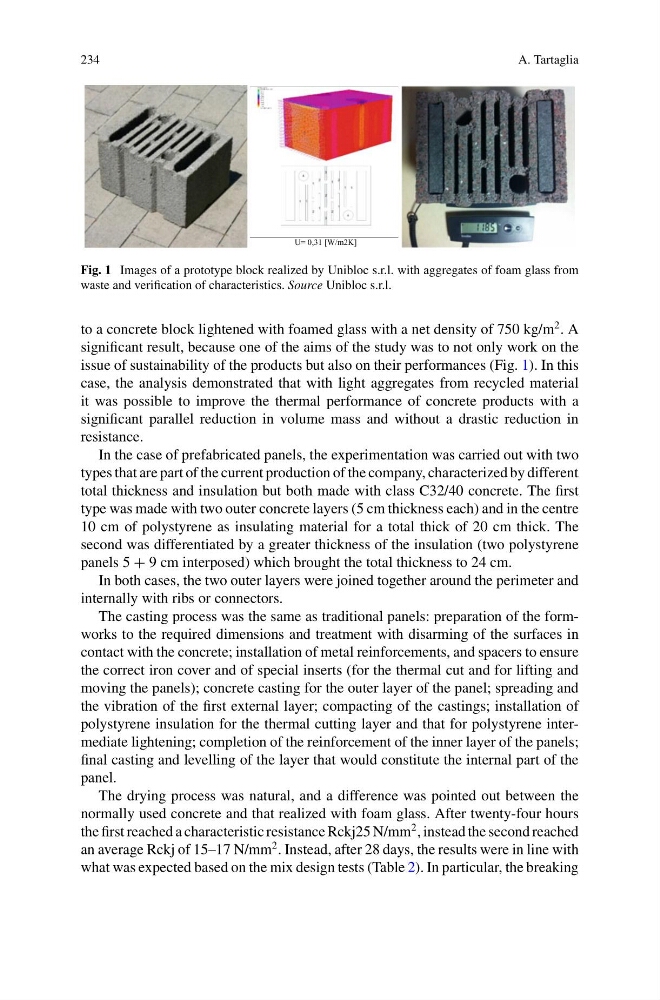
Fig. 1 Images of a prototype block realized by Unibloc s.r.l. with aggregates of foam glass from
waste and verification of characteristics. Source Unibloc s.r.l.
to a concrete block lightened with foamed glass with a net density of 750 kg/m
2 . A
significant result, because one of the aims of the study was to not only work on the
issue of sustainability of the products but also on their performances (Fig. 1). In this
case, the analysis demonstrated that with light aggregates from recycled material
it was possible to improve the thermal performance of concrete products with a
significant parallel reduction in volume mass and without a drastic reduction in
resistance.
In the case of prefabricated panels, the experimentation was carried out with two
types that are part of the current production of the company, characterized by different
total thickness and insulation but both made with class C32/40 concrete. The first
type was made with two outer concrete layers (5 cm thickness each) and in the centre
10 cm of polystyrene as insulating material for a total thick of 20 cm thick. The
second was differentiated by a greater thickness of the insulation (two polystyrene
panels 5 + 9 cm interposed) which brought the total thickness to 24 cm.
In both cases, the two outer layers were joined together around the perimeter and
internally with ribs or connectors.
The casting process was the same as traditional panels: preparation of the formworks to the required dimensions and treatment with disarming of the surfaces in
contact with the concrete; installation of metal reinforcements, and spacers to ensure
the correct iron cover and of special inserts (for the thermal cut and for lifting and
moving the panels); concrete casting for the outer layer of the panel; spreading and
the vibration of the first external layer; compacting of the castings; installation of
polystyrene insulation for the thermal cutting layer and that for polystyrene intermediate lightening; completion of the reinforcement of the inner layer of the panels;
final casting and levelling of the layer that would constitute the internal part of the
panel.
The drying process was natural, and a difference was pointed out between the
normally used concrete and that realized with foam glass. After twenty-four hours
the first reached a characteristic resistance Rckj25 N/mm
2 , instead the second reached
an average Rckj of 15–17 N/mm
2 . Instead, after 28 days, the results were in line with
what was expected based on the mix design tests (Table 2). In particular, the breaking
A. Tartaglia
U= 0,31 [W/m2K]
Fig. 1 Images of a prototype block realized by Unibloc s.r.l. with aggregates of foam glass from
waste and verification of characteristics. Source Unibloc s.r.l.
to a concrete block lightened with foamed glass with a net density of 750 kg/m
2 . A
significant result, because one of the aims of the study was to not only work on the
issue of sustainability of the products but also on their performances (Fig. 1). In this
case, the analysis demonstrated that with light aggregates from recycled material
it was possible to improve the thermal performance of concrete products with a
significant parallel reduction in volume mass and without a drastic reduction in
resistance.
In the case of prefabricated panels, the experimentation was carried out with two
types that are part of the current production of the company, characterized by different
total thickness and insulation but both made with class C32/40 concrete. The first
type was made with two outer concrete layers (5 cm thickness each) and in the centre
10 cm of polystyrene as insulating material for a total thick of 20 cm thick. The
second was differentiated by a greater thickness of the insulation (two polystyrene
panels 5 + 9 cm interposed) which brought the total thickness to 24 cm.
In both cases, the two outer layers were joined together around the perimeter and
internally with ribs or connectors.
The casting process was the same as traditional panels: preparation of the formworks to the required dimensions and treatment with disarming of the surfaces in
contact with the concrete; installation of metal reinforcements, and spacers to ensure
the correct iron cover and of special inserts (for the thermal cut and for lifting and
moving the panels); concrete casting for the outer layer of the panel; spreading and
the vibration of the first external layer; compacting of the castings; installation of
polystyrene insulation for the thermal cutting layer and that for polystyrene intermediate lightening; completion of the reinforcement of the inner layer of the panels;
final casting and levelling of the layer that would constitute the internal part of the
panel.
The drying process was natural, and a difference was pointed out between the
normally used concrete and that realized with foam glass. After twenty-four hours
the first reached a characteristic resistance Rckj25 N/mm
2 , instead the second reached
an average Rckj of 15–17 N/mm
2 . Instead, after 28 days, the results were in line with
what was expected based on the mix design tests (Table 2). In particular, the breaking