

Urban Renovation: An Opportunity for Economic Development …
131
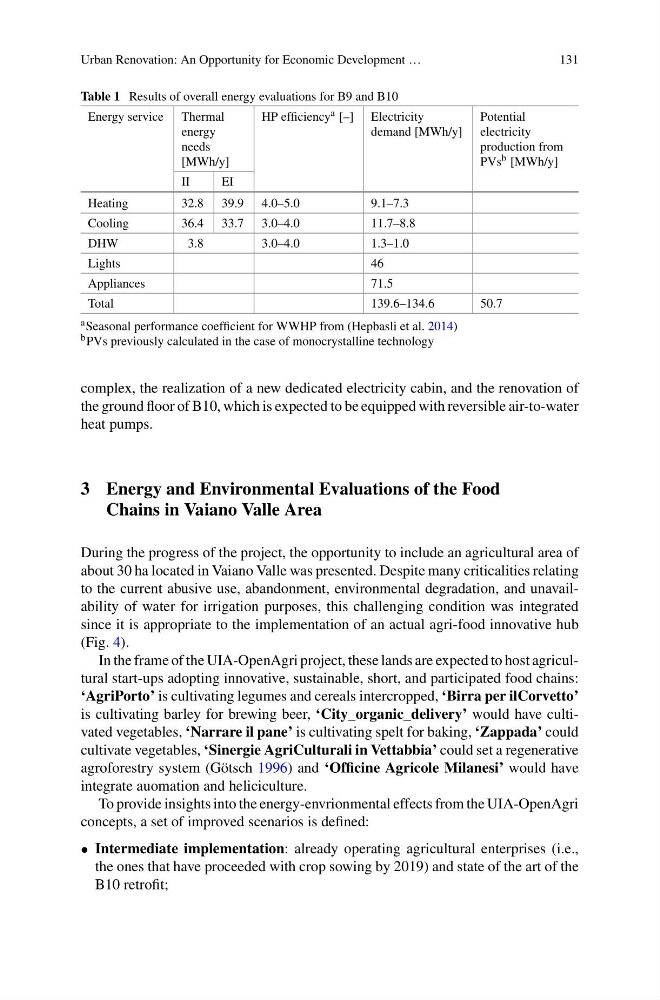
Table 1 Results of overall energy evaluations for B9 and B10
Energy service Thermal
energy
needs
[MWh/y]
HP efficiency a [–] Electricity
demand [MWh/y]
Potential
electricity
production from
PVs b [MWh/y]
II
EI
Heating
32.8 39.9 4.0–5.0
9.1–7.3
Cooling
36.4 33.7 3.0–4.0
11.7–8.8
DHW
3.8
3.0–4.0
1.3–1.0
Lights
46
Appliances
71.5
Total
139.6–134.6
50.7
a Seasonal performance coefficient for WWHP from (Hepbasli et al. 2014)
b PVs previously calculated in the case of monocrystalline technology
complex, the realization of a new dedicated electricity cabin, and the renovation of
the ground floor of B10, which is expected to be equipped with reversible air-to-water
heat pumps.
3 Energy and Environmental Evaluations of the Food
Chains in Vaiano Valle Area
During the progress of the project, the opportunity to include an agricultural area of
about 30 ha located in Vaiano Valle was presented. Despite many criticalities relating
to the current abusive use, abandonment, environmental degradation, and unavailability of water for irrigation purposes, this challenging condition was integrated
since it is appropriate to the implementation of an actual agri-food innovative hub
(Fig. 4).
In the frame of the UIA-OpenAgri project, these lands are expected to host agricultural start-ups adopting innovative, sustainable, short, and participated food chains:
‘AgriPorto’ is cultivating legumes and cereals intercropped, ‘Birra per ilCorvetto’
is cultivating barley for brewing beer, ‘City_organic_delivery’ would have cultivated vegetables, ‘Narrare il pane’ is cultivating spelt for baking, ‘Zappada’ could
cultivate vegetables, ‘Sinergie AgriCulturali in Vettabbia’ could set a regenerative
agroforestry system (Götsch 1996) and ‘Officine Agricole Milanesi’ would have
integrate auomation and heliciculture.
To provide insights into the energy-envrionmental effects from the UIA-OpenAgri
concepts, a set of improved scenarios is defined:
• Intermediate implementation: already operating agricultural enterprises (i.e.,
the ones that have proceeded with crop sowing by 2019) and state of the art of the
B10 retrofit;
131
Table 1 Results of overall energy evaluations for B9 and B10
Energy service Thermal
energy
needs
[MWh/y]
HP efficiency a [–] Electricity
demand [MWh/y]
Potential
electricity
production from
PVs b [MWh/y]
II
EI
Heating
32.8 39.9 4.0–5.0
9.1–7.3
Cooling
36.4 33.7 3.0–4.0
11.7–8.8
DHW
3.8
3.0–4.0
1.3–1.0
Lights
46
Appliances
71.5
Total
139.6–134.6
50.7
a Seasonal performance coefficient for WWHP from (Hepbasli et al. 2014)
b PVs previously calculated in the case of monocrystalline technology
complex, the realization of a new dedicated electricity cabin, and the renovation of
the ground floor of B10, which is expected to be equipped with reversible air-to-water
heat pumps.
3 Energy and Environmental Evaluations of the Food
Chains in Vaiano Valle Area
During the progress of the project, the opportunity to include an agricultural area of
about 30 ha located in Vaiano Valle was presented. Despite many criticalities relating
to the current abusive use, abandonment, environmental degradation, and unavailability of water for irrigation purposes, this challenging condition was integrated
since it is appropriate to the implementation of an actual agri-food innovative hub
(Fig. 4).
In the frame of the UIA-OpenAgri project, these lands are expected to host agricultural start-ups adopting innovative, sustainable, short, and participated food chains:
‘AgriPorto’ is cultivating legumes and cereals intercropped, ‘Birra per ilCorvetto’
is cultivating barley for brewing beer, ‘City_organic_delivery’ would have cultivated vegetables, ‘Narrare il pane’ is cultivating spelt for baking, ‘Zappada’ could
cultivate vegetables, ‘Sinergie AgriCulturali in Vettabbia’ could set a regenerative
agroforestry system (Götsch 1996) and ‘Officine Agricole Milanesi’ would have
integrate auomation and heliciculture.
To provide insights into the energy-envrionmental effects from the UIA-OpenAgri
concepts, a set of improved scenarios is defined:
• Intermediate implementation: already operating agricultural enterprises (i.e.,
the ones that have proceeded with crop sowing by 2019) and state of the art of the
B10 retrofit;