

12.4.3.3 Educational Benefits
First, the modelling tool holds the potential to enlarge possibilities for pupils’
theoretical inquiry of realistic, dynamic phenomena (e.g. motion with air resistance,
charging and discharging capacitors, combustion of carbon monoxide, and chemical
equilibrium). These phenomena are difficult to describe with school mathematics but
relatively easy to model with software (Heck 2009; Velanova et al. 2014). There are
different patterns in which pupils can move back and forth between the theoretical
and physical worlds and so learn with the modelling tool. For example, pupils run a
given model (e.g. a parachute jump with air resistance) to understand a phenomenon
and/or explore its structure to gain insight into interactions between the model
elements. Based upon their understanding, pupils can also make a small change to
a given model, try out various modelling ideas, and then evaluate if the revised
model describes the phenomenon better. For example, “unfortunately, the parachute
does not open right away. Therefore, there is first free fall for two minutes and then
fall with air resistance while the parachute already opens”. With a certain mastery of
Fig. 12.6 A graphical model of the shape of the Golden Gate Bridge
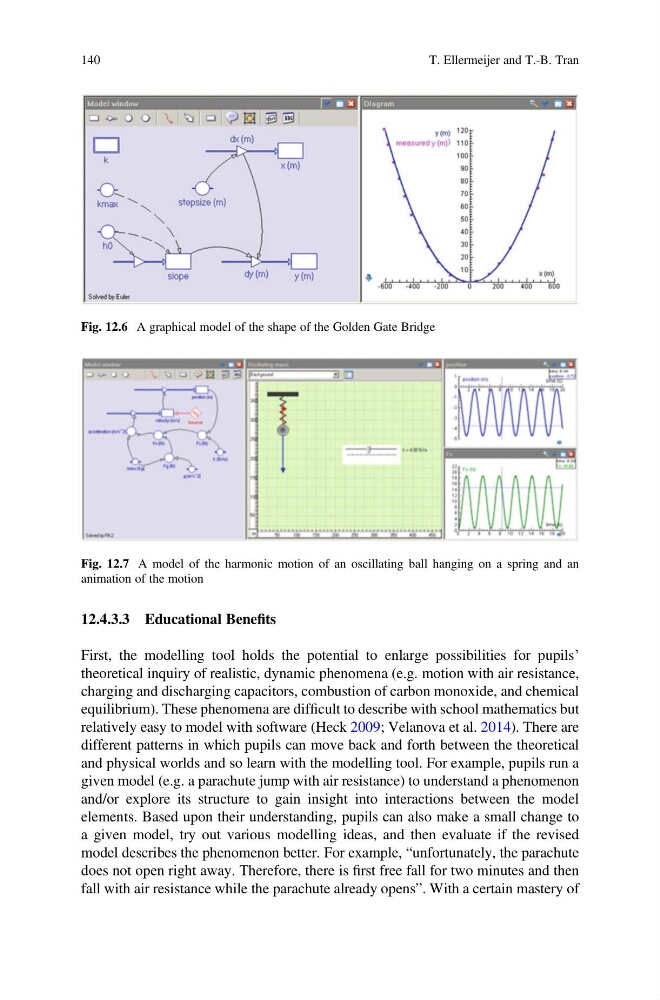
Fig. 12.7 A model of the harmonic motion of an oscillating ball hanging on a spring and an
animation of the motion
140
T. Ellermeijer and T.-B. Tran
First, the modelling tool holds the potential to enlarge possibilities for pupils’
theoretical inquiry of realistic, dynamic phenomena (e.g. motion with air resistance,
charging and discharging capacitors, combustion of carbon monoxide, and chemical
equilibrium). These phenomena are difficult to describe with school mathematics but
relatively easy to model with software (Heck 2009; Velanova et al. 2014). There are
different patterns in which pupils can move back and forth between the theoretical
and physical worlds and so learn with the modelling tool. For example, pupils run a
given model (e.g. a parachute jump with air resistance) to understand a phenomenon
and/or explore its structure to gain insight into interactions between the model
elements. Based upon their understanding, pupils can also make a small change to
a given model, try out various modelling ideas, and then evaluate if the revised
model describes the phenomenon better. For example, “unfortunately, the parachute
does not open right away. Therefore, there is first free fall for two minutes and then
fall with air resistance while the parachute already opens”. With a certain mastery of
Fig. 12.6 A graphical model of the shape of the Golden Gate Bridge
Fig. 12.7 A model of the harmonic motion of an oscillating ball hanging on a spring and an
animation of the motion
140
T. Ellermeijer and T.-B. Tran