

12.4.1.1 Educational Benefits
The tool for data logging with sensors has many educational benefits if it is properly
integrated in the science lessons. First, this tool enhances new possibilities and
contexts for physics experiments that might not be otherwise possible due to time
constraints and technical difficulties (Barton 2004; Newton and Rogers 2001). This
increases access to real-life phenomena, facilitates new classroom experiments, and
allows measurements in the field. Second, the tool enables collecting, recording and
representing of many data and even repeating this process several times in short time
(physical world). Consequently, pupils will have time in the classroom to design the
experiment, interpret data and/or explain relationships (theoretical world).
Third, the “real-time graphing” feature of the data-logging tool stimulates pupils to
move back and forth between the physical world and the theoretical world. For example,
a pupil walks in front of a motion sensor, and immediately the software shows in the
graph her or his position and/or velocity in real time. By observing the pupil walking and
the graph showing up at almost the same time, other pupils in the class can easily realise
the connection between the motion of their classmate and the kinematics concepts.
According to Brasell (1987), this immediacy between the phenomenon and real-time
graphing of data stimulates pupils’ conceptual understanding, and this feature is critical
for both understanding and motivation. Sokoloff et al. (2007) showed research evidence
that the use of the tool for data logging with sensors in a laboratory curriculum
(i.e. RealTime Physics Mechanics) improved pupils’ understanding of dynamics concepts, and the retention of the concepts by those pupils was excellent.
Finally, the incorporation of the data-logging tool enables pupils to participate in
aspects of scientists’ experimental inquiry, considering that the data-logging tool is
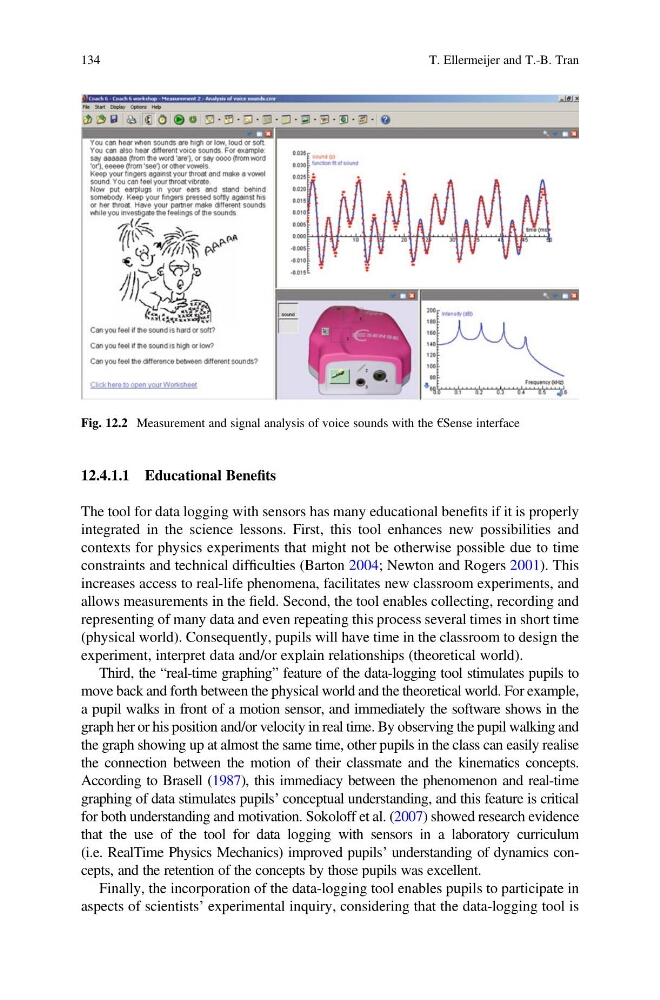
Fig. 12.2 Measurement and signal analysis of voice sounds with the €Sense interface
134
T. Ellermeijer and T.-B. Tran
The tool for data logging with sensors has many educational benefits if it is properly
integrated in the science lessons. First, this tool enhances new possibilities and
contexts for physics experiments that might not be otherwise possible due to time
constraints and technical difficulties (Barton 2004; Newton and Rogers 2001). This
increases access to real-life phenomena, facilitates new classroom experiments, and
allows measurements in the field. Second, the tool enables collecting, recording and
representing of many data and even repeating this process several times in short time
(physical world). Consequently, pupils will have time in the classroom to design the
experiment, interpret data and/or explain relationships (theoretical world).
Third, the “real-time graphing” feature of the data-logging tool stimulates pupils to
move back and forth between the physical world and the theoretical world. For example,
a pupil walks in front of a motion sensor, and immediately the software shows in the
graph her or his position and/or velocity in real time. By observing the pupil walking and
the graph showing up at almost the same time, other pupils in the class can easily realise
the connection between the motion of their classmate and the kinematics concepts.
According to Brasell (1987), this immediacy between the phenomenon and real-time
graphing of data stimulates pupils’ conceptual understanding, and this feature is critical
for both understanding and motivation. Sokoloff et al. (2007) showed research evidence
that the use of the tool for data logging with sensors in a laboratory curriculum
(i.e. RealTime Physics Mechanics) improved pupils’ understanding of dynamics concepts, and the retention of the concepts by those pupils was excellent.
Finally, the incorporation of the data-logging tool enables pupils to participate in
aspects of scientists’ experimental inquiry, considering that the data-logging tool is
Fig. 12.2 Measurement and signal analysis of voice sounds with the €Sense interface
134
T. Ellermeijer and T.-B. Tran