

209
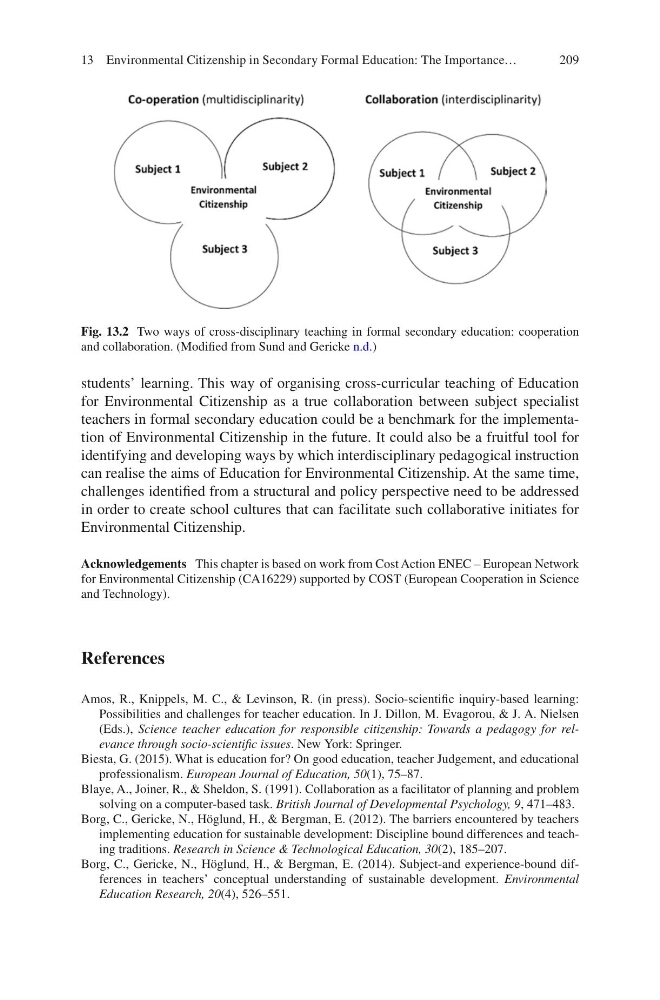
Fig. 13.2 Two ways of cross-disciplinary teaching in formal secondary education: cooperation
and collaboration. (Modified from Sund and Gericke n.d.)
students’ learning. This way of organising cross-curricular teaching of Education
for Environmental Citizenship as a true collaboration between subject specialist
teachers in formal secondary education could be a benchmark for the implementation of Environmental Citizenship in the future. It could also be a fruitful tool for
identifying and developing ways by which interdisciplinary pedagogical instruction
can realise the aims of Education for Environmental Citizenship. At the same time,
challenges identified from a structural and policy perspective need to be addressed
in order to create school cultures that can facilitate such collaborative initiates for
Environmental Citizenship.
Acknowledgements This chapter is based on work from Cost Action ENEC – European Network
for Environmental Citizenship (CA16229) supported by COST (European Cooperation in Science
and Technology).
References
Amos, R., Knippels, M. C., & Levinson, R. (in press). Socio-scientific inquiry-based learning:
Possibilities and challenges for teacher education. In J. Dillon, M. Evagorou, & J. A. Nielsen
(Eds.), Science teacher education for responsible citizenship: Towards a pedagogy for relevance through socio-scientific issues. New York: Springer.
Biesta, G. (2015). What is education for? On good education, teacher Judgement, and educational
professionalism. European Journal of Education, 50(1), 75–87.
Blaye, A., Joiner, R., & Sheldon, S. (1991). Collaboration as a facilitator of planning and problem
solving on a computer-based task. British Journal of Developmental Psychology, 9, 471–483.
Borg, C., Gericke, N., Höglund, H., & Bergman, E. (2012). The barriers encountered by teachers
implementing education for sustainable development: Discipline bound differences and teaching traditions. Research in Science & Technological Education, 30(2), 185–207.
Borg, C., Gericke, N., Höglund, H., & Bergman, E. (2014). Subject-and experience-bound differences in teachers’ conceptual understanding of sustainable development. Environmental
Education Research, 20(4), 526–551.
13 Environmental Citizenship in Secondary Formal Education: The Importance…
Fig. 13.2 Two ways of cross-disciplinary teaching in formal secondary education: cooperation
and collaboration. (Modified from Sund and Gericke n.d.)
students’ learning. This way of organising cross-curricular teaching of Education
for Environmental Citizenship as a true collaboration between subject specialist
teachers in formal secondary education could be a benchmark for the implementation of Environmental Citizenship in the future. It could also be a fruitful tool for
identifying and developing ways by which interdisciplinary pedagogical instruction
can realise the aims of Education for Environmental Citizenship. At the same time,
challenges identified from a structural and policy perspective need to be addressed
in order to create school cultures that can facilitate such collaborative initiates for
Environmental Citizenship.
Acknowledgements This chapter is based on work from Cost Action ENEC – European Network
for Environmental Citizenship (CA16229) supported by COST (European Cooperation in Science
and Technology).
References
Amos, R., Knippels, M. C., & Levinson, R. (in press). Socio-scientific inquiry-based learning:
Possibilities and challenges for teacher education. In J. Dillon, M. Evagorou, & J. A. Nielsen
(Eds.), Science teacher education for responsible citizenship: Towards a pedagogy for relevance through socio-scientific issues. New York: Springer.
Biesta, G. (2015). What is education for? On good education, teacher Judgement, and educational
professionalism. European Journal of Education, 50(1), 75–87.
Blaye, A., Joiner, R., & Sheldon, S. (1991). Collaboration as a facilitator of planning and problem
solving on a computer-based task. British Journal of Developmental Psychology, 9, 471–483.
Borg, C., Gericke, N., Höglund, H., & Bergman, E. (2012). The barriers encountered by teachers
implementing education for sustainable development: Discipline bound differences and teaching traditions. Research in Science & Technological Education, 30(2), 185–207.
Borg, C., Gericke, N., Höglund, H., & Bergman, E. (2014). Subject-and experience-bound differences in teachers’ conceptual understanding of sustainable development. Environmental
Education Research, 20(4), 526–551.
13 Environmental Citizenship in Secondary Formal Education: The Importance…