

130
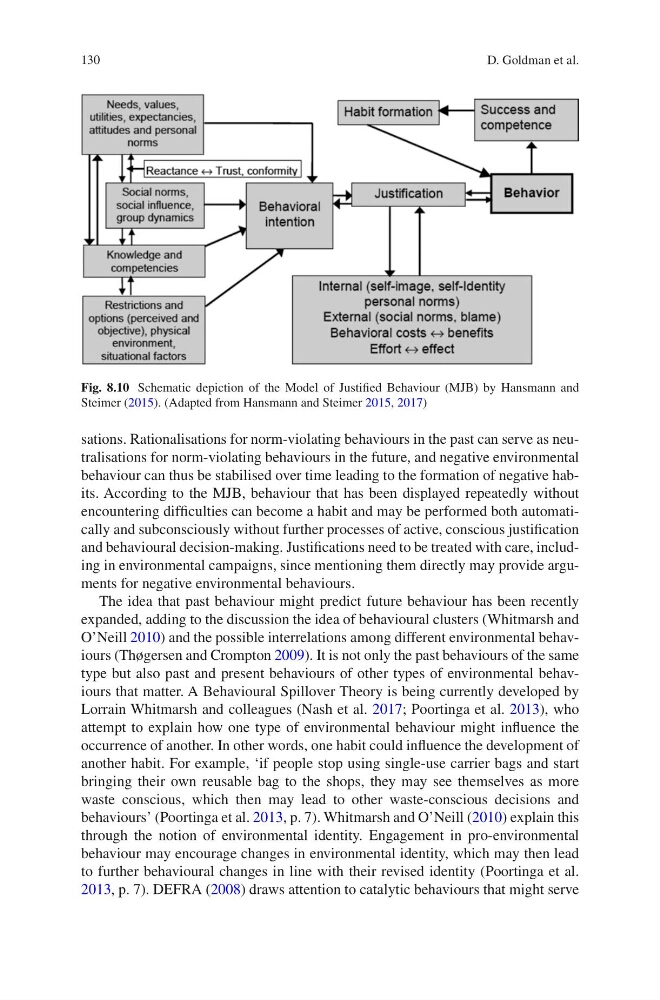
Fig. 8.10 Schematic depiction of the Model of Justified Behaviour (MJB) by Hansmann and
Steimer (2015). (Adapted from Hansmann and Steimer 2015, 2017)
sations. Rationalisations for norm-violating behaviours in the past can serve as neutralisations for norm-violating behaviours in the future, and negative environmental
behaviour can thus be stabilised over time leading to the formation of negative habits. According to the MJB, behaviour that has been displayed repeatedly without
encountering difficulties can become a habit and may be performed both automatically and subconsciously without further processes of active, conscious justification
and behavioural decision-making. Justifications need to be treated with care, including in environmental campaigns, since mentioning them directly may provide arguments for negative environmental behaviours.
The idea that past behaviour might predict future behaviour has been recently
expanded, adding to the discussion the idea of behavioural clusters (Whitmarsh and
O’Neill 2010) and the possible interrelations among different environmental behaviours (Thøgersen and Crompton 2009). It is not only the past behaviours of the same
type but also past and present behaviours of other types of environmental behaviours that matter. A Behavioural Spillover Theory is being currently developed by
Lorrain Whitmarsh and colleagues (Nash et al. 2017; Poortinga et al. 2013), who
attempt to explain how one type of environmental behaviour might influence the
occurrence of another. In other words, one habit could influence the development of
another habit. For example, ‘if people stop using single-use carrier bags and start
bringing their own reusable bag to the shops, they may see themselves as more
waste conscious, which then may lead to other waste-conscious decisions and
behaviours’ (Poortinga et al. 2013, p. 7). Whitmarsh and O’Neill (2010) explain this
through the notion of environmental identity. Engagement in pro-environmental
behaviour may encourage changes in environmental identity, which may then lead
to further behavioural changes in line with their revised identity (Poortinga et al.
2013, p. 7). DEFRA (2008) draws attention to catalytic behaviours that might serve
D. Goldman et al.
Fig. 8.10 Schematic depiction of the Model of Justified Behaviour (MJB) by Hansmann and
Steimer (2015). (Adapted from Hansmann and Steimer 2015, 2017)
sations. Rationalisations for norm-violating behaviours in the past can serve as neutralisations for norm-violating behaviours in the future, and negative environmental
behaviour can thus be stabilised over time leading to the formation of negative habits. According to the MJB, behaviour that has been displayed repeatedly without
encountering difficulties can become a habit and may be performed both automatically and subconsciously without further processes of active, conscious justification
and behavioural decision-making. Justifications need to be treated with care, including in environmental campaigns, since mentioning them directly may provide arguments for negative environmental behaviours.
The idea that past behaviour might predict future behaviour has been recently
expanded, adding to the discussion the idea of behavioural clusters (Whitmarsh and
O’Neill 2010) and the possible interrelations among different environmental behaviours (Thøgersen and Crompton 2009). It is not only the past behaviours of the same
type but also past and present behaviours of other types of environmental behaviours that matter. A Behavioural Spillover Theory is being currently developed by
Lorrain Whitmarsh and colleagues (Nash et al. 2017; Poortinga et al. 2013), who
attempt to explain how one type of environmental behaviour might influence the
occurrence of another. In other words, one habit could influence the development of
another habit. For example, ‘if people stop using single-use carrier bags and start
bringing their own reusable bag to the shops, they may see themselves as more
waste conscious, which then may lead to other waste-conscious decisions and
behaviours’ (Poortinga et al. 2013, p. 7). Whitmarsh and O’Neill (2010) explain this
through the notion of environmental identity. Engagement in pro-environmental
behaviour may encourage changes in environmental identity, which may then lead
to further behavioural changes in line with their revised identity (Poortinga et al.
2013, p. 7). DEFRA (2008) draws attention to catalytic behaviours that might serve
D. Goldman et al.