

118
Environmentally significant behaviors
Non-activist public
sphere
Activism
Purchase of major
household goods or
services
Use and
maintenance of
environmentally
important goods
Waste disposal
Green
consumerism
Private-sphere
Other
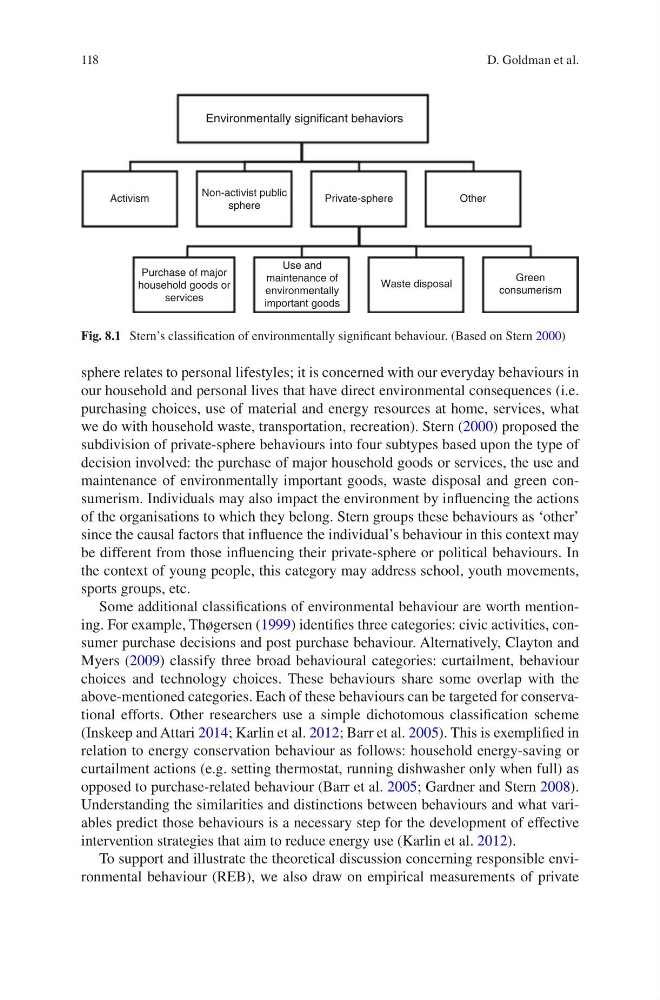
Fig. 8.1 Stern’s classification of environmentally significant behaviour. (Based on Stern 2000)
sphere relates to personal lifestyles; it is concerned with our everyday behaviours in
our household and personal lives that have direct environmental consequences (i.e.
purchasing choices, use of material and energy resources at home, services, what
we do with household waste, transportation, recreation). Stern (2000) proposed the
subdivision of private-sphere behaviours into four subtypes based upon the type of
decision involved: the purchase of major household goods or services, the use and
maintenance of environmentally important goods, waste disposal and green consumerism. Individuals may also impact the environment by influencing the actions
of the organisations to which they belong. Stern groups these behaviours as ‘other’
since the causal factors that influence the individual’s behaviour in this context may
be different from those influencing their private-sphere or political behaviours. In
the context of young people, this category may address school, youth movements,
sports groups, etc.
Some additional classifications of environmental behaviour are worth mentioning. For example, Thøgersen (1999) identifies three categories: civic activities, consumer purchase decisions and post purchase behaviour. Alternatively, Clayton and
Myers (2009) classify three broad behavioural categories: curtailment, behaviour
choices and technology choices. These behaviours share some overlap with the
above-mentioned categories. Each of these behaviours can be targeted for conservational efforts. Other researchers use a simple dichotomous classification scheme
(Inskeep and Attari 2014; Karlin et al. 2012; Barr et al. 2005). This is exemplified in
relation to energy conservation behaviour as follows: household energy-saving or
curtailment actions (e.g. setting thermostat, running dishwasher only when full) as
opposed to purchase-related behaviour (Barr et al. 2005; Gardner and Stern 2008).
Understanding the similarities and distinctions between behaviours and what variables predict those behaviours is a necessary step for the development of effective
intervention strategies that aim to reduce energy use (Karlin et al. 2012).
To support and illustrate the theoretical discussion concerning responsible environmental behaviour (REB), we also draw on empirical measurements of private
D. Goldman et al.
Environmentally significant behaviors
Non-activist public
sphere
Activism
Purchase of major
household goods or
services
Use and
maintenance of
environmentally
important goods
Waste disposal
Green
consumerism
Private-sphere
Other
Fig. 8.1 Stern’s classification of environmentally significant behaviour. (Based on Stern 2000)
sphere relates to personal lifestyles; it is concerned with our everyday behaviours in
our household and personal lives that have direct environmental consequences (i.e.
purchasing choices, use of material and energy resources at home, services, what
we do with household waste, transportation, recreation). Stern (2000) proposed the
subdivision of private-sphere behaviours into four subtypes based upon the type of
decision involved: the purchase of major household goods or services, the use and
maintenance of environmentally important goods, waste disposal and green consumerism. Individuals may also impact the environment by influencing the actions
of the organisations to which they belong. Stern groups these behaviours as ‘other’
since the causal factors that influence the individual’s behaviour in this context may
be different from those influencing their private-sphere or political behaviours. In
the context of young people, this category may address school, youth movements,
sports groups, etc.
Some additional classifications of environmental behaviour are worth mentioning. For example, Thøgersen (1999) identifies three categories: civic activities, consumer purchase decisions and post purchase behaviour. Alternatively, Clayton and
Myers (2009) classify three broad behavioural categories: curtailment, behaviour
choices and technology choices. These behaviours share some overlap with the
above-mentioned categories. Each of these behaviours can be targeted for conservational efforts. Other researchers use a simple dichotomous classification scheme
(Inskeep and Attari 2014; Karlin et al. 2012; Barr et al. 2005). This is exemplified in
relation to energy conservation behaviour as follows: household energy-saving or
curtailment actions (e.g. setting thermostat, running dishwasher only when full) as
opposed to purchase-related behaviour (Barr et al. 2005; Gardner and Stern 2008).
Understanding the similarities and distinctions between behaviours and what variables predict those behaviours is a necessary step for the development of effective
intervention strategies that aim to reduce energy use (Karlin et al. 2012).
To support and illustrate the theoretical discussion concerning responsible environmental behaviour (REB), we also draw on empirical measurements of private
D. Goldman et al.