

N 2 W
3 D u ; v W
À
Á À!
M N 2 B
3 P g ; v B
À
Á À!
M N 2 W
3 D u ; v WÀ1
À
Á ;
ð5:6:1Þ
equivalent vibrational relaxation in the sense of the N 2 (W
3 D u ,v W ) energy loss
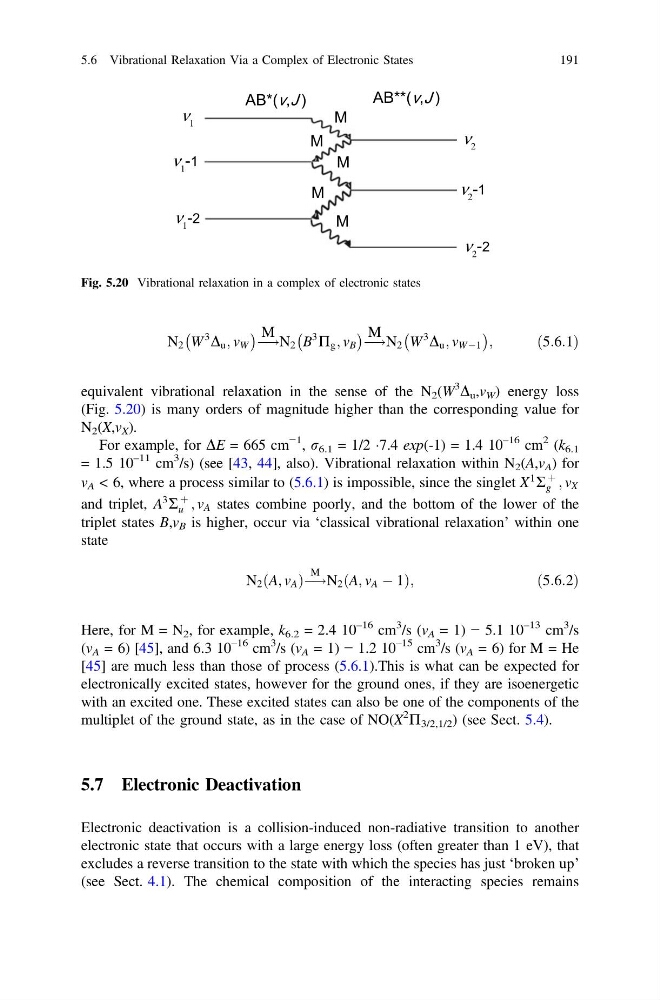
(Fig. 5.20) is many orders of magnitude higher than the corresponding value for
N 2 (X,v X ).
For example, for DE = 665 cm
−1 , r 6.1 = 1/2 Á7.4 exp(-1) = 1.4 10
–16 cm
2 (k 6.1
= 1.5 10
–11 cm
3 /s) (see [43, 44], also). Vibrational relaxation within N 2 (A,v A ) for
v A < 6, where a process similar to (5.6.1) is impossible, since the singlet X
1 R
þ
g ; v X
and triplet, A
3 R
þ
u ; v A states combine poorly, and the bottom of the lower of the
triplet states B,v B is higher, occur via ‘classical vibrational relaxation’ within one
state
N 2 A; v A
ð
ÞÀ !
M N 2 A; v A À 1
ð
Þ ;
ð5:6:2Þ
Here, for M = N 2 , for example, k 6.2 = 2.4 10
–16 cm
3 /s (v A = 1) − 5.1 10
–13 cm
3
/s
(v A = 6) [45], and 6.3 10
–16 cm
3 /s (v A = 1) − 1.2 10
–15 cm
3 /s (v A = 6) for M = He
[45] are much less than those of process (5.6.1).This is what can be expected for
electronically excited states, however for the ground ones, if they are isoenergetic
with an excited one. These excited states can also be one of the components of the
multiplet of the ground state, as in the case of NO(X
2 P 3/2,1/2 ) (see Sect. 5.4).
5.7 Electronic Deactivation
Electronic deactivation is a collision-induced non-radiative transition to another
electronic state that occurs with a large energy loss (often greater than 1 eV), that
excludes a reverse transition to the state with which the species has just ‘broken up’
(see Sect. 4.1). The chemical composition of the interacting species remains
ν 2
ν 2 -2
ν 2 -1
ν 1
ν 1 -2
ν 1 -1
AB**(v,J )
AB*(v,J )
M
M
M
M
M
Fig. 5.20 Vibrational relaxation in a complex of electronic states
5.6 Vibrational Relaxation Via a Complex of Electronic States
191
3 D u ; v W
À
Á À!
M N 2 B
3 P g ; v B
À
Á À!
M N 2 W
3 D u ; v WÀ1
À
Á ;
ð5:6:1Þ
equivalent vibrational relaxation in the sense of the N 2 (W
3 D u ,v W ) energy loss
(Fig. 5.20) is many orders of magnitude higher than the corresponding value for
N 2 (X,v X ).
For example, for DE = 665 cm
−1 , r 6.1 = 1/2 Á7.4 exp(-1) = 1.4 10
–16 cm
2 (k 6.1
= 1.5 10
–11 cm
3 /s) (see [43, 44], also). Vibrational relaxation within N 2 (A,v A ) for
v A < 6, where a process similar to (5.6.1) is impossible, since the singlet X
1 R
þ
g ; v X
and triplet, A
3 R
þ
u ; v A states combine poorly, and the bottom of the lower of the
triplet states B,v B is higher, occur via ‘classical vibrational relaxation’ within one
state
N 2 A; v A
ð
ÞÀ !
M N 2 A; v A À 1
ð
Þ ;
ð5:6:2Þ
Here, for M = N 2 , for example, k 6.2 = 2.4 10
–16 cm
3 /s (v A = 1) − 5.1 10
–13 cm
3
/s
(v A = 6) [45], and 6.3 10
–16 cm
3 /s (v A = 1) − 1.2 10
–15 cm
3 /s (v A = 6) for M = He
[45] are much less than those of process (5.6.1).This is what can be expected for
electronically excited states, however for the ground ones, if they are isoenergetic
with an excited one. These excited states can also be one of the components of the
multiplet of the ground state, as in the case of NO(X
2 P 3/2,1/2 ) (see Sect. 5.4).
5.7 Electronic Deactivation
Electronic deactivation is a collision-induced non-radiative transition to another
electronic state that occurs with a large energy loss (often greater than 1 eV), that
excludes a reverse transition to the state with which the species has just ‘broken up’
(see Sect. 4.1). The chemical composition of the interacting species remains
ν 2
ν 2 -2
ν 2 -1
ν 1
ν 1 -2
ν 1 -1
AB**(v,J )
AB*(v,J )
M
M
M
M
M
Fig. 5.20 Vibrational relaxation in a complex of electronic states
5.6 Vibrational Relaxation Via a Complex of Electronic States
191