

simplify the problem, one can draw only four cubes side by side to get the central
atom along with five other nearest atoms, only one atom will lie outside.
Now, connect the central point with all other neighboring atoms as shown in the
figure. Mark their midpoints and draw planes through these bisectors as mentioned
in the procedure. Volume enclosed by the intersection of these planes (the resulting
shape is a simple cube) is the required Wigner–Seitz unit cell as shown in Fig. 2.2c.
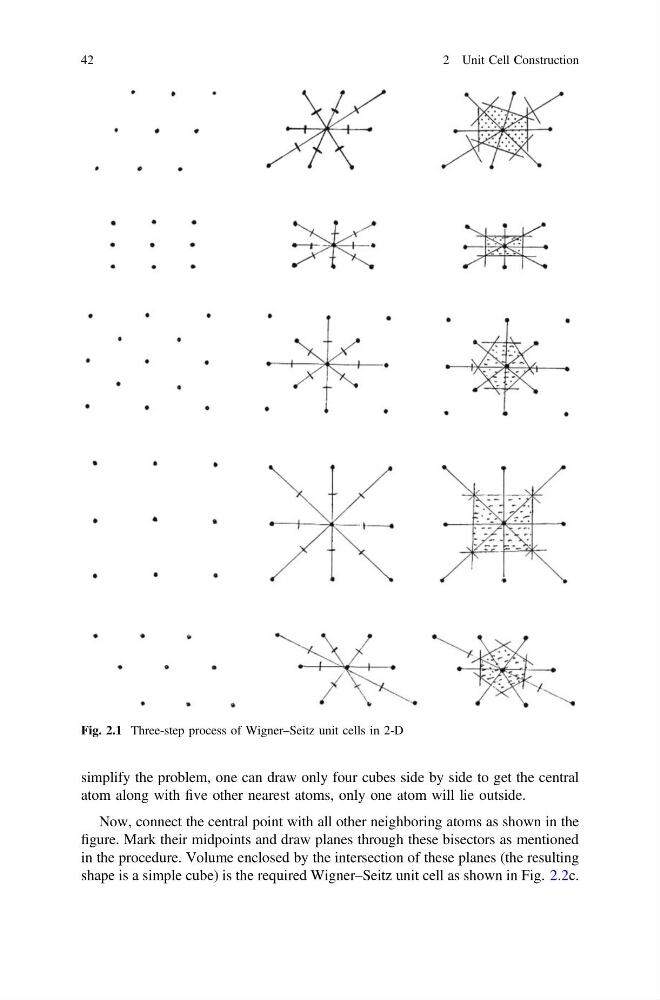
Fig. 2.1 Three-step process of Wigner–Seitz unit cells in 2-D
42
2 Unit Cell Construction
atom along with five other nearest atoms, only one atom will lie outside.
Now, connect the central point with all other neighboring atoms as shown in the
figure. Mark their midpoints and draw planes through these bisectors as mentioned
in the procedure. Volume enclosed by the intersection of these planes (the resulting
shape is a simple cube) is the required Wigner–Seitz unit cell as shown in Fig. 2.2c.
Fig. 2.1 Three-step process of Wigner–Seitz unit cells in 2-D
42
2 Unit Cell Construction