

E C 3 E ¼ E C 3 ¼ C 3
C 3 C 3 C
2
3 ¼ C 3 E ¼ C 3
C
2
3 C 3 C 3 ¼ C
2
3 C
2
3 ¼ C 3
C 2x C 3 C 2x ¼ C 2x C 2xy ¼ C
2
3
C 2y C 3 C 2y ¼ C 2y C 2x ¼ C
2
3
C 2xy C 3 C 2xy ¼ C 2xy C 2y ¼ C
2
3
E C
2
3 E ¼ E C
2
3 ¼ C
2
3
C 3 C
2
3 C
2
3 ¼ C 3 C 3 ¼ C
2
3
C
2
3 C
2
3 C 3 ¼ C
2
3 E ¼ C
2
3
C 2x C
2
3 C 2x ¼ C 2x C 2y ¼ C 3
C 2y C
2
3 C 2y ¼ C 2y C 2xy ¼ C 3
C 2xy C
2
3 C 2xy ¼ C 2xy C 2x ¼ C 3
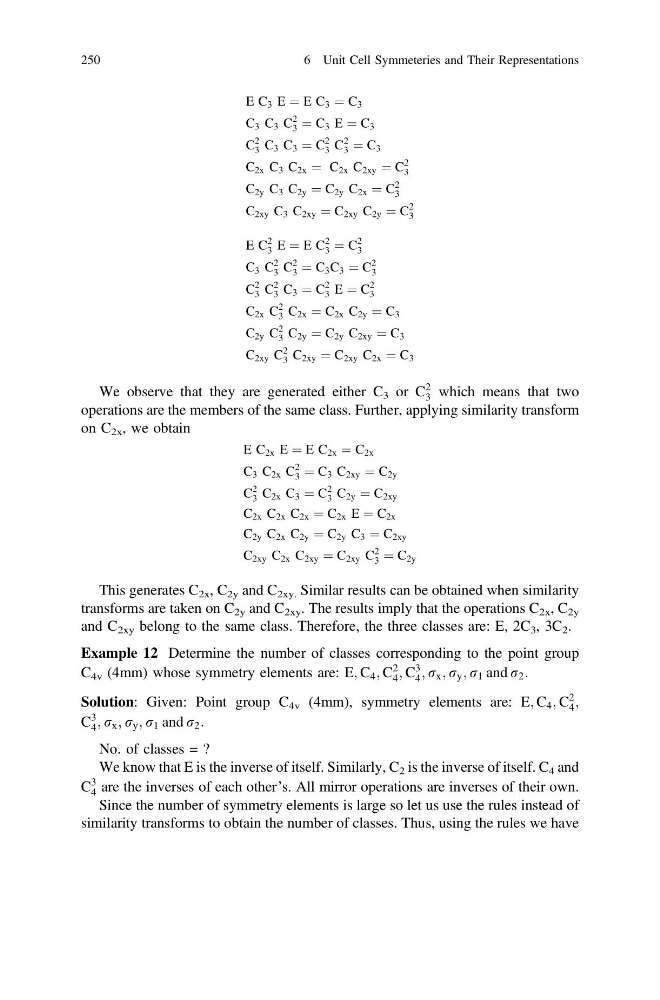
We observe that they are generated either C 3 or C
2
3 which means that two
operations are the members of the same class. Further, applying similarity transform
on C 2x , we obtain
E C 2x E ¼ E C 2x ¼ C 2x
C 3 C 2x C
2
3 ¼ C 3 C 2xy ¼ C 2y
C
2
3 C 2x C 3 ¼ C
2
3 C 2y ¼ C 2xy
C 2x C 2x C 2x ¼ C 2x E ¼ C 2x
C 2y C 2x C 2y ¼ C 2y C 3 ¼ C 2xy
C 2xy C 2x C 2xy ¼ C 2xy C
2
3 ¼ C 2y
This generates C 2x , C 2y and C 2xy. Similar results can be obtained when similarity
transforms are taken on C 2y and C 2xy . The results imply that the operations C 2x , C 2y
and C 2xy belong to the same class. Therefore, the three classes are: E, 2C 3 , 3C 2 .
Example 12 Determine the number of classes corresponding to the point group
C 4v (4mm) whose symmetry elements are: E; C 4 ; C
2
4 ; C
3
4 ; r x ; r y ; r 1 and r 2 :
Solution: Given: Point group C 4v (4mm), symmetry elements are: E; C 4 ; C
2
4 ;
C
3
4 ; r x ; r y ; r 1 and r 2 :
No. of classes = ?
We know that E is the inverse of itself. Similarly, C 2 is the inverse of itself. C 4 and
C
3
4 are the inverses of each other’s. All mirror operations are inverses of their own.
Since the number of symmetry elements is large so let us use the rules instead of
similarity transforms to obtain the number of classes. Thus, using the rules we have
250
6 Unit Cell Symmeteries and Their Representations
C 3 C 3 C
2
3 ¼ C 3 E ¼ C 3
C
2
3 C 3 C 3 ¼ C
2
3 C
2
3 ¼ C 3
C 2x C 3 C 2x ¼ C 2x C 2xy ¼ C
2
3
C 2y C 3 C 2y ¼ C 2y C 2x ¼ C
2
3
C 2xy C 3 C 2xy ¼ C 2xy C 2y ¼ C
2
3
E C
2
3 E ¼ E C
2
3 ¼ C
2
3
C 3 C
2
3 C
2
3 ¼ C 3 C 3 ¼ C
2
3
C
2
3 C
2
3 C 3 ¼ C
2
3 E ¼ C
2
3
C 2x C
2
3 C 2x ¼ C 2x C 2y ¼ C 3
C 2y C
2
3 C 2y ¼ C 2y C 2xy ¼ C 3
C 2xy C
2
3 C 2xy ¼ C 2xy C 2x ¼ C 3
We observe that they are generated either C 3 or C
2
3 which means that two
operations are the members of the same class. Further, applying similarity transform
on C 2x , we obtain
E C 2x E ¼ E C 2x ¼ C 2x
C 3 C 2x C
2
3 ¼ C 3 C 2xy ¼ C 2y
C
2
3 C 2x C 3 ¼ C
2
3 C 2y ¼ C 2xy
C 2x C 2x C 2x ¼ C 2x E ¼ C 2x
C 2y C 2x C 2y ¼ C 2y C 3 ¼ C 2xy
C 2xy C 2x C 2xy ¼ C 2xy C
2
3 ¼ C 2y
This generates C 2x , C 2y and C 2xy. Similar results can be obtained when similarity
transforms are taken on C 2y and C 2xy . The results imply that the operations C 2x , C 2y
and C 2xy belong to the same class. Therefore, the three classes are: E, 2C 3 , 3C 2 .
Example 12 Determine the number of classes corresponding to the point group
C 4v (4mm) whose symmetry elements are: E; C 4 ; C
2
4 ; C
3
4 ; r x ; r y ; r 1 and r 2 :
Solution: Given: Point group C 4v (4mm), symmetry elements are: E; C 4 ; C
2
4 ;
C
3
4 ; r x ; r y ; r 1 and r 2 :
No. of classes = ?
We know that E is the inverse of itself. Similarly, C 2 is the inverse of itself. C 4 and
C
3
4 are the inverses of each other’s. All mirror operations are inverses of their own.
Since the number of symmetry elements is large so let us use the rules instead of
similarity transforms to obtain the number of classes. Thus, using the rules we have
250
6 Unit Cell Symmeteries and Their Representations