

224
C. Tang (唐晨宇) and Y. Wang (王延颋)
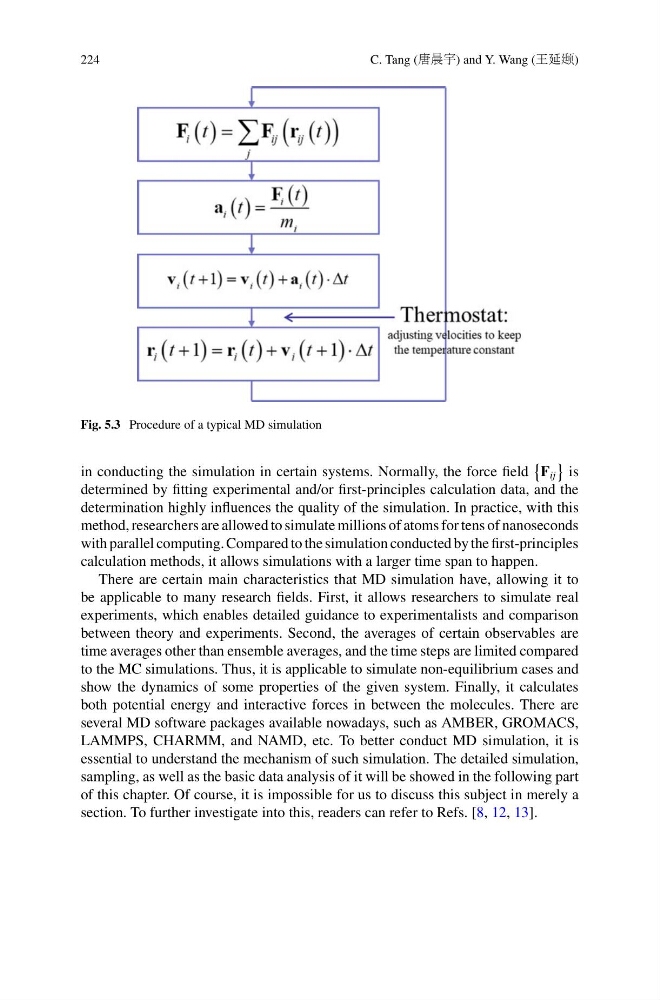
Fig. 5.3 Procedure of a typical MD simulation
in conducting the simulation in certain systems. Normally, the force field
F ij
is
determined by fitting experimental and/or first-principles calculation data, and the
determination highly influences the quality of the simulation. In practice, with this
method, researchers are allowed to simulate millions of atoms for tens of nanoseconds
with parallel computing. Compared to the simulation conducted by the first-principles
calculation methods, it allows simulations with a larger time span to happen.
There are certain main characteristics that MD simulation have, allowing it to
be applicable to many research fields. First, it allows researchers to simulate real
experiments, which enables detailed guidance to experimentalists and comparison
between theory and experiments. Second, the averages of certain observables are
time averages other than ensemble averages, and the time steps are limited compared
to the MC simulations. Thus, it is applicable to simulate non-equilibrium cases and
show the dynamics of some properties of the given system. Finally, it calculates
both potential energy and interactive forces in between the molecules. There are
several MD software packages available nowadays, such as AMBER, GROMACS,
LAMMPS, CHARMM, and NAMD, etc. To better conduct MD simulation, it is
essential to understand the mechanism of such simulation. The detailed simulation,
sampling, as well as the basic data analysis of it will be showed in the following part
of this chapter. Of course, it is impossible for us to discuss this subject in merely a
section. To further investigate into this, readers can refer to Refs. [8, 12, 13].
C. Tang (唐晨宇) and Y. Wang (王延颋)
Fig. 5.3 Procedure of a typical MD simulation
in conducting the simulation in certain systems. Normally, the force field
F ij
is
determined by fitting experimental and/or first-principles calculation data, and the
determination highly influences the quality of the simulation. In practice, with this
method, researchers are allowed to simulate millions of atoms for tens of nanoseconds
with parallel computing. Compared to the simulation conducted by the first-principles
calculation methods, it allows simulations with a larger time span to happen.
There are certain main characteristics that MD simulation have, allowing it to
be applicable to many research fields. First, it allows researchers to simulate real
experiments, which enables detailed guidance to experimentalists and comparison
between theory and experiments. Second, the averages of certain observables are
time averages other than ensemble averages, and the time steps are limited compared
to the MC simulations. Thus, it is applicable to simulate non-equilibrium cases and
show the dynamics of some properties of the given system. Finally, it calculates
both potential energy and interactive forces in between the molecules. There are
several MD software packages available nowadays, such as AMBER, GROMACS,
LAMMPS, CHARMM, and NAMD, etc. To better conduct MD simulation, it is
essential to understand the mechanism of such simulation. The detailed simulation,
sampling, as well as the basic data analysis of it will be showed in the following part
of this chapter. Of course, it is impossible for us to discuss this subject in merely a
section. To further investigate into this, readers can refer to Refs. [8, 12, 13].