

418
9 Looking Back and Looking Forward
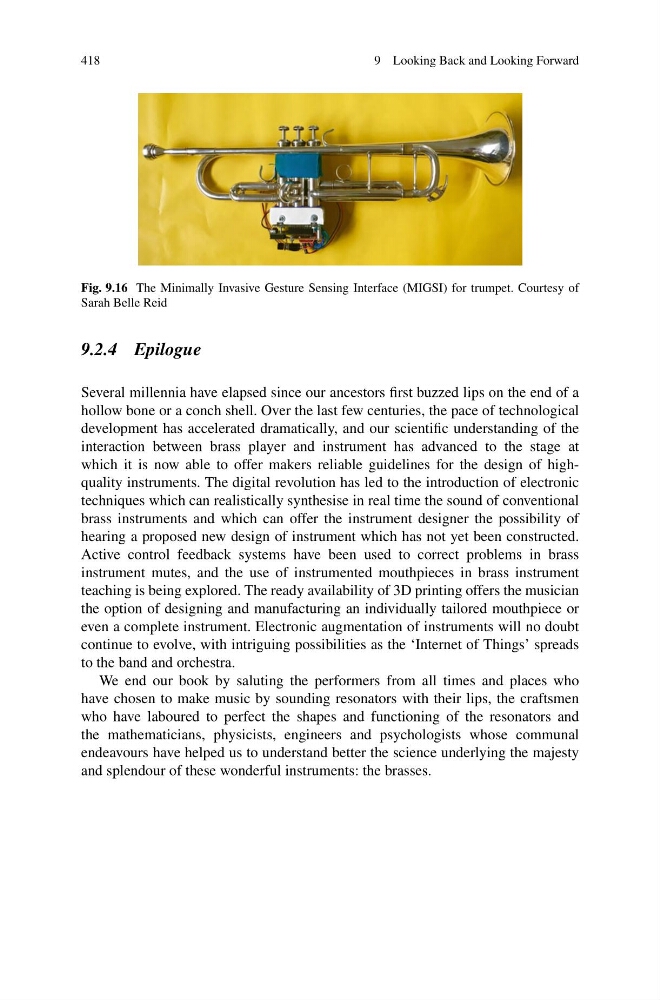
Fig. 9.16 The Minimally Invasive Gesture Sensing Interface (MIGSI) for trumpet. Courtesy of
Sarah Belle Reid
9.2.4 Epilogue
Several millennia have elapsed since our ancestors first buzzed lips on the end of a
hollow bone or a conch shell. Over the last few centuries, the pace of technological
development has accelerated dramatically, and our scientific understanding of the
interaction between brass player and instrument has advanced to the stage at
which it is now able to offer makers reliable guidelines for the design of highquality instruments. The digital revolution has led to the introduction of electronic
techniques which can realistically synthesise in real time the sound of conventional
brass instruments and which can offer the instrument designer the possibility of
hearing a proposed new design of instrument which has not yet been constructed.
Active control feedback systems have been used to correct problems in brass
instrument mutes, and the use of instrumented mouthpieces in brass instrument
teaching is being explored. The ready availability of 3D printing offers the musician
the option of designing and manufacturing an individually tailored mouthpiece or
even a complete instrument. Electronic augmentation of instruments will no doubt
continue to evolve, with intriguing possibilities as the ‘Internet of Things’ spreads
to the band and orchestra.
We end our book by saluting the performers from all times and places who
have chosen to make music by sounding resonators with their lips, the craftsmen
who have laboured to perfect the shapes and functioning of the resonators and
the mathematicians, physicists, engineers and psychologists whose communal
endeavours have helped us to understand better the science underlying the majesty
and splendour of these wonderful instruments: the brasses.
9 Looking Back and Looking Forward
Fig. 9.16 The Minimally Invasive Gesture Sensing Interface (MIGSI) for trumpet. Courtesy of
Sarah Belle Reid
9.2.4 Epilogue
Several millennia have elapsed since our ancestors first buzzed lips on the end of a
hollow bone or a conch shell. Over the last few centuries, the pace of technological
development has accelerated dramatically, and our scientific understanding of the
interaction between brass player and instrument has advanced to the stage at
which it is now able to offer makers reliable guidelines for the design of highquality instruments. The digital revolution has led to the introduction of electronic
techniques which can realistically synthesise in real time the sound of conventional
brass instruments and which can offer the instrument designer the possibility of
hearing a proposed new design of instrument which has not yet been constructed.
Active control feedback systems have been used to correct problems in brass
instrument mutes, and the use of instrumented mouthpieces in brass instrument
teaching is being explored. The ready availability of 3D printing offers the musician
the option of designing and manufacturing an individually tailored mouthpiece or
even a complete instrument. Electronic augmentation of instruments will no doubt
continue to evolve, with intriguing possibilities as the ‘Internet of Things’ spreads
to the band and orchestra.
We end our book by saluting the performers from all times and places who
have chosen to make music by sounding resonators with their lips, the craftsmen
who have laboured to perfect the shapes and functioning of the resonators and
the mathematicians, physicists, engineers and psychologists whose communal
endeavours have helped us to understand better the science underlying the majesty
and splendour of these wonderful instruments: the brasses.