

4.3 Bore Profiles of Brass Instruments
143
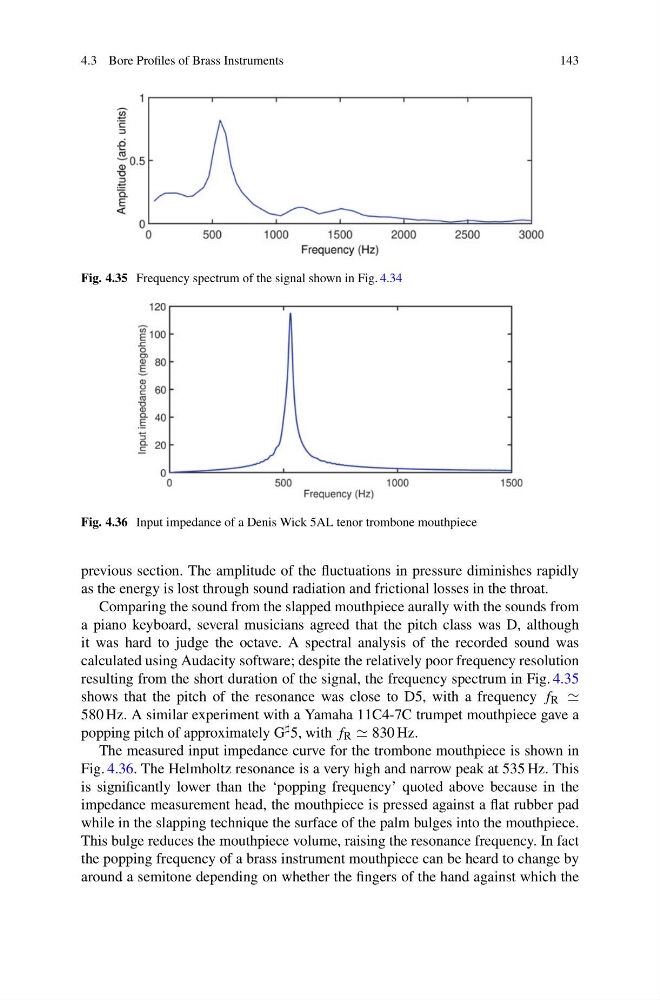
Fig. 4.35 Frequency spectrum of the signal shown in Fig. 4.34
Fig. 4.36 Input impedance of a Denis Wick 5AL tenor trombone mouthpiece
previous section. The amplitude of the fluctuations in pressure diminishes rapidly
as the energy is lost through sound radiation and frictional losses in the throat.
Comparing the sound from the slapped mouthpiece aurally with the sounds from
a piano keyboard, several musicians agreed that the pitch class was D, although
it was hard to judge the octave. A spectral analysis of the recorded sound was
calculated using Audacity software; despite the relatively poor frequency resolution
resulting from the short duration of the signal, the frequency spectrum in Fig. 4.35
shows that the pitch of the resonance was close to D5, with a frequency f R
580 Hz. A similar experiment with a Yamaha 11C4-7C trumpet mouthpiece gave a
popping pitch of approximately G 5, with f R 830 Hz.
The measured input impedance curve for the trombone mouthpiece is shown in
Fig. 4.36. The Helmholtz resonance is a very high and narrow peak at 535 Hz. This
is significantly lower than the ‘popping frequency’ quoted above because in the
impedance measurement head, the mouthpiece is pressed against a flat rubber pad
while in the slapping technique the surface of the palm bulges into the mouthpiece.
This bulge reduces the mouthpiece volume, raising the resonance frequency. In fact
the popping frequency of a brass instrument mouthpiece can be heard to change by
around a semitone depending on whether the fingers of the hand against which the
143
Fig. 4.35 Frequency spectrum of the signal shown in Fig. 4.34
Fig. 4.36 Input impedance of a Denis Wick 5AL tenor trombone mouthpiece
previous section. The amplitude of the fluctuations in pressure diminishes rapidly
as the energy is lost through sound radiation and frictional losses in the throat.
Comparing the sound from the slapped mouthpiece aurally with the sounds from
a piano keyboard, several musicians agreed that the pitch class was D, although
it was hard to judge the octave. A spectral analysis of the recorded sound was
calculated using Audacity software; despite the relatively poor frequency resolution
resulting from the short duration of the signal, the frequency spectrum in Fig. 4.35
shows that the pitch of the resonance was close to D5, with a frequency f R
580 Hz. A similar experiment with a Yamaha 11C4-7C trumpet mouthpiece gave a
popping pitch of approximately G 5, with f R 830 Hz.
The measured input impedance curve for the trombone mouthpiece is shown in
Fig. 4.36. The Helmholtz resonance is a very high and narrow peak at 535 Hz. This
is significantly lower than the ‘popping frequency’ quoted above because in the
impedance measurement head, the mouthpiece is pressed against a flat rubber pad
while in the slapping technique the surface of the palm bulges into the mouthpiece.
This bulge reduces the mouthpiece volume, raising the resonance frequency. In fact
the popping frequency of a brass instrument mouthpiece can be heard to change by
around a semitone depending on whether the fingers of the hand against which the