

2 New Signatures of Phase Transition from Models of Nuclear Multifragmentation
17
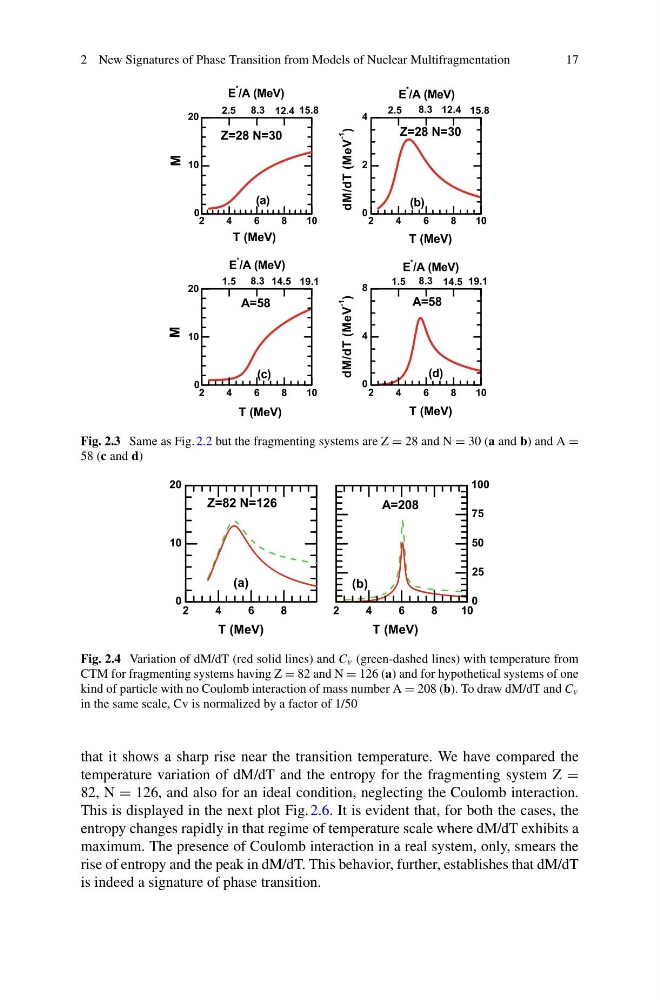
Fig. 2.3 Same as Fig. 2.2 but the fragmenting systems are Z = 28 and N = 30 (a and b) and A =
58 (c and d)
Fig. 2.4 Variation of dM/dT (red solid lines) and C v (green-dashed lines) with temperature from
CTM for fragmenting systems having Z = 82 and N = 126 (a) and for hypothetical systems of one
kind of particle with no Coulomb interaction of mass number A = 208 (b). To draw dM/dT and C v
in the same scale, Cv is normalized by a factor of 1/50
that it shows a sharp rise near the transition temperature. We have compared the
temperature variation of dM/dT and the entropy for the fragmenting system Z =
82, N = 126, and also for an ideal condition, neglecting the Coulomb interaction.
This is displayed in the next plot Fig. 2.6. It is evident that, for both the cases, the
entropy changes rapidly in that regime of temperature scale where dM/dT exhibits a
maximum. The presence of Coulomb interaction in a real system, only, smears the
rise of entropy and the peak in dM/dT. This behavior, further, establishes that dM/dT
is indeed a signature of phase transition.
17
Fig. 2.3 Same as Fig. 2.2 but the fragmenting systems are Z = 28 and N = 30 (a and b) and A =
58 (c and d)
Fig. 2.4 Variation of dM/dT (red solid lines) and C v (green-dashed lines) with temperature from
CTM for fragmenting systems having Z = 82 and N = 126 (a) and for hypothetical systems of one
kind of particle with no Coulomb interaction of mass number A = 208 (b). To draw dM/dT and C v
in the same scale, Cv is normalized by a factor of 1/50
that it shows a sharp rise near the transition temperature. We have compared the
temperature variation of dM/dT and the entropy for the fragmenting system Z =
82, N = 126, and also for an ideal condition, neglecting the Coulomb interaction.
This is displayed in the next plot Fig. 2.6. It is evident that, for both the cases, the
entropy changes rapidly in that regime of temperature scale where dM/dT exhibits a
maximum. The presence of Coulomb interaction in a real system, only, smears the
rise of entropy and the peak in dM/dT. This behavior, further, establishes that dM/dT
is indeed a signature of phase transition.