

164
M. M. Aggarwal
The Elliptic flow is one of the first important observables measured at the Relativistic Heavy-Ion Collider (RHIC) [13, 14]. The ideal hydrodynamics without viscous
effects first reproduced the large observed elliptic flow at the RHIC in the Au+Au
collisions at
√ s NN = 200 GeV. Improved agreement with data was achieved with
viscous hydrodynamic models with a very small ratio of the shear viscosity to the
entropy density. The applicability of the hydrodynamics requires a short mean free
path with respect to the system size. This led to conclude that the created quark-gluon
plasma is strongly interacting and behaves like a nearly perfect liquid.
The heavy-ion programmes at the Large Hadron Collider at the CERN have
extended the energy range for measuring the properties of strongly interacting QuarkGluon Plasma (sQGP). The goal of heavy-ion experiments at RHIC and LHC is to
investigate the matter at extreme conditions of energy densities and high temperatures as evidenced by the available number of text books [15–20]. Results of the
elliptic flow will be presented in this article.
13.2 Elliptic Flow
Particle production in the elementary nucleon-nucleon collisions is azimuthally
isotropic whereas in non-central heavy-ion collisions it is azimuthally anisotropic.
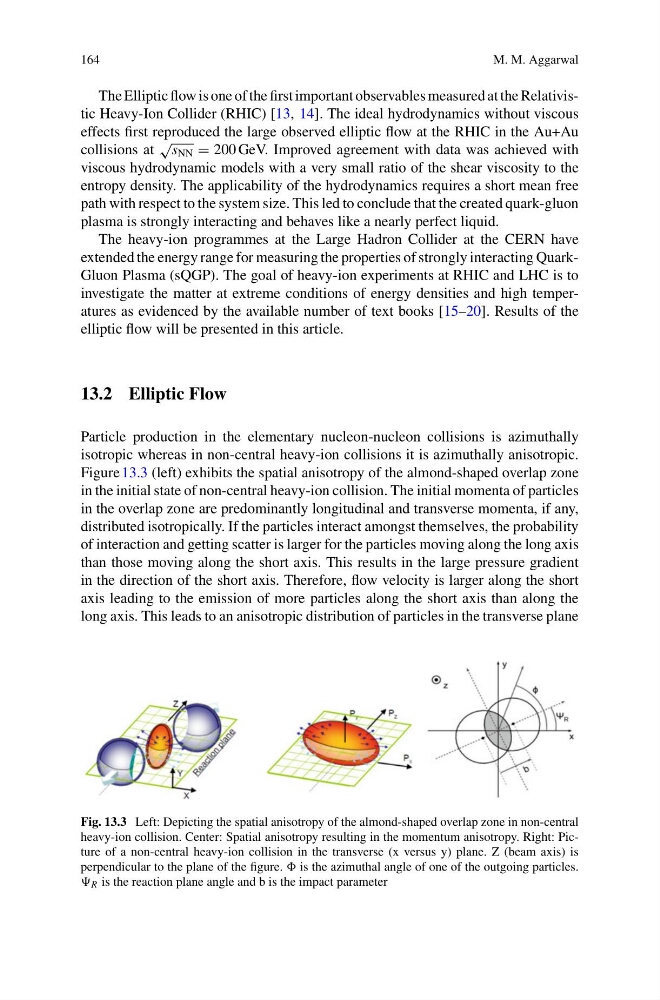
Figure 13.3 (left) exhibits the spatial anisotropy of the almond-shaped overlap zone
in the initial state of non-central heavy-ion collision. The initial momenta of particles
in the overlap zone are predominantly longitudinal and transverse momenta, if any,
distributed isotropically. If the particles interact amongst themselves, the probability
of interaction and getting scatter is larger for the particles moving along the long axis
than those moving along the short axis. This results in the large pressure gradient
in the direction of the short axis. Therefore, flow velocity is larger along the short
axis leading to the emission of more particles along the short axis than along the
long axis. This leads to an anisotropic distribution of particles in the transverse plane
Fig. 13.3 Left: Depicting the spatial anisotropy of the almond-shaped overlap zone in non-central
heavy-ion collision. Center: Spatial anisotropy resulting in the momentum anisotropy. Right: Picture of a non-central heavy-ion collision in the transverse (x versus y) plane. Z (beam axis) is
perpendicular to the plane of the figure. is the azimuthal angle of one of the outgoing particles.
R is the reaction plane angle and b is the impact parameter
M. M. Aggarwal
The Elliptic flow is one of the first important observables measured at the Relativistic Heavy-Ion Collider (RHIC) [13, 14]. The ideal hydrodynamics without viscous
effects first reproduced the large observed elliptic flow at the RHIC in the Au+Au
collisions at
√ s NN = 200 GeV. Improved agreement with data was achieved with
viscous hydrodynamic models with a very small ratio of the shear viscosity to the
entropy density. The applicability of the hydrodynamics requires a short mean free
path with respect to the system size. This led to conclude that the created quark-gluon
plasma is strongly interacting and behaves like a nearly perfect liquid.
The heavy-ion programmes at the Large Hadron Collider at the CERN have
extended the energy range for measuring the properties of strongly interacting QuarkGluon Plasma (sQGP). The goal of heavy-ion experiments at RHIC and LHC is to
investigate the matter at extreme conditions of energy densities and high temperatures as evidenced by the available number of text books [15–20]. Results of the
elliptic flow will be presented in this article.
13.2 Elliptic Flow
Particle production in the elementary nucleon-nucleon collisions is azimuthally
isotropic whereas in non-central heavy-ion collisions it is azimuthally anisotropic.
Figure 13.3 (left) exhibits the spatial anisotropy of the almond-shaped overlap zone
in the initial state of non-central heavy-ion collision. The initial momenta of particles
in the overlap zone are predominantly longitudinal and transverse momenta, if any,
distributed isotropically. If the particles interact amongst themselves, the probability
of interaction and getting scatter is larger for the particles moving along the long axis
than those moving along the short axis. This results in the large pressure gradient
in the direction of the short axis. Therefore, flow velocity is larger along the short
axis leading to the emission of more particles along the short axis than along the
long axis. This leads to an anisotropic distribution of particles in the transverse plane
Fig. 13.3 Left: Depicting the spatial anisotropy of the almond-shaped overlap zone in non-central
heavy-ion collision. Center: Spatial anisotropy resulting in the momentum anisotropy. Right: Picture of a non-central heavy-ion collision in the transverse (x versus y) plane. Z (beam axis) is
perpendicular to the plane of the figure. is the azimuthal angle of one of the outgoing particles.
R is the reaction plane angle and b is the impact parameter