

546
16 Scientific Instrument Technology of Lunar Lander
EUV camera
Ground console
Turntable
Image acquisition
equipment
Temperature
monitoring equipment
EUV
light
source
chromator
EUV
Collimation
system
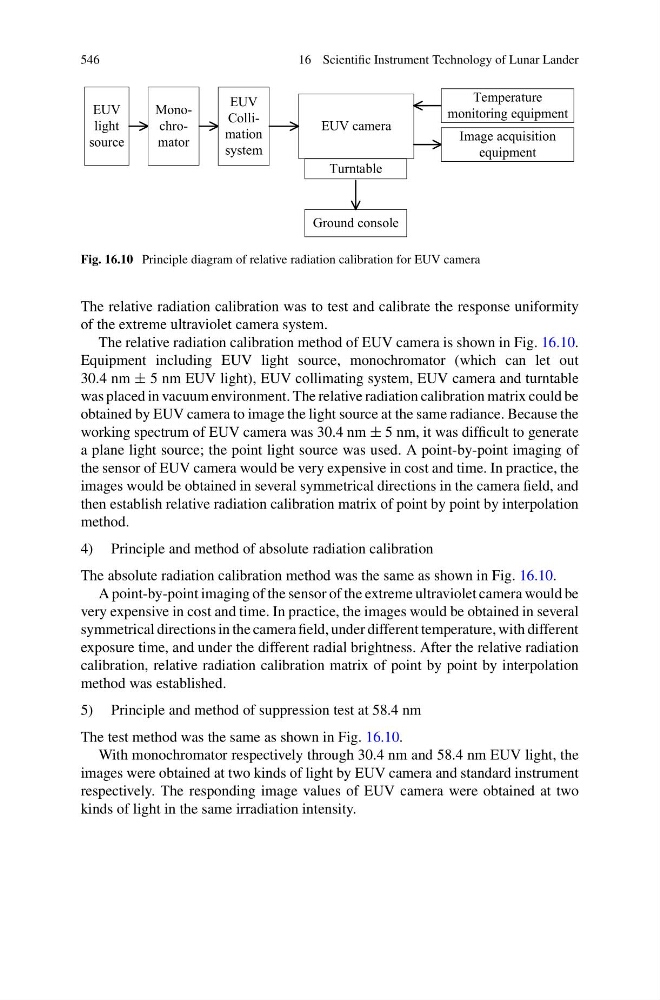
Fig. 16.10 Principle diagram of relative radiation calibration for EUV camera
The relative radiation calibration was to test and calibrate the response uniformity
of the extreme ultraviolet camera system.
The relative radiation calibration method of EUV camera is shown in Fig. 16.10.
Equipment including EUV light source, monochromator (which can let out
30.4 nm ± 5 nm EUV light), EUV collimating system, EUV camera and turntable
was placed in vacuum environment. The relative radiation calibration matrix could be
obtained by EUV camera to image the light source at the same radiance. Because the
working spectrum of EUV camera was 30.4 nm ± 5 nm, it was difficult to generate
a plane light source; the point light source was used. A point-by-point imaging of
the sensor of EUV camera would be very expensive in cost and time. In practice, the
images would be obtained in several symmetrical directions in the camera field, and
then establish relative radiation calibration matrix of point by point by interpolation
method.
4) Principle and method of absolute radiation calibration
The absolute radiation calibration method was the same as shown in Fig. 16.10.
A point-by-point imaging of the sensor of the extreme ultraviolet camera would be
very expensive in cost and time. In practice, the images would be obtained in several
symmetrical directions in the camera field, under different temperature, with different
exposure time, and under the different radial brightness. After the relative radiation
calibration, relative radiation calibration matrix of point by point by interpolation
method was established.
5) Principle and method of suppression test at 58.4 nm
The test method was the same as shown in Fig. 16.10.
With monochromator respectively through 30.4 nm and 58.4 nm EUV light, the
images were obtained at two kinds of light by EUV camera and standard instrument
respectively. The responding image values of EUV camera were obtained at two
kinds of light in the same irradiation intensity.
16 Scientific Instrument Technology of Lunar Lander
EUV camera
Ground console
Turntable
Image acquisition
equipment
Temperature
monitoring equipment
EUV
light
source
chromator
EUV
Collimation
system
Fig. 16.10 Principle diagram of relative radiation calibration for EUV camera
The relative radiation calibration was to test and calibrate the response uniformity
of the extreme ultraviolet camera system.
The relative radiation calibration method of EUV camera is shown in Fig. 16.10.
Equipment including EUV light source, monochromator (which can let out
30.4 nm ± 5 nm EUV light), EUV collimating system, EUV camera and turntable
was placed in vacuum environment. The relative radiation calibration matrix could be
obtained by EUV camera to image the light source at the same radiance. Because the
working spectrum of EUV camera was 30.4 nm ± 5 nm, it was difficult to generate
a plane light source; the point light source was used. A point-by-point imaging of
the sensor of EUV camera would be very expensive in cost and time. In practice, the
images would be obtained in several symmetrical directions in the camera field, and
then establish relative radiation calibration matrix of point by point by interpolation
method.
4) Principle and method of absolute radiation calibration
The absolute radiation calibration method was the same as shown in Fig. 16.10.
A point-by-point imaging of the sensor of the extreme ultraviolet camera would be
very expensive in cost and time. In practice, the images would be obtained in several
symmetrical directions in the camera field, under different temperature, with different
exposure time, and under the different radial brightness. After the relative radiation
calibration, relative radiation calibration matrix of point by point by interpolation
method was established.
5) Principle and method of suppression test at 58.4 nm
The test method was the same as shown in Fig. 16.10.
With monochromator respectively through 30.4 nm and 58.4 nm EUV light, the
images were obtained at two kinds of light by EUV camera and standard instrument
respectively. The responding image values of EUV camera were obtained at two
kinds of light in the same irradiation intensity.