

15.6 Landing Stability Tests
503
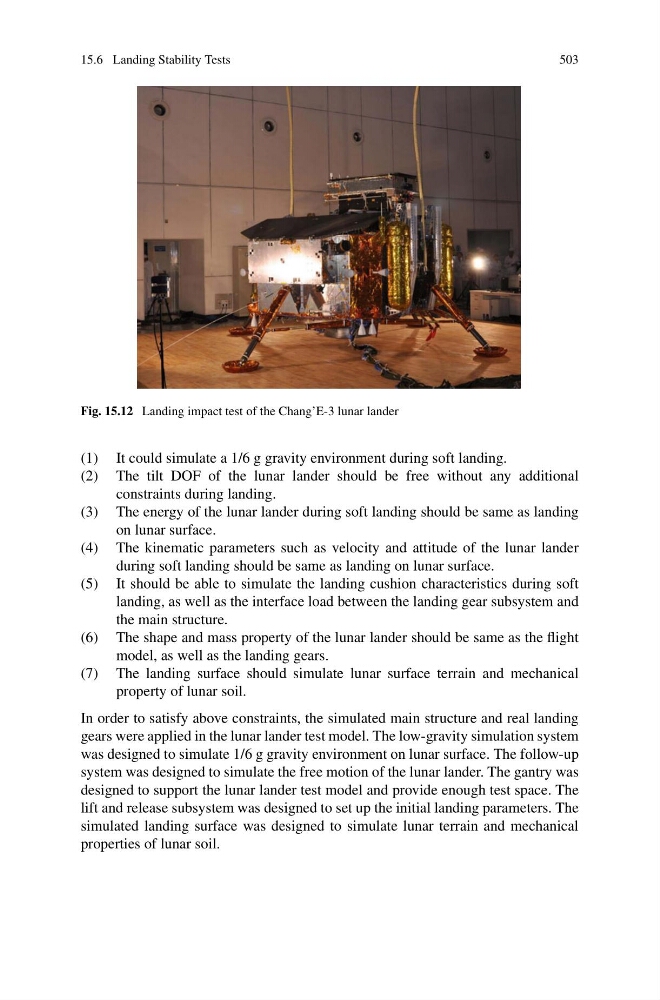
Fig. 15.12 Landing impact test of the Chang’E-3 lunar lander
(1) It could simulate a 1/6 g gravity environment during soft landing.
(2) The tilt DOF of the lunar lander should be free without any additional
constraints during landing.
(3) The energy of the lunar lander during soft landing should be same as landing
on lunar surface.
(4) The kinematic parameters such as velocity and attitude of the lunar lander
during soft landing should be same as landing on lunar surface.
(5) It should be able to simulate the landing cushion characteristics during soft
landing, as well as the interface load between the landing gear subsystem and
the main structure.
(6) The shape and mass property of the lunar lander should be same as the flight
model, as well as the landing gears.
(7) The landing surface should simulate lunar surface terrain and mechanical
property of lunar soil.
In order to satisfy above constraints, the simulated main structure and real landing
gears were applied in the lunar lander test model. The low-gravity simulation system
was designed to simulate 1/6 g gravity environment on lunar surface. The follow-up
system was designed to simulate the free motion of the lunar lander. The gantry was
designed to support the lunar lander test model and provide enough test space. The
lift and release subsystem was designed to set up the initial landing parameters. The
simulated landing surface was designed to simulate lunar terrain and mechanical
properties of lunar soil.
503
Fig. 15.12 Landing impact test of the Chang’E-3 lunar lander
(1) It could simulate a 1/6 g gravity environment during soft landing.
(2) The tilt DOF of the lunar lander should be free without any additional
constraints during landing.
(3) The energy of the lunar lander during soft landing should be same as landing
on lunar surface.
(4) The kinematic parameters such as velocity and attitude of the lunar lander
during soft landing should be same as landing on lunar surface.
(5) It should be able to simulate the landing cushion characteristics during soft
landing, as well as the interface load between the landing gear subsystem and
the main structure.
(6) The shape and mass property of the lunar lander should be same as the flight
model, as well as the landing gears.
(7) The landing surface should simulate lunar surface terrain and mechanical
property of lunar soil.
In order to satisfy above constraints, the simulated main structure and real landing
gears were applied in the lunar lander test model. The low-gravity simulation system
was designed to simulate 1/6 g gravity environment on lunar surface. The follow-up
system was designed to simulate the free motion of the lunar lander. The gantry was
designed to support the lunar lander test model and provide enough test space. The
lift and release subsystem was designed to set up the initial landing parameters. The
simulated landing surface was designed to simulate lunar terrain and mechanical
properties of lunar soil.