

482
14 Electrical Testing Technology of Lunar Lander
UHF
Transmitter
Attenuator
Lunar Rover
Power
Divider
UHF
Receiver
Lunar Lander
Integrated
Electronic
Subsystem
OBDH
subsystem
Data
Transmission
Channel
TT&C and
Telecommunication
subsystem SCOEs
Of lunar lander
TT&C and
Telecommunication
subsystem SCOEs
Of lunar rover
OCOE
Integrated Test
LAN
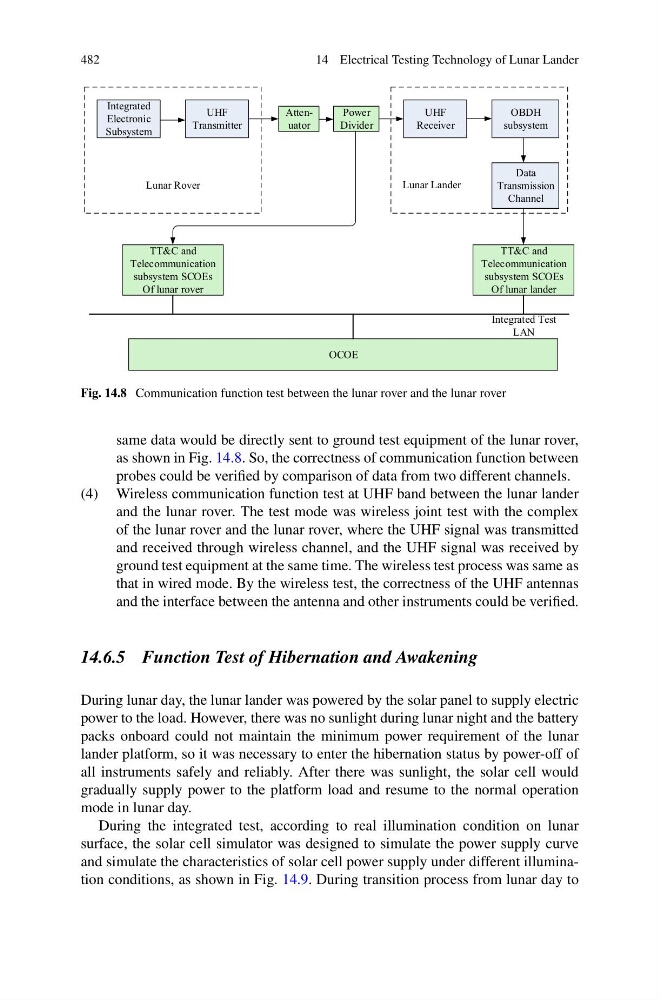
Fig. 14.8 Communication function test between the lunar rover and the lunar rover
same data would be directly sent to ground test equipment of the lunar rover,
as shown in Fig. 14.8. So, the correctness of communication function between
probes could be verified by comparison of data from two different channels.
(4) Wireless communication function test at UHF band between the lunar lander
and the lunar rover. The test mode was wireless joint test with the complex
of the lunar rover and the lunar rover, where the UHF signal was transmitted
and received through wireless channel, and the UHF signal was received by
ground test equipment at the same time. The wireless test process was same as
that in wired mode. By the wireless test, the correctness of the UHF antennas
and the interface between the antenna and other instruments could be verified.
14.6.5 Function Test of Hibernation and Awakening
During lunar day, the lunar lander was powered by the solar panel to supply electric
power to the load. However, there was no sunlight during lunar night and the battery
packs onboard could not maintain the minimum power requirement of the lunar
lander platform, so it was necessary to enter the hibernation status by power-off of
all instruments safely and reliably. After there was sunlight, the solar cell would
gradually supply power to the platform load and resume to the normal operation
mode in lunar day.
During the integrated test, according to real illumination condition on lunar
surface, the solar cell simulator was designed to simulate the power supply curve
and simulate the characteristics of solar cell power supply under different illumination conditions, as shown in Fig. 14.9. During transition process from lunar day to
14 Electrical Testing Technology of Lunar Lander
UHF
Transmitter
Attenuator
Lunar Rover
Power
Divider
UHF
Receiver
Lunar Lander
Integrated
Electronic
Subsystem
OBDH
subsystem
Data
Transmission
Channel
TT&C and
Telecommunication
subsystem SCOEs
Of lunar lander
TT&C and
Telecommunication
subsystem SCOEs
Of lunar rover
OCOE
Integrated Test
LAN
Fig. 14.8 Communication function test between the lunar rover and the lunar rover
same data would be directly sent to ground test equipment of the lunar rover,
as shown in Fig. 14.8. So, the correctness of communication function between
probes could be verified by comparison of data from two different channels.
(4) Wireless communication function test at UHF band between the lunar lander
and the lunar rover. The test mode was wireless joint test with the complex
of the lunar rover and the lunar rover, where the UHF signal was transmitted
and received through wireless channel, and the UHF signal was received by
ground test equipment at the same time. The wireless test process was same as
that in wired mode. By the wireless test, the correctness of the UHF antennas
and the interface between the antenna and other instruments could be verified.
14.6.5 Function Test of Hibernation and Awakening
During lunar day, the lunar lander was powered by the solar panel to supply electric
power to the load. However, there was no sunlight during lunar night and the battery
packs onboard could not maintain the minimum power requirement of the lunar
lander platform, so it was necessary to enter the hibernation status by power-off of
all instruments safely and reliably. After there was sunlight, the solar cell would
gradually supply power to the platform load and resume to the normal operation
mode in lunar day.
During the integrated test, according to real illumination condition on lunar
surface, the solar cell simulator was designed to simulate the power supply curve
and simulate the characteristics of solar cell power supply under different illumination conditions, as shown in Fig. 14.9. During transition process from lunar day to