

9.4 Design Methodology
315
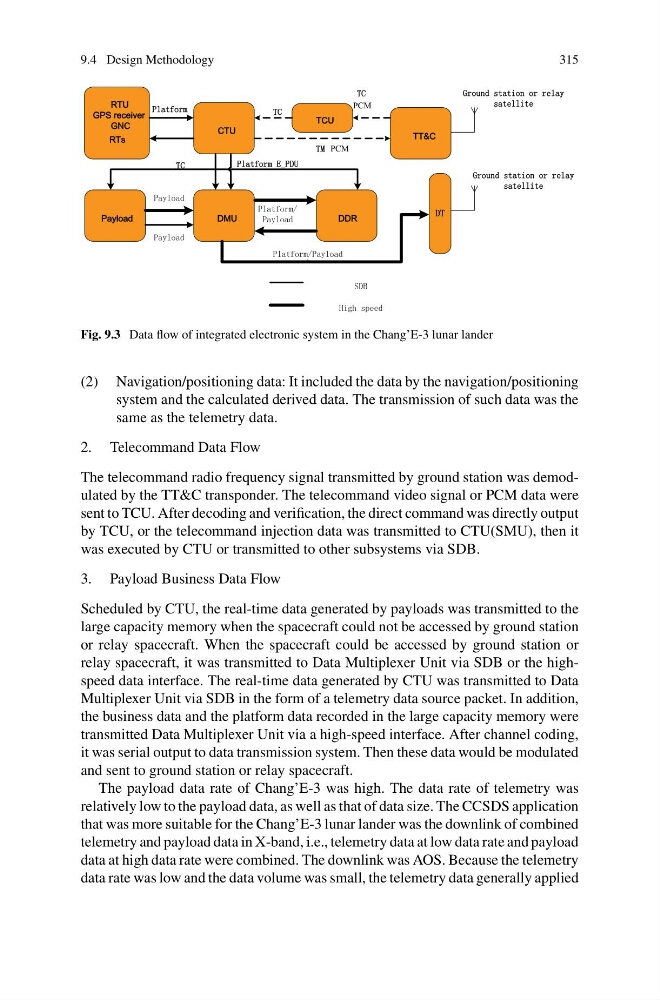
Fig. 9.3 Data flow of integrated electronic system in the Chang’E-3 lunar lander
(2) Navigation/positioning data: It included the data by the navigation/positioning
system and the calculated derived data. The transmission of such data was the
same as the telemetry data.
2. Telecommand Data Flow
The telecommand radio frequency signal transmitted by ground station was demodulated by the TT&C transponder. The telecommand video signal or PCM data were
sent to TCU. After decoding and verification, the direct command was directly output
by TCU, or the telecommand injection data was transmitted to CTU(SMU), then it
was executed by CTU or transmitted to other subsystems via SDB.
3. Payload Business Data Flow
Scheduled by CTU, the real-time data generated by payloads was transmitted to the
large capacity memory when the spacecraft could not be accessed by ground station
or relay spacecraft. When the spacecraft could be accessed by ground station or
relay spacecraft, it was transmitted to Data Multiplexer Unit via SDB or the highspeed data interface. The real-time data generated by CTU was transmitted to Data
Multiplexer Unit via SDB in the form of a telemetry data source packet. In addition,
the business data and the platform data recorded in the large capacity memory were
transmitted Data Multiplexer Unit via a high-speed interface. After channel coding,
it was serial output to data transmission system. Then these data would be modulated
and sent to ground station or relay spacecraft.
The payload data rate of Chang’E-3 was high. The data rate of telemetry was
relatively low to the payload data, as well as that of data size. The CCSDS application
that was more suitable for the Chang’E-3 lunar lander was the downlink of combined
telemetry and payload data in X-band, i.e., telemetry data at low data rate and payload
data at high data rate were combined. The downlink was AOS. Because the telemetry
data rate was low and the data volume was small, the telemetry data generally applied
315
Fig. 9.3 Data flow of integrated electronic system in the Chang’E-3 lunar lander
(2) Navigation/positioning data: It included the data by the navigation/positioning
system and the calculated derived data. The transmission of such data was the
same as the telemetry data.
2. Telecommand Data Flow
The telecommand radio frequency signal transmitted by ground station was demodulated by the TT&C transponder. The telecommand video signal or PCM data were
sent to TCU. After decoding and verification, the direct command was directly output
by TCU, or the telecommand injection data was transmitted to CTU(SMU), then it
was executed by CTU or transmitted to other subsystems via SDB.
3. Payload Business Data Flow
Scheduled by CTU, the real-time data generated by payloads was transmitted to the
large capacity memory when the spacecraft could not be accessed by ground station
or relay spacecraft. When the spacecraft could be accessed by ground station or
relay spacecraft, it was transmitted to Data Multiplexer Unit via SDB or the highspeed data interface. The real-time data generated by CTU was transmitted to Data
Multiplexer Unit via SDB in the form of a telemetry data source packet. In addition,
the business data and the platform data recorded in the large capacity memory were
transmitted Data Multiplexer Unit via a high-speed interface. After channel coding,
it was serial output to data transmission system. Then these data would be modulated
and sent to ground station or relay spacecraft.
The payload data rate of Chang’E-3 was high. The data rate of telemetry was
relatively low to the payload data, as well as that of data size. The CCSDS application
that was more suitable for the Chang’E-3 lunar lander was the downlink of combined
telemetry and payload data in X-band, i.e., telemetry data at low data rate and payload
data at high data rate were combined. The downlink was AOS. Because the telemetry
data rate was low and the data volume was small, the telemetry data generally applied