

5.5 Typical Technologies
177
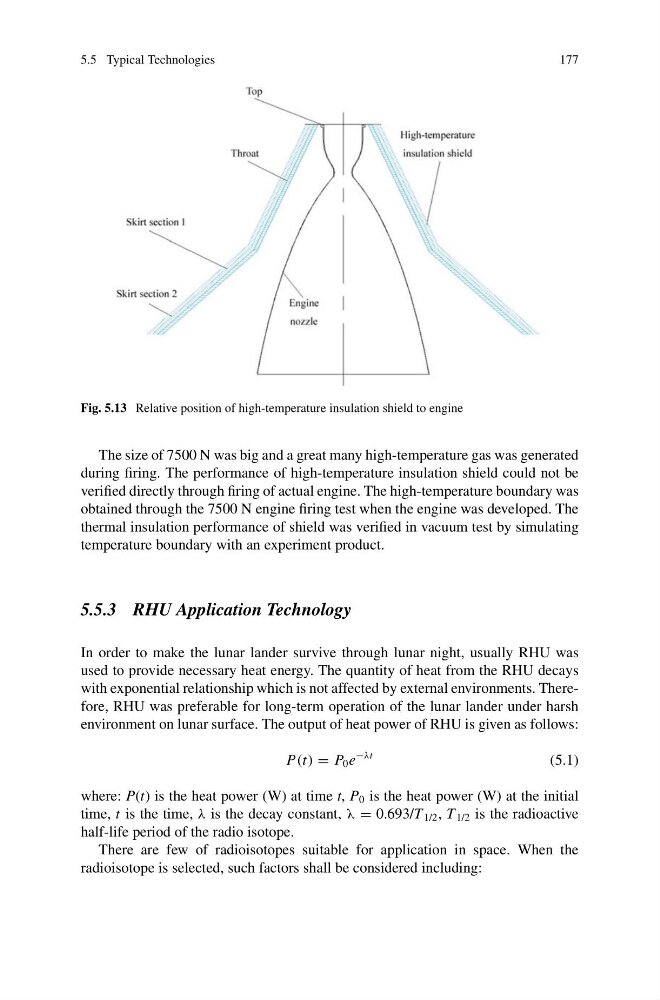
Fig. 5.13 Relative position of high-temperature insulation shield to engine
The size of 7500 N was big and a great many high-temperature gas was generated
during firing. The performance of high-temperature insulation shield could not be
verified directly through firing of actual engine. The high-temperature boundary was
obtained through the 7500 N engine firing test when the engine was developed. The
thermal insulation performance of shield was verified in vacuum test by simulating
temperature boundary with an experiment product.
5.5.3 RHU Application Technology
In order to make the lunar lander survive through lunar night, usually RHU was
used to provide necessary heat energy. The quantity of heat from the RHU decays
with exponential relationship which is not affected by external environments. Therefore, RHU was preferable for long-term operation of the lunar lander under harsh
environment on lunar surface. The output of heat power of RHU is given as follows:
P(t) = P 0 e
−λt
(5.1)
where: P(t) is the heat power (W) at time t, P 0 is the heat power (W) at the initial
time, t is the time, λ is the decay constant, λ = 0.693/T 1/2 , T 1/2 is the radioactive
half-life period of the radio isotope.
There are few of radioisotopes suitable for application in space. When the
radioisotope is selected, such factors shall be considered including:
177
Fig. 5.13 Relative position of high-temperature insulation shield to engine
The size of 7500 N was big and a great many high-temperature gas was generated
during firing. The performance of high-temperature insulation shield could not be
verified directly through firing of actual engine. The high-temperature boundary was
obtained through the 7500 N engine firing test when the engine was developed. The
thermal insulation performance of shield was verified in vacuum test by simulating
temperature boundary with an experiment product.
5.5.3 RHU Application Technology
In order to make the lunar lander survive through lunar night, usually RHU was
used to provide necessary heat energy. The quantity of heat from the RHU decays
with exponential relationship which is not affected by external environments. Therefore, RHU was preferable for long-term operation of the lunar lander under harsh
environment on lunar surface. The output of heat power of RHU is given as follows:
P(t) = P 0 e
−λt
(5.1)
where: P(t) is the heat power (W) at time t, P 0 is the heat power (W) at the initial
time, t is the time, λ is the decay constant, λ = 0.693/T 1/2 , T 1/2 is the radioactive
half-life period of the radio isotope.
There are few of radioisotopes suitable for application in space. When the
radioisotope is selected, such factors shall be considered including: