

4.3 Design and Verification of Lunar Lander Structure
113
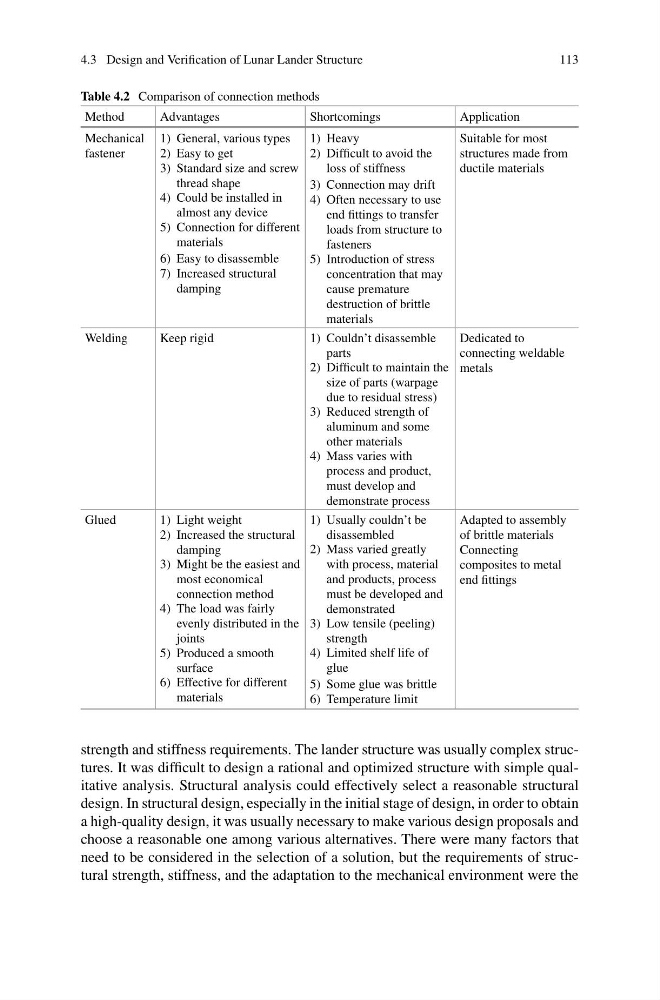
Table 4.2 Comparison of connection methods
Method
Advantages
Shortcomings
Application
Mechanical
fastener
1) General, various types
2) Easy to get
3) Standard size and screw
thread shape
4) Could be installed in
almost any device
5) Connection for different
materials
6) Easy to disassemble
7) Increased structural
damping
1) Heavy
2) Difficult to avoid the
loss of stiffness
3) Connection may drift
4) Often necessary to use
end fittings to transfer
loads from structure to
fasteners
5) Introduction of stress
concentration that may
cause premature
destruction of brittle
materials
Suitable for most
structures made from
ductile materials
Welding
Keep rigid
1) Couldn’t disassemble
parts
2) Difficult to maintain the
size of parts (warpage
due to residual stress)
3) Reduced strength of
aluminum and some
other materials
4) Mass varies with
process and product,
must develop and
demonstrate process
Dedicated to
connecting weldable
metals
Glued
1) Light weight
2) Increased the structural
damping
3) Might be the easiest and
most economical
connection method
4) The load was fairly
evenly distributed in the
joints
5) Produced a smooth
surface
6) Effective for different
materials
1) Usually couldn’t be
disassembled
2) Mass varied greatly
with process, material
and products, process
must be developed and
demonstrated
3) Low tensile (peeling)
strength
4) Limited shelf life of
glue
5) Some glue was brittle
6) Temperature limit
Adapted to assembly
of brittle materials
Connecting
composites to metal
end fittings
strength and stiffness requirements. The lander structure was usually complex structures. It was difficult to design a rational and optimized structure with simple qualitative analysis. Structural analysis could effectively select a reasonable structural
design. In structural design, especially in the initial stage of design, in order to obtain
a high-quality design, it was usually necessary to make various design proposals and
choose a reasonable one among various alternatives. There were many factors that
need to be considered in the selection of a solution, but the requirements of structural strength, stiffness, and the adaptation to the mechanical environment were the
113
Table 4.2 Comparison of connection methods
Method
Advantages
Shortcomings
Application
Mechanical
fastener
1) General, various types
2) Easy to get
3) Standard size and screw
thread shape
4) Could be installed in
almost any device
5) Connection for different
materials
6) Easy to disassemble
7) Increased structural
damping
1) Heavy
2) Difficult to avoid the
loss of stiffness
3) Connection may drift
4) Often necessary to use
end fittings to transfer
loads from structure to
fasteners
5) Introduction of stress
concentration that may
cause premature
destruction of brittle
materials
Suitable for most
structures made from
ductile materials
Welding
Keep rigid
1) Couldn’t disassemble
parts
2) Difficult to maintain the
size of parts (warpage
due to residual stress)
3) Reduced strength of
aluminum and some
other materials
4) Mass varies with
process and product,
must develop and
demonstrate process
Dedicated to
connecting weldable
metals
Glued
1) Light weight
2) Increased the structural
damping
3) Might be the easiest and
most economical
connection method
4) The load was fairly
evenly distributed in the
joints
5) Produced a smooth
surface
6) Effective for different
materials
1) Usually couldn’t be
disassembled
2) Mass varied greatly
with process, material
and products, process
must be developed and
demonstrated
3) Low tensile (peeling)
strength
4) Limited shelf life of
glue
5) Some glue was brittle
6) Temperature limit
Adapted to assembly
of brittle materials
Connecting
composites to metal
end fittings
strength and stiffness requirements. The lander structure was usually complex structures. It was difficult to design a rational and optimized structure with simple qualitative analysis. Structural analysis could effectively select a reasonable structural
design. In structural design, especially in the initial stage of design, in order to obtain
a high-quality design, it was usually necessary to make various design proposals and
choose a reasonable one among various alternatives. There were many factors that
need to be considered in the selection of a solution, but the requirements of structural strength, stiffness, and the adaptation to the mechanical environment were the