

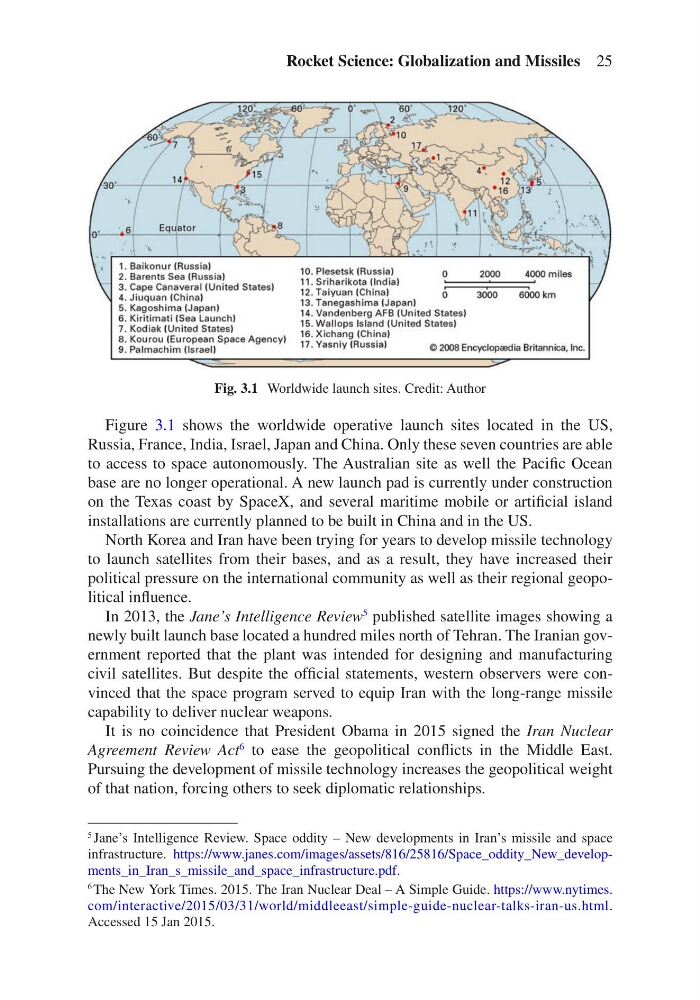
Figure 3.1 shows the worldwide operative launch sites located in the US,
Russia, France, India, Israel, Japan and China. Only these seven countries are able
to access to space autonomously. The Australian site as well the Pacific Ocean
base are no longer operational. A new launch pad is currently under construction
on the Texas coast by SpaceX, and several maritime mobile or artificial island
installations are currently planned to be built in China and in the US.
North Korea and Iran have been trying for years to develop missile technology
to launch satellites from their bases, and as a result, they have increased their
political pressure on the international community as well as their regional geopolitical influence.
In 2013, the Jane’s Intelligence Review
5
published satellite images showing a
newly built launch base located a hundred miles north of Tehran. The Iranian government reported that the plant was intended for designing and manufacturing
civil satellites. But despite the official statements, western observers were convinced that the space program served to equip Iran with the long-range missile
capability to deliver nuclear weapons.
It is no coincidence that President Obama in 2015 signed the Iran Nuclear
Agreement Review Act
6
to ease the geopolitical conflicts in the Middle East.
Pursuing the development of missile technology increases the geopolitical weight
of that nation, forcing others to seek diplomatic relationships.
5
Jane’s Intelligence Review. Space oddity – New developments in Iran’s missile and space
infrastructure. https://www.janes.com/images/assets/816/25816/Space_oddity_New_developments_in_Iran_s_missile_and_space_infrastructure.pdf.
6
The New York Times. 2015. The Iran Nuclear Deal – A Simple Guide. https://www.nytimes.
com/interactive/2015/03/31/world/middleeast/simple-guide-nuclear-talks-iran-us.html.
Accessed 15 Jan 2015.
Fig. 3.1 Worldwide launch sites. Credit: Author
Rocket Science: Globalization and Missiles 25
Russia, France, India, Israel, Japan and China. Only these seven countries are able
to access to space autonomously. The Australian site as well the Pacific Ocean
base are no longer operational. A new launch pad is currently under construction
on the Texas coast by SpaceX, and several maritime mobile or artificial island
installations are currently planned to be built in China and in the US.
North Korea and Iran have been trying for years to develop missile technology
to launch satellites from their bases, and as a result, they have increased their
political pressure on the international community as well as their regional geopolitical influence.
In 2013, the Jane’s Intelligence Review
5
published satellite images showing a
newly built launch base located a hundred miles north of Tehran. The Iranian government reported that the plant was intended for designing and manufacturing
civil satellites. But despite the official statements, western observers were convinced that the space program served to equip Iran with the long-range missile
capability to deliver nuclear weapons.
It is no coincidence that President Obama in 2015 signed the Iran Nuclear
Agreement Review Act
6
to ease the geopolitical conflicts in the Middle East.
Pursuing the development of missile technology increases the geopolitical weight
of that nation, forcing others to seek diplomatic relationships.
5
Jane’s Intelligence Review. Space oddity – New developments in Iran’s missile and space
infrastructure. https://www.janes.com/images/assets/816/25816/Space_oddity_New_developments_in_Iran_s_missile_and_space_infrastructure.pdf.
6
The New York Times. 2015. The Iran Nuclear Deal – A Simple Guide. https://www.nytimes.
com/interactive/2015/03/31/world/middleeast/simple-guide-nuclear-talks-iran-us.html.
Accessed 15 Jan 2015.
Fig. 3.1 Worldwide launch sites. Credit: Author
Rocket Science: Globalization and Missiles 25