

• Radar calibration.
• Satellite simulation.
• Incremental testing.
• Research and development of sensors.
Its balloons are designed to carry payloads weighing from a few pounds to over
four tons to the edge of space in order to gather valuable information. Quickly
deployable and cost-effective, they are capable of both short and long duration
flights that serve a wide range of dynamic and critical missions.
The Raven Thunderhead Balloon System is a steerable multipurpose platform
developed by Raven Aerostar for stratospheric missions of long duration, with
navigational capabilities and the ability to achieve persistent flight over areas of
interest. It offers an alternative to using satellites for communications or making
surveys of ground, marine and environmental objectives. Balloons can be flown
individually or in constellations in support of a wide range of requirements.
The Thunderhead Balloon System is a super-pressure balloon and a gondola
that contains the payload, flight systems, and solar panels. The balloon is a
pumpkin- shaped SPB made of polyethylene, available in two configurations:
Thunderhead 200 SPB has a volume of 1,812 m
3
(64,000 ft
3
), and Thunderhead
400 SPB has a volume of 11,326 m
3
(400,000 ft
3
). The 200 SPB floats at a maximum altitude in the range 15-20 km (50,000-65,000 ft) while the 400 SPB is
23-28 km (75,000-92,000 ft), far above commercial jets and weather phenomena.
Both models can carry a payload of up to 125 lb. The balloons are inflated with
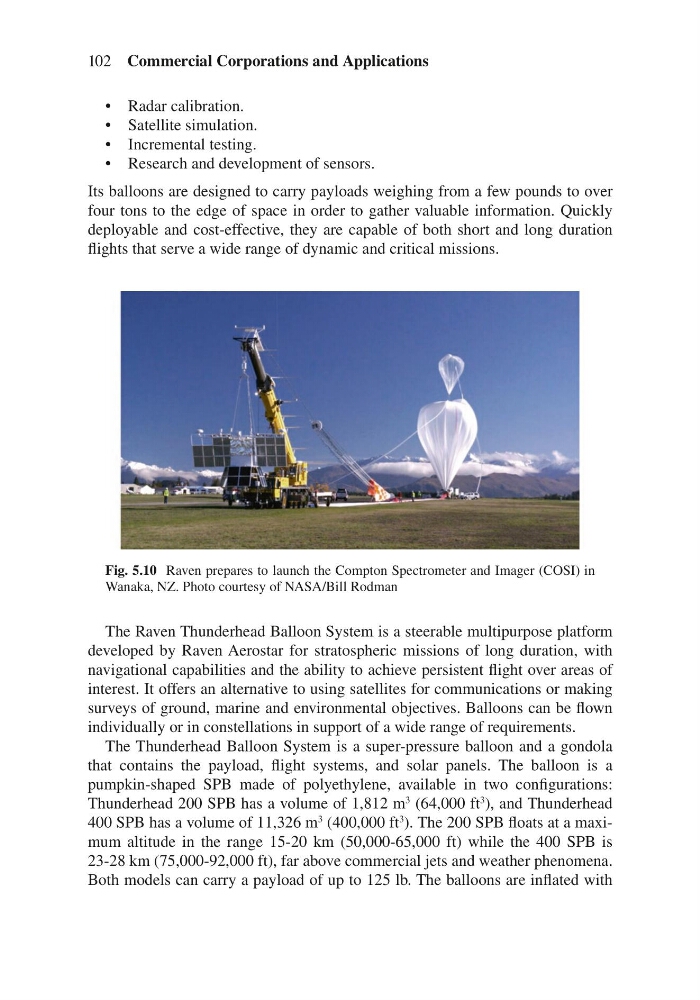
Fig. 5.10 Raven prepares to launch the Compton Spectrometer and Imager (COSI) in
Wanaka, NZ. Photo courtesy of NASA/Bill Rodman
102 Commercial Corporations and Applications
• Satellite simulation.
• Incremental testing.
• Research and development of sensors.
Its balloons are designed to carry payloads weighing from a few pounds to over
four tons to the edge of space in order to gather valuable information. Quickly
deployable and cost-effective, they are capable of both short and long duration
flights that serve a wide range of dynamic and critical missions.
The Raven Thunderhead Balloon System is a steerable multipurpose platform
developed by Raven Aerostar for stratospheric missions of long duration, with
navigational capabilities and the ability to achieve persistent flight over areas of
interest. It offers an alternative to using satellites for communications or making
surveys of ground, marine and environmental objectives. Balloons can be flown
individually or in constellations in support of a wide range of requirements.
The Thunderhead Balloon System is a super-pressure balloon and a gondola
that contains the payload, flight systems, and solar panels. The balloon is a
pumpkin- shaped SPB made of polyethylene, available in two configurations:
Thunderhead 200 SPB has a volume of 1,812 m
3
(64,000 ft
3
), and Thunderhead
400 SPB has a volume of 11,326 m
3
(400,000 ft
3
). The 200 SPB floats at a maximum altitude in the range 15-20 km (50,000-65,000 ft) while the 400 SPB is
23-28 km (75,000-92,000 ft), far above commercial jets and weather phenomena.
Both models can carry a payload of up to 125 lb. The balloons are inflated with
Fig. 5.10 Raven prepares to launch the Compton Spectrometer and Imager (COSI) in
Wanaka, NZ. Photo courtesy of NASA/Bill Rodman
102 Commercial Corporations and Applications