

The payload consists of the communications equipment to deliver connectivity,
including the radio base station and its antennas. Antennas transmit connectivity from
(often distant) ground stations across a balloon mesh network and directly to a user’s
LTE phone. A user needs only a standard LTE phone to connect to a Loon balloon.
The balloons also incorporate automatic dependent surveillance broadcast, so that
they can be publicly tracked (along with other balloons) with the call- sign “HBAL”.
The ground equipment consists of all that is required for launching the
balloons.
Loon has built an Autolauncher specifically to launch Loon balloons safely and
reliably at scale. Side panels protect the balloon from the wind as it is filled with
lift gas and positioned for launch. The crane is orientated downwind to smoothly
release the Loon balloon. A single crane can add another balloon to the network
every 30 minutes.
For a 2:56 video titled “Launching at Scale”, go to:
https://www.youtube.com/watch?v=gwkmOE8dkvw
Loon maintains continuous and redundant command and control links with each
of its balloons, tracking their location using GPS. When a balloon is ready to be
taken out of service, the lift gas which keeps the balloon aloft is released and the
parachute automatically deploys to control the landing. Loon has a network of
partners around the world to identify pre-defined landing zones. Its descents are
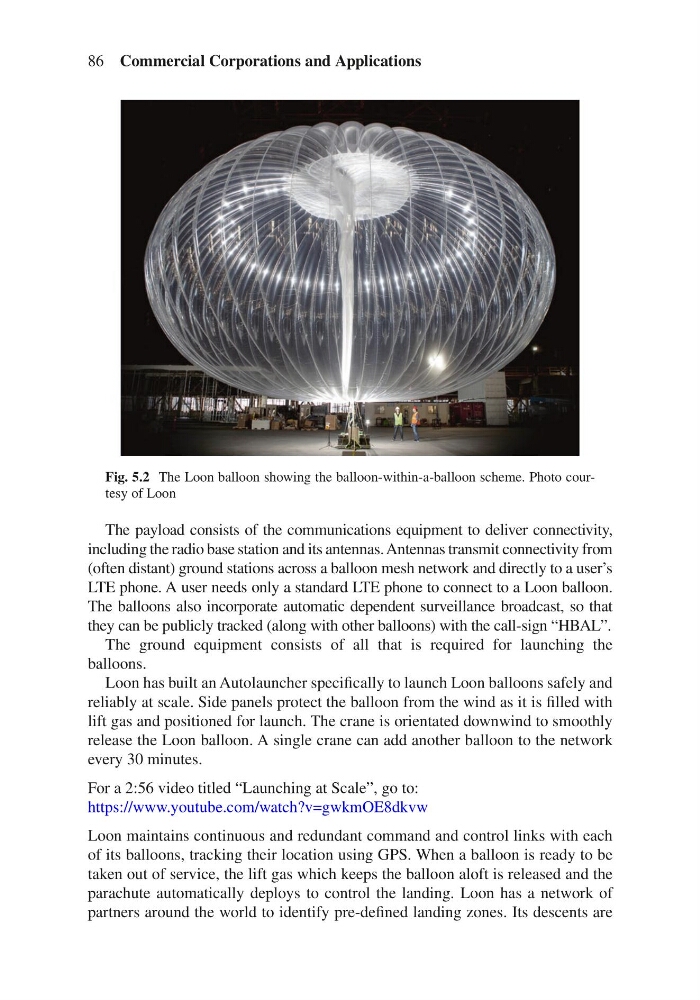
Fig. 5.2 The Loon balloon showing the balloon-within-a-balloon scheme. Photo courtesy of Loon
86 Commercial Corporations and Applications
including the radio base station and its antennas. Antennas transmit connectivity from
(often distant) ground stations across a balloon mesh network and directly to a user’s
LTE phone. A user needs only a standard LTE phone to connect to a Loon balloon.
The balloons also incorporate automatic dependent surveillance broadcast, so that
they can be publicly tracked (along with other balloons) with the call- sign “HBAL”.
The ground equipment consists of all that is required for launching the
balloons.
Loon has built an Autolauncher specifically to launch Loon balloons safely and
reliably at scale. Side panels protect the balloon from the wind as it is filled with
lift gas and positioned for launch. The crane is orientated downwind to smoothly
release the Loon balloon. A single crane can add another balloon to the network
every 30 minutes.
For a 2:56 video titled “Launching at Scale”, go to:
https://www.youtube.com/watch?v=gwkmOE8dkvw
Loon maintains continuous and redundant command and control links with each
of its balloons, tracking their location using GPS. When a balloon is ready to be
taken out of service, the lift gas which keeps the balloon aloft is released and the
parachute automatically deploys to control the landing. Loon has a network of
partners around the world to identify pre-defined landing zones. Its descents are
Fig. 5.2 The Loon balloon showing the balloon-within-a-balloon scheme. Photo courtesy of Loon
86 Commercial Corporations and Applications