

78
Using the transfer of development rights, a technique that encourages the transfer
of growth from places where a community would like to see less development to
places where a community would like to see more development, is one idea for
conserving productive green space (Fig. 4.25). A mix of productive open space and
mini detached houses represents the present situation. If no action is taken, productive green space will be lost to mini-detached housing developments; or in the case
that no market for mini detached houses exists, land will undoubtedly be abandoned.
Presupposing the existence of a market for eco-collective housing for rent or sale,
higher density housing could be built along newly constructed arterial roads. Arterial
roads are already planned and are to be constructed to form a better road network.
Through the transfer of development rights, green space inside the superblocks surrounded by arterial roads can be conserved, thus contributing to the overall quality
of the urban area.
The second case is a low-density residential area with community-managed forest.
Fujimaki-cho in the eastern hills of Nagoya City, Aichi Prefecture, is designated as an
area for a future urban park (Fig. 4.26). But the park is unlikely to be developed
because of the shortage of public funds. Nearly 200 households live in the future park
area with a minimum urban infrastructure. Streets are partly unpaved and houses are
not connected to the city’s sewage system. The forests in Fujimaki- cho are maintained
by resident volunteers. The community workshops we organized there conducted
lengthy discussions about the current issues and the future scenario of Fujimaki-cho.
When a city has no public funds to purchase and maintain such land for the future
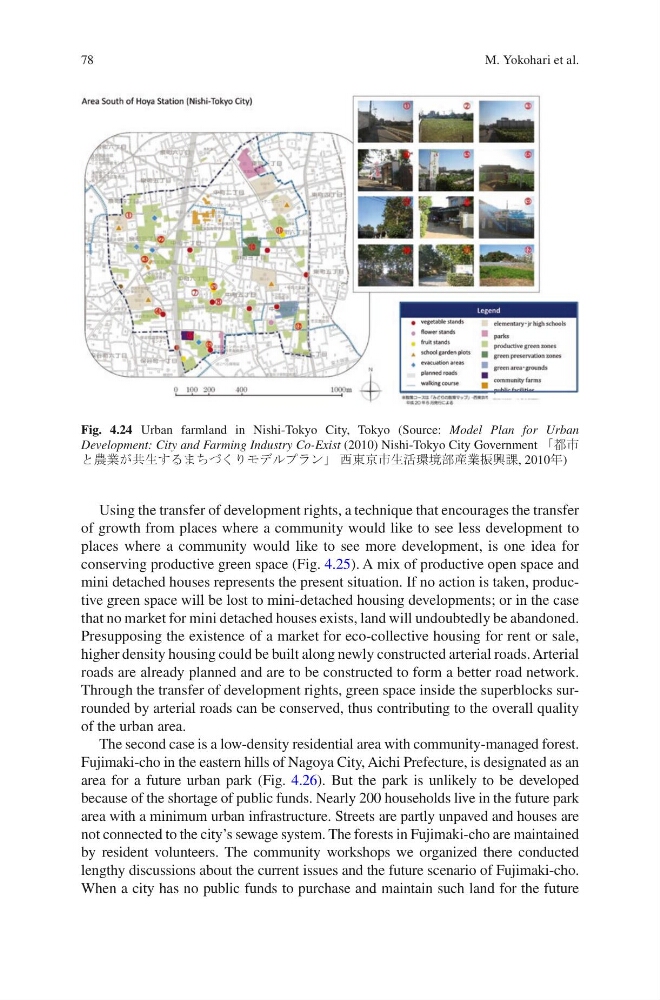
Fig. 4.24 Urban farmland in Nishi-Tokyo City, Tokyo (Source: Model Plan for Urban
Development: City and Farming Industry Co-Exist (2010) Nishi-Tokyo City Government 「都市
と農業が共生するまちづくりモデルプラン」 西東京市生活環境部産業振興課, 2010年)
M. Yokohari et al.
Using the transfer of development rights, a technique that encourages the transfer
of growth from places where a community would like to see less development to
places where a community would like to see more development, is one idea for
conserving productive green space (Fig. 4.25). A mix of productive open space and
mini detached houses represents the present situation. If no action is taken, productive green space will be lost to mini-detached housing developments; or in the case
that no market for mini detached houses exists, land will undoubtedly be abandoned.
Presupposing the existence of a market for eco-collective housing for rent or sale,
higher density housing could be built along newly constructed arterial roads. Arterial
roads are already planned and are to be constructed to form a better road network.
Through the transfer of development rights, green space inside the superblocks surrounded by arterial roads can be conserved, thus contributing to the overall quality
of the urban area.
The second case is a low-density residential area with community-managed forest.
Fujimaki-cho in the eastern hills of Nagoya City, Aichi Prefecture, is designated as an
area for a future urban park (Fig. 4.26). But the park is unlikely to be developed
because of the shortage of public funds. Nearly 200 households live in the future park
area with a minimum urban infrastructure. Streets are partly unpaved and houses are
not connected to the city’s sewage system. The forests in Fujimaki- cho are maintained
by resident volunteers. The community workshops we organized there conducted
lengthy discussions about the current issues and the future scenario of Fujimaki-cho.
When a city has no public funds to purchase and maintain such land for the future
Fig. 4.24 Urban farmland in Nishi-Tokyo City, Tokyo (Source: Model Plan for Urban
Development: City and Farming Industry Co-Exist (2010) Nishi-Tokyo City Government 「都市
と農業が共生するまちづくりモデルプラン」 西東京市生活環境部産業振興課, 2010年)
M. Yokohari et al.