

76
Koenji, Suginami Ward, Tokyo is grey in a way (Fig. 4.23). The border between
private and public is unclear, and merchandise, and tables and chairs are illegally
placed on the street. This borderless relationship between shops, restaurants, and
the street is attractive for urban dwellers. But in formal urban planning, a plan
has been developed a long time ago to modernize this commercial area by constructing a new road in the existing urban area. If this road is actually developed,
most of the shops and restaurants will be relocated resulting in a totally different
urban environment. The modernized commercial area will have wider roads that
clearly separate pedestrians and automobiles, and larger buildings. Thus, the
characteristics of the vibrant, small-scale commercial area that urban dwellers
enjoy now will disappear.
4.4.2 Modernization: The Only Solution?
Jane Jacobs (1906–2006), a famous North American journalist and activist who
often wrote about preserving urban neighborhoods, raised this question in the
1960s. She fought against new big-money developments and emphasized that existing urban areas with higher population density, mixed uses, older buildings, and
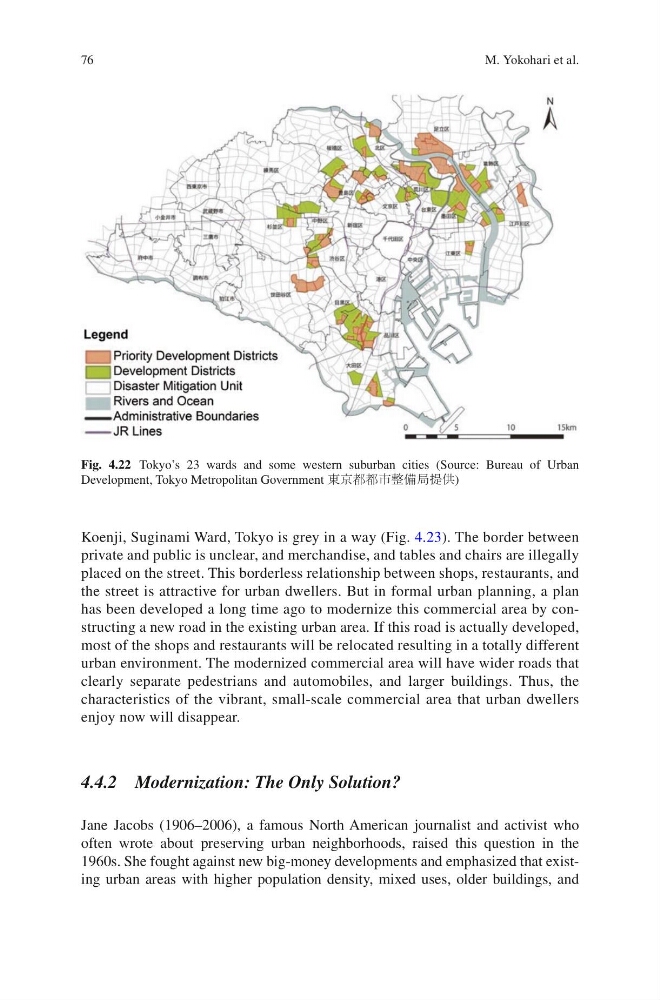
Fig. 4.22 Tokyo’s 23 wards and some western suburban cities (Source: Bureau of Urban
Development, Tokyo Metropolitan Government 東京都都市整備局提供)
M. Yokohari et al.
Koenji, Suginami Ward, Tokyo is grey in a way (Fig. 4.23). The border between
private and public is unclear, and merchandise, and tables and chairs are illegally
placed on the street. This borderless relationship between shops, restaurants, and
the street is attractive for urban dwellers. But in formal urban planning, a plan
has been developed a long time ago to modernize this commercial area by constructing a new road in the existing urban area. If this road is actually developed,
most of the shops and restaurants will be relocated resulting in a totally different
urban environment. The modernized commercial area will have wider roads that
clearly separate pedestrians and automobiles, and larger buildings. Thus, the
characteristics of the vibrant, small-scale commercial area that urban dwellers
enjoy now will disappear.
4.4.2 Modernization: The Only Solution?
Jane Jacobs (1906–2006), a famous North American journalist and activist who
often wrote about preserving urban neighborhoods, raised this question in the
1960s. She fought against new big-money developments and emphasized that existing urban areas with higher population density, mixed uses, older buildings, and
Fig. 4.22 Tokyo’s 23 wards and some western suburban cities (Source: Bureau of Urban
Development, Tokyo Metropolitan Government 東京都都市整備局提供)
M. Yokohari et al.